

Your skin's outer layer acts as a shield, keeping moisture in and harmful elements out. However, urban living - pollution, UV rays, and stress - can weaken this barrier, causing dryness, irritation, and even premature aging. Prebiotics and probiotics can help repair and strengthen your skin by balancing its microbiome and improving hydration.
Key takeaways:
- Prebiotics: Fuel beneficial bacteria with ingredients like inulin and FOS.
- Probiotics: Restore balance with strains like Lactobacillus and Bifidobacterium.
- Postbiotics: Deliver bioactive compounds to soothe inflammation and support repair.
- Gut-Skin Connection: A healthy gut microbiome reduces systemic inflammation, improving skin health.
Simple steps like using microbiome-friendly skincare, eating fiber-rich foods, and adding supplements can rebuild your skin's defenses. Consistency is key - expect noticeable improvements in 4-8 weeks.
Prebiotic Skincare - Our Microbiome & A Healthy Skin Barrier
How Prebiotics and Probiotics Repair the Skin Barrier
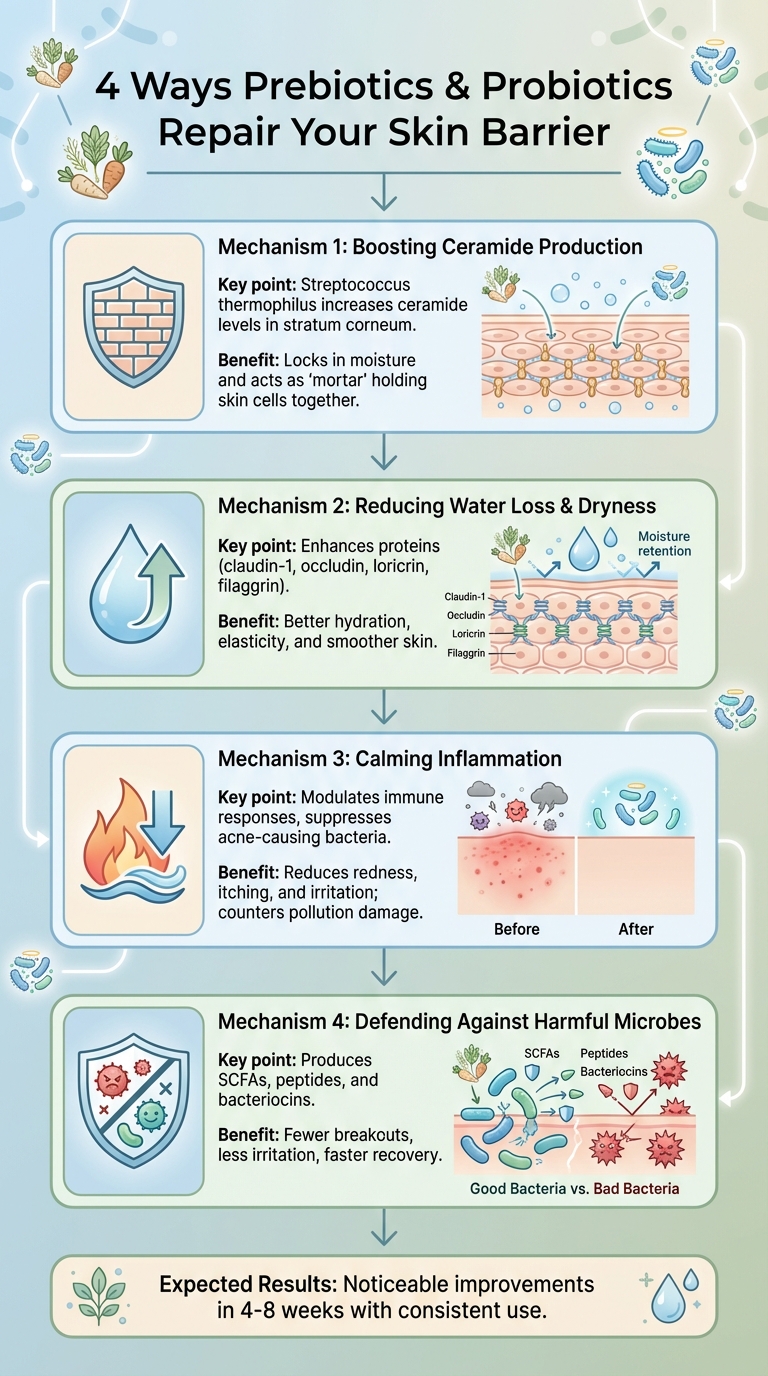
How Prebiotics and Probiotics Repair Your Skin Barrier: 4 Key Mechanisms
What Are Prebiotics and Probiotics?
Prebiotics are non-digestible fibers - like inulin, fructooligosaccharides (FOS), galactooligosaccharides (GOS), and xylitol - that fuel the good bacteria in your gut and on your skin. They help these beneficial microbes thrive, keeping harmful ones in check. Probiotics, on the other hand, are live microorganisms such as Lactobacillus and Bifidobacterium species. When consumed or applied to the skin in the right amounts, they help balance the microbiome, improve the skin’s barrier, and reduce inflammation. Postbiotics complete the picture - they’re the bioactive substances produced by these microbes, including short-chain fatty acids (SCFAs), antimicrobial peptides, and fermented filtrates.
Together, these biotics work both internally and externally. In the gut, they maintain microbial balance and regulate the immune system. On the skin, they strengthen the barrier, improve hydration, and shield against environmental stressors like pollution and UV rays. Common prebiotic ingredients in skincare products include inulin and plant-based sugars, while supplements often list FOS, GOS, and resistant starch. Probiotic strains such as Lactobacillus rhamnosus, L. plantarum, L. paracasei, and Bifidobacterium lactis have been studied for their ability to address acne, eczema, and signs of aging. In topical products, you might come across Lactobacillus and Streptococcus thermophilus ferments, with the latter shown to boost ceramide production and improve the skin’s barrier.
Key Mechanisms of Skin Barrier Repair
Prebiotics and probiotics work through multiple pathways to repair and strengthen the skin barrier. Here’s how:
- Boosting ceramide production: Certain probiotic formulations, like Streptococcus thermophilus, can increase ceramide levels in the skin’s outermost layer (the stratum corneum). Ceramides are essential lipids that lock in moisture and act as the "mortar" holding skin cells together. This not only hydrates the skin but also keeps bacteria at bay. Prebiotics, meanwhile, help maintain a balanced microbiome that produces barrier-supportive compounds.
- Reducing water loss and dryness: Probiotics improve the skin’s ability to retain moisture by enhancing the production of proteins like claudin-1, occludin, loricrin, and filaggrin, which are crucial for barrier integrity. This leads to better hydration, elasticity, and smoother skin. Prebiotics like inulin and FOS also bind water, providing immediate and lasting hydration while supporting microbiome health.
- Calming inflammation: Probiotics help reduce chronic inflammation by modulating immune responses in the skin. For acne-prone skin, they suppress acne-causing bacteria and promote ceramide production to soothe irritation. For sensitive or eczema-prone skin, they strengthen the barrier, reduce irritant exposure, and alleviate redness and itching. Their antioxidant properties also help counteract damage from pollution.
- Defending against harmful microbes: Beneficial bacteria outcompete pathogens for space on the skin, while also producing antimicrobial substances like SCFAs, peptides, and bacteriocins. These natural defenses limit the growth of harmful bacteria, reduce acne, and help manage conditions like rosacea and folliculitis. The result? Fewer breakouts, less irritation, and faster recovery from skin issues.
These mechanisms highlight the interconnected role of the microbiome in gut and skin health, showing how a balanced microbiome supports a resilient skin barrier.
The Gut-Skin Axis and Microbiome Balance
The gut-skin axis connects gut health to skin health through immune, metabolic, and hormonal pathways. When the gut microbiome becomes imbalanced - due to poor diet, stress, medications, or toxins - it can lead to increased gut permeability. This allows inflammatory molecules and microbial fragments to enter the bloodstream, triggering systemic inflammation that disrupts skin repair and immune responses. This process can worsen conditions like acne, eczema, rosacea, and premature aging. By promoting a balanced gut microbiome with prebiotics and probiotics, you can reduce inflammation and support skin barrier recovery.
Short-chain fatty acids (SCFAs), produced when gut bacteria ferment fibers, play a key role here. SCFAs strengthen the gut barrier by regulating proteins like occludin and ZO-1, reducing permeability and inflammation. They also have anti-inflammatory effects, helping to calm the immune system. To boost SCFA production, include fiber-rich foods like vegetables, fruits, legumes, and whole grains in your diet, and consider prebiotic and probiotic supplements. Topical postbiotics, such as fermented filtrates, can further enhance skin health by delivering barrier-supportive compounds directly to the skin.
For those living in urban areas, where microbiome imbalances are common, a high-potency synbiotic like Begin Rebirth RE-1™ can help restore balance. This 3-in-1 formula combines prebiotics, probiotics, and postbiotics, delivering 500 billion CFU per sachet. Using Human Origin Strains (HOSt™), it targets the root causes of dysbiosis rather than just managing symptoms. In a 7-day study involving 35 adults, 94% reported reduced bloating, and 87% experienced fewer infections after using RE-1™ [1]. By addressing gut imbalances, this product strengthens the gut-skin connection, leading to clearer, more hydrated skin with a stronger barrier against environmental stressors.
Using Prebiotics and Probiotics in Urban Lifestyles
Topical Skincare Strategies
Living in a city can take a toll on your skin. Pollution, UV rays, and daily stress can disrupt its natural microbiome and weaken its protective barrier. To keep your skin healthy, start with a low-pH, sulfate-free cleanser. This helps protect beneficial bacteria without stripping away your skin's natural oils. Steer clear of harsh foaming cleansers and antibacterial products - they can upset your skin's acid mantle.
Prebiotic moisturizers are a great addition to your routine, especially in urban settings. Look for ingredients like inulin, fructooligosaccharides, or PreBIULIN AGA. These nourish good bacteria and help your skin stay hydrated while defending against dryness caused by pollution. Interestingly, PreBIULIN AGA is even better than hyaluronic acid at retaining moisture and can assist in recovering the microbiome in conditions like rosacea [4]. Apply these moisturizers right after cleansing to lock in hydration and keep your skin protected throughout the day.
Probiotic creams and serums are another powerful option. They often contain live or fermented strains such as Lactobacillus or Streptococcus thermophilus, which help reduce inflammation, improve hydration, and repair your skin's barrier. For example, creams with Streptococcus thermophilus can boost ceramide levels, providing long-lasting hydration [2]. Layer a probiotic serum under a broad-spectrum SPF 30+ sunscreen for extra protection and repair against urban stressors.
While topical care is essential, don’t forget to support your skin from within by focusing on gut health.
Internal Support with Nutrition and Supplements
Your gut health plays a big role in how well your skin can handle environmental stress. A diet rich in prebiotic fibers and fermented foods can reduce systemic inflammation through the gut-skin connection, helping your skin retain moisture and stay resilient. Add fiber-packed vegetables, fruits, legumes, and whole grains to your meals, and include fermented foods like yogurt with live cultures, kefir, kimchi, sauerkraut, and miso. At the same time, try to cut back on high-glycemic carbs and ultra-processed foods - they can trigger inflammation and even lead to acne.
For an added boost, consider oral synbiotics. These combine prebiotics, probiotics, and postbiotics to enhance the gut-skin connection. They can help reduce water loss through the skin, improve hydration, and balance oil production. If you’re dealing with gut issues like bloating or irregular digestion, a synbiotic supplement such as Begin Rebirth RE-1™ could be helpful. Each sachet delivers 500 billion CFU with a 3-in-1 formula, supporting digestion and improving skin hydration [1]. In one study, 94% of users reported less bloating, and 87% experienced fewer infections after just seven days, resulting in clearer, more hydrated skin [1].
By focusing on gut health, you can strengthen your skin’s barrier from the inside out.
Daily Routines and Seasonal Adjustments
To build a skincare routine that works in an urban environment, combine both external and internal strategies. In the morning, start by gently cleansing with lukewarm water. Follow this with a probiotic serum and a prebiotic moisturizer to keep your skin hydrated and protected. Finish with a broad-spectrum SPF 30+ sunscreen. Taking your oral synbiotic on an empty stomach in the morning can further enhance your skin’s natural defenses throughout the day.
Your evening routine should focus on recovery. Begin with a double cleanse to remove makeup and pollution while preserving your skin’s natural microbes. Use a probiotic mask or treatment to repair your barrier overnight, and finish with a prebiotic-rich night cream or balm to boost hydration and support microbiome recovery as you sleep.
Adjusting your routine with the seasons is also key. In the winter, when the air is cold and dry, switch to richer prebiotic moisturizers with ingredients like inulin and thicker probiotic creams to prevent moisture loss. In the summer, lightweight probiotic gels and prebiotic toners can help control oil and keep your skin balanced despite sweat and air conditioning. For areas with frequent pollution spikes, look for products enriched with anti-inflammatory probiotic strains and antioxidants. Make small changes as needed and pay attention to how your skin responds.
sbb-itb-1bbfe7f
Choosing Effective Biotic Products for Skin and Gut Health
Reading Ingredient Labels
When picking biotic products, it’s crucial to go beyond vague terms like "probiotic complex" on ingredient lists. Instead, look for specific strains such as Lactobacillus johnsonii, Streptococcus thermophilus, or Bifidobacterium longum BR-BB536. For instance, research suggests that Streptococcus thermophilus can increase ceramide production, which helps the skin retain moisture and fight acne-causing bacteria [2].
For prebiotics in skincare, focus on ingredients like inulin, fructooligosaccharides, xylitol, or PreBIULIN AGA. In supplements, you’ll want to look for options like Galactooligosaccharide (GOS) or Low Molecular Weight Inulin, which are known for their effectiveness. PreBIULIN AGA, in particular, is recognized for its ability to retain moisture, benefiting skin health [4]. Additionally, postbiotics such as lactic acid or ferment lysates in oral supplements can support gut health by regulating tight junctions and reducing inflammation [2].
Steer clear of products containing antibacterials or fillers that can disrupt the balance of beneficial microbes - especially if your skin is sensitive, acne-prone, or affected by eczema.
By understanding these ingredients, you’re better equipped to evaluate the quality and effectiveness of the biotic products you choose.
Understanding Formulation and Efficacy
The stability of biotic products is just as important as their ingredients. For probiotic supplements, check if they use freeze-dried strains or a delivery system like Lyosublime™ to protect the bacteria from stomach acid, ensuring they make it to the gut intact. For topical products, lysate forms such as Lactococcus ferment lysate offer stability without requiring live bacteria [2].
When it comes to oral supplements, look for formulations with appropriate colony-forming unit (CFU) counts - typically between 10 and 50 billion CFU per serving. For specific needs, like recovering from antibiotic use or managing high-stress periods, higher CFU counts of up to 500 billion may provide a quicker microbiome reset.
Products combining probiotics, prebiotics, and postbiotics - known as synbiotics - can be particularly effective. These formulations are designed to restore balance, reduce inflammation in conditions like eczema and rosacea, and improve skin health overall [2].
Integrating Biotics into Existing Routines
Once you’ve chosen the right biotic products, incorporating them into your daily routine is straightforward. For skincare, apply biotic serums or creams before layering active ingredients like retinoids or vitamin C. If you have dry or sensitive skin, try using a prebiotic or probiotic moisturizer over a retinoid at night to minimize irritation and help maintain your skin’s microbiome. For oily or acne-prone skin, using biotics in the morning alongside vitamin C and following up with sunscreen can yield great results [3].
If your skin is reactive, introduce new products gradually to give your microbiome time to adapt. For oral supplements, take them in the morning on an empty stomach with water to maximize absorption and support the gut-skin connection throughout the day. Track changes in your skin over four weeks, noting improvements in hydration, reduced inflammation, and clarity. Adjust your routine seasonally - opt for richer, hydrating biotics during colder months and lighter formulations in the summer to address environmental stressors effectively.
Conclusion
Rebuilding your skin's defenses in urban environments requires a mix of topical care and internal support. Together, prebiotics, probiotics, and postbiotics work to protect your skin from urban stressors. Postbiotics, in particular, help manage inflammation, while topical applications improve hydration and strengthen the skin barrier. At the same time, oral biotics support the gut–skin connection, reducing systemic inflammation that can show up as acne or eczema.
Studies highlight the benefits of oral probiotics, which can reduce transepidermal water loss (TEWL), boost hydration, and increase essential barrier proteins. Meanwhile, topical probiotics enhance ceramide production and help fortify the skin’s antimicrobial defenses. For those dealing with stressors like processed diets, lack of sleep, and exposure to pollutants, a synbiotic supplement combining prebiotics, probiotics, and postbiotics can help restore gut microbiome balance. This, in turn, supports clearer, calmer skin through the gut–skin connection. For example, Begin Rebirth RE-1™ delivers 500 billion CFU with Human Origin Strains (HOSt™) in structured protocols lasting 7 days to 12 weeks, aiming to restore gut health and complement microbiome-friendly skincare routines.
Making small, intentional changes to your routine can yield noticeable results. Start with simple swaps - such as using a gentle cleanser, incorporating a prebiotic moisturizer, or adding fermented foods or a high-quality synbiotic supplement to your diet. Allow at least four to eight weeks to see improvements. Signs like reduced dryness, less redness and sensitivity, fewer breakouts, and smoother texture indicate that your skin barrier is recovering and your microbiome is rebalancing.
Consistency is the key to long-term results. Even small, steady adjustments - like gentle cleansing, daily SPF use, better sleep habits, and gradual dietary improvements - can strengthen your skin barrier over time. By combining topical care with internal biotic support, you’re building resilience that lasts well beyond any quick fix.
FAQs
How do prebiotics and probiotics help keep skin hydrated?
Prebiotics and probiotics play a key role in keeping your skin hydrated by reinforcing its natural barrier. This barrier is essential for locking in moisture and maintaining a healthy balance. They also help your skin better handle external stressors, which can otherwise lead to dryness and irritation. By encouraging a balanced microbiome, these beneficial components boost your skin's ability to hold onto hydration, leaving it smoother and more radiant.
How do postbiotics help repair and strengthen the skin barrier?
Postbiotics play an essential role in improving and fortifying the skin barrier. They work to calm inflammation, increase hydration, and strengthen the skin's natural defense mechanisms, helping it become more resilient. By promoting a balanced microbiome, postbiotics pave the way for skin that feels healthier, looks smoother, and glows with radiance.
How does living in a city affect my skin's microbiome?
Living in a city can take a toll on your skin's microbiome. Daily exposure to pollution, toxins in the environment, and higher stress levels can disrupt the delicate balance of your skin. Things like poor air quality, inconsistent sleep schedules, and an unbalanced diet can weaken your skin's natural barrier, often resulting in dryness, irritation, and heightened sensitivity.
Urban life can also lead to dysbiosis, which is when your skin's natural ecosystem becomes unbalanced. This makes your skin more prone to damage and less capable of repairing itself as it should.