


Did you know that 70-80% of a child’s immune system is located in their gut? That’s why supporting gut health is key to strengthening immunity, especially during the first 1,000 days of life. Biotics - like prebiotics, probiotics, postbiotics, and synbiotics - play a central role in maintaining a balanced gut microbiome. Here's a quick breakdown of how they work:
- Prebiotics: Feed beneficial gut bacteria to promote a healthy gut lining and reduce inflammation.
- Probiotics: Introduce live bacteria that help fight harmful microbes and boost immune defenses.
- Postbiotics: Provide non-living bacterial components that support immunity without the risks of live bacteria.
- Synbiotics: Combine prebiotics and probiotics for enhanced gut health benefits.
Delivery systems, like sachets and encapsulated supplements, protect these biotics as they journey through the digestive system, ensuring they reach the gut intact. For example, Begin Rebirth RE-1™ uses advanced technology to deliver 500 billion CFU per serving, combining prebiotics, probiotics, and postbiotics in a single formula.
Pairing biotics with a fiber-rich diet, proper hydration, and healthy habits like regular exercise and sleep can further support your child’s immunity. By building a strong gut microbiome early in life, you can help reduce the risk of allergies, infections, and chronic conditions later on.
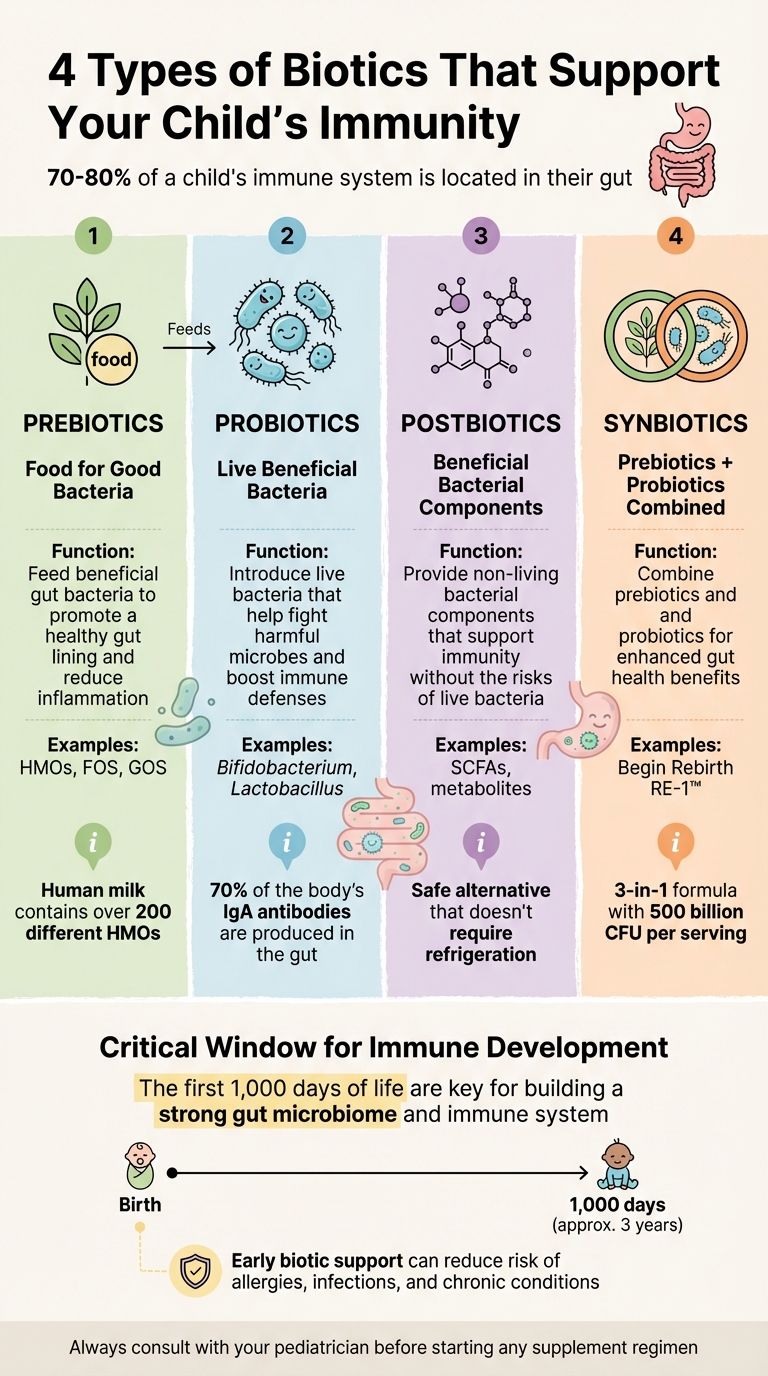
4 Types of Biotics and How They Support Children's Gut Health and Immunity
How the Gut and Immune System Work Together in Children
The Gut-Immune Connection Explained
Did you know the gut is home to more than half of the body's immune cells? It’s a powerhouse of immune activity, thanks to the Gut-Associated Lymphoid Tissue (GALT). This includes Peyer’s patches, mesenteric lymph nodes, and lymphoid follicles that line the intestines, forming a crucial part of the immune system’s defense network [9][14].
Here’s how it works: immune cells in the gut are constantly in conversation with gut bacteria, exchanging signals across the intestinal barrier. These signals are picked up by specialized receptors called Pattern Recognition Receptors (PRRs) [10][12]. The gut also has unique cells called Thetis cells, which are especially active during the first few weeks of life. These cells help produce regulatory T cells (Tregs), ensuring the immune system stays balanced. Interestingly, some immune cells even travel from the gut to the thymus, shaping a child’s adaptive immunity [11].
The first 1,000 days of life are a key period for both the gut microbiome and the immune system. During this time, the gut microbiome teaches the immune system to differentiate between friendly microbes and harmful pathogens [8][4][15]. For example, neutrophils - an essential type of immune cell - mature around the seventh day of life, just as the gut microbiome begins to expand rapidly. However, disruptions like unnecessary antibiotic use, C-section deliveries without microbial supplementation, or lack of breastfeeding during this window can have long-term effects. These disruptions are linked to a higher risk of conditions like asthma, allergies, and autoimmune diseases [8][10][4].
This intricate connection between the gut and the immune system lays the groundwork for understanding how probiotics, prebiotics, and postbiotics can strengthen a child’s immune defenses.
How Probiotics Support Immune Function
Probiotics take the gut’s immune-supporting role to the next level. These beneficial bacteria, particularly Bifidobacterium and Lactobacillus, help by outcompeting harmful microbes for nutrients and adhesion spots. They also produce antimicrobial substances like bacteriocins and hydrogen peroxide, which keep pathogens in check [3][6].
Beyond that, probiotics directly interact with immune cells like T cells, macrophages, and dendritic cells. This interaction promotes the production of anti-inflammatory cytokines and boosts secretory IgA (sIgA), a key antibody. In fact, about 70% of the body’s IgA is produced in the gut [3][6][9]. For formula-fed infants, who may miss out on some immune benefits of breast milk, probiotics like L. fermentum have proven effective in reducing the risk of infections [5].
How Prebiotics and Postbiotics Strengthen Immunity
Prebiotics, such as HMOs (human milk oligosaccharides), FOS (fructooligosaccharides), and GOS (galactooligosaccharides), act as fuel for beneficial bacteria like Bifidobacterium. They also prevent harmful pathogens from attaching to the gut lining [3][5]. Human milk itself contains over 200 different HMOs, making it the third most abundant component after lactose and fats [5]. When prebiotics are fermented in the gut, they produce short-chain fatty acids (SCFAs), which strengthen the gut lining and fine-tune immune signaling [3][13].
Postbiotics, on the other hand, include non-living microbial components and metabolites, such as SCFAs. These offer immune benefits without the risks associated with live bacteria [3][13]. They play a role in maintaining the gut’s barrier function and regulating immune responses. Together, prebiotics, probiotics, and postbiotics create a well-rounded approach to supporting immunity. For instance, Begin Rebirth RE-1™ combines all three in a 3-in-1 synbiotic formula, enriched with Human Origin Strains (HOSt™), to promote healthy immune development during those crucial early years.
Advances in Biotic Delivery for Children
How Effective Biotic Delivery Works
For biotics to work effectively, they need to survive the harsh environment of the stomach, including exposure to stomach acid, enzymes, and bile, before finally reaching the colon. To tackle this, advanced delivery systems incorporate technologies like enteric coatings and specialized matrices, which protect the biotics as they pass through the upper gastrointestinal tract [19].
"Enteric-coated capsules protect the probiotics as they travel through the harsh upper gastrointestinal tract."
Most supplements rely on freeze-dried biotics, where bacterial cells remain dormant until they are rehydrated in the gut. To ensure stability during this freeze-drying process, manufacturers use lyoprotectants. The goal is to deliver enough viable biotics to the distal gut, where they can produce short-chain fatty acids (SCFAs) that play a role in regulating the immune system [2].
Emerging technologies such as nanoencapsulation and lipid-based nanoparticles are pushing the boundaries of stability, making biotics more effective for children. According to research from Carol Davila University of Medicine and Pharmacy, these cutting-edge methods are particularly beneficial for pediatric use, as they can be customized to suit a child's physiological needs and size [33, 34].
These advancements are shaping the future of pediatric biotics, ensuring their delivery systems are both effective and tailored to meet the unique needs of children.
Biotic Formats Designed for Children
Since young children often struggle with swallowing pills, manufacturers have developed formats that are easier for them to consume. Liquid drops, for example, are perfect for infants as they can be mixed directly into breast milk or formula [18]. For toddlers, powders and sachets offer a practical option, as they can be sprinkled onto food or stirred into drinks [18].
Gummies have become a favorite among parents, with over 66% preferring this format for their children's supplements [17]. However, traditional probiotic strains like Lactobacilli and Bifidobacteria may not hold up well in gummies due to the high moisture content. To address this, manufacturers often incorporate more resilient spore-forming bacteria or stable postbiotics [19].
During the 2022–2023 cold and flu season, a 12-week study conducted by Cargill and KGK Science, led by Dr. Justin Green, examined the effects of a yeast-derived postbiotic delivered in gummy form. The study, which involved over 250 children, found that kids who consumed the postbiotic were 1.7 times less likely to use over-the-counter cold and flu medications. They also experienced noticeable reductions in symptoms like sore throats and muscle aches [17].
"It should be more straightforward to incorporate postbiotics into complex delivery forms as they don't need to be alive to exhibit their modes of action."
- Dr. Justin Green, Director of EpiCor's Scientific Affairs at Cargill [17]
These child-friendly formats ensure that biotics are not only effective but also easy to integrate into daily routines, supporting children's immune health.
Begin Rebirth RE-1™: A 3-in-1 Synbiotic Solution
Begin Rebirth RE-1™ is designed specifically to address the challenges of delivering biotics to children. This innovative product not only protects the biotics but also enhances their effectiveness to support immune health.
Begin Rebirth RE-1™ combines prebiotics, probiotics, and postbiotics into a single, convenient formula. Each sachet contains 500 billion CFU of Human Origin Strains (HOSt™), beneficial bacteria derived from healthy human microbiomes. Additionally, the sachets provide 4.5g of prebiotic fiber (GOS and inulin) to nourish these bacteria. As a "3-in-1" synbiotic, the product introduces beneficial strains, feeds good bacteria, and delivers immune-supporting metabolites right away [2].
The product's no-refrigeration design makes it especially convenient for busy families. It's also vegan, gluten-free, dairy-free, soy-free, and nut-free, accommodating a variety of dietary needs. Families can use the sachets flexibly, whether for a 7-day quick reset, a 4-week program, or a 12-week comprehensive microbiome restoration plan.
How to Choose and Use Biotic Delivery Systems for Your Child
How to Evaluate Biotic Product Quality
When selecting biotic products, strain specificity should be your top priority. Different strains offer different benefits. For instance, Lactobacillus rhamnosus GG ATCC53103 may have effects distinct from other strains within the same species[5]. Always check the label for the full strain name, including the letters and numbers that follow the species name, rather than relying on just the genus and species[21].
Next, verify the CFU (colony-forming units) count. For children, effective doses typically range between 10^7 and 10^10 CFUs, depending on the strain and the intended purpose[5]. When it comes to postbiotics (inactive biotics), accurate quantification methods like flow cytometry or quantitative PCR can ensure proper dosing[1].
Look for safety certifications such as GRAS in the U.S. or QPS in Europe, which indicate a product’s reliability[5]. Since biotics are considered food supplements, quality control standards can vary. To ensure safety and accurate CFU counts, seek products with third-party testing seals[21].
Products backed by rigorous clinical research, particularly randomized, double-blind, placebo-controlled trials in children, are ideal. For example, one study involving 64 children aged 3–17 tested a 9-strain synbiotic over 84 days. Results showed that 63.2% of the treatment group with low baseline bowel movements experienced an increase of at least one movement per week, compared to 36.8% in the placebo group[20].
"There is substantial evidence suggesting that the effectiveness of probiotics is specific regarding strain and disease."
- Leontien Depoorter, Vrije Universiteit Brussel[21]
Once you’ve identified a quality product, the next step is choosing the best format for your child.
Choosing the Right Biotic Format for Your Child
The ideal biotic format depends on your child’s age, dietary needs, and daily routine. For infants, liquid drops are often the easiest option since they can be mixed directly into breast milk or formula[5]. Toddlers and older children may benefit from powders or sachets that can be stirred into food or drinks[5].
If your child has food allergies, carefully review the product label. For children with cow’s milk protein allergy (CMPA), biotics delivered in extensively hydrolyzed formulas (eHCF) are a good option[5][13]. Products like Begin Rebirth RE-1™ cater to diverse dietary requirements.
Consider whether your child needs a structured reset or ongoing maintenance. A structured reset is often helpful after a course of antibiotics or an illness, while ongoing maintenance supports daily immune and gut health. Begin Rebirth RE-1™ offers flexible programs, including 7-day, 4-week, and 12-week resets, each delivering 500 billion CFU per sachet, ensuring consistent and high-quality biotic support.
Consistency is just as important as choosing the right product.
Creating a Daily Biotic Routine
Consistency is crucial because most probiotic strains don’t stay in the gut once supplementation ends. For example, levels of B. lactis Bb-12 in stool decrease after use stops[5]. For chronic issues like constipation, daily use for at least 84 days may be necessary to see noticeable benefits[20].
Timing also plays a role, especially for acute conditions. For infectious diarrhea, start biotics as soon as possible - ideally within 72 hours of symptoms appearing[21]. To prevent antibiotic-associated diarrhea, begin supplementation alongside the antibiotic and continue for the full course of treatment[5]. Strains like Lactobacillus rhamnosus GG and Saccharomyces boulardii, when used within 48 hours of starting antibiotics, can help improve microbial diversity and reduce gastrointestinal symptoms[7].
Minor side effects like gas or bloating may occur but usually resolve within a few days.
Here’s a quick guide to pediatric dosing based on current research:
| Usage Type | Primary Goal | Typical Dosage/Duration | Example Strains |
|---|---|---|---|
| Structured Reset | Managing acute diarrhea or post-antibiotic recovery | High dose (around 10^10 CFU for 5–7 days) | Lactobacillus rhamnosus GG, Saccharomyces boulardii |
| Ongoing Maintenance | General immune support and gut health | Lower daily dose (10^6–10^8 CFU) indefinitely | B. lactis Bb-12, L. reuteri DSM 17938 |
The first 1–24 months of life are especially important for supporting the microbiome and immune system[16]. During cold and flu season, maintaining a consistent daily biotic routine can provide an extra layer of immune protection for your child.
sbb-itb-1bbfe7f
Additional Ways to Support Your Child's Immunity
The Role of Diet in Gut and Immune Health
A fiber-rich diet is a cornerstone of a healthy gut and strong immunity. Kids need about 21 to 38 grams of fiber daily to maintain a diverse gut microbiome. To meet these needs, try including foods like legumes, whole grains, avocados, sweet potatoes, berries, leafy greens, nuts, and seeds in their meals. These foods not only fuel beneficial gut bacteria but also contribute to overall immune health [23].
Certain nutrients are equally important for supporting immunity. For instance, offering oily fish like salmon or mackerel once a week provides DHA omega-3 fatty acids, which play a role in regulating both innate and adaptive immune responses [22]. Zinc, vitamin C, and iron are also key players. Foods like red meat, whole grains, nuts, cheese (for zinc), citrus fruits, bell peppers, broccoli (for vitamin C), and meat, eggs, legumes, and leafy greens (for iron) help support immune cells like natural killer cells and lymphocytes [22].
"Nutrition counselling should start early in life, emphasizing the importance of foods with immune-modulating properties, promoting healthy eating."
- Elvira Verduci, Department of Pediatrics, Ospedale dei bambini V. Buzzi [22]
Hydration is another simple yet essential factor. Children should drink 4–6 cups of water daily to aid digestion and maintain mucus production, which helps keep the body's defenses in check [23].
While diet lays the groundwork, lifestyle habits also play a major role in immunity.
Lifestyle Habits That Boost Immunity
Physical activity is a natural way to strengthen the immune system. Kids should aim for about 60 minutes of daily exercise, while older children and teens can benefit from 150 to 270 minutes of moderate-to-high-intensity activity per week. Regular movement not only promotes gut diversity but also improves blood flow, helping immune cells circulate more effectively [40,43,46].
Sleep is another critical factor. Younger children need 7–9 hours of rest, while teens require 8–10 hours to allow for cellular repair and immune support [40,47]. Not getting enough sleep can weaken immune cell function, making it easier to catch viruses like the common cold [24].
"Sleep helps the body replenish and repair. For example, if there's irritation in an airway, sleep supports making cells that repair it."
- Elizabeth Lippner, MD, Attending Physician in Allergy and Immunology, Lurie Children's [24]
Stress management is equally important. High stress levels can disrupt hormonal balance, weakening immune responses. Teaching kids simple techniques like deep breathing or meditation can help manage stress and even reduce digestive issues like heartburn. Additionally, spending time outdoors and interacting with pets can encourage gut bacteria diversity, which has been linked to a lower risk of food allergies [4,40].
Incorporating Biotics Into Daily Routines
Adding biotics - prebiotics, probiotics, and postbiotics - to your child’s routine can further support their immune system. Pairing biotic supplements with fiber-rich meals can maximize their impact. For example, mixing Begin Rebirth RE-1™ into breakfast with whole grain toast and berries allows the fiber to work in harmony with the biotics [39,6].
For easy integration, mix probiotic powders into foods like yogurt, avocado, or applesauce. Just ensure the food is at or below body temperature to maintain the probiotics' effectiveness [42,45]. For infants, biotics can be blended into breast milk or formula during regular feedings [5].
Combining biotics with a nutrient-dense diet and active habits creates a comprehensive approach to strengthening immunity. Simple practices like regular handwashing - before meals, after using the bathroom, or when sick - also play a role in keeping kids healthy. Supervised outdoor play and early interactions with pets can further enhance microbial diversity, potentially lowering the risk of allergies [4,43,46].
Why Probiotics are important for your child’s Immune system- Full video
Conclusion: Strengthening Children's Immunity with Biotic Delivery
Your child’s immunity is closely tied to gut health. With 70% of immune cells located in the gastrointestinal tract, this connection highlights the critical role of gut health in overall immunity [17]. Supporting this relationship through targeted biotic delivery systems can make a significant difference.
The first three years of life are especially important for establishing a strong microbial foundation. During this period, consistent biotic support - whether through breastfeeding, HMO-enriched formula, or high-quality synbiotic products like Begin Rebirth RE-1™ - helps build a resilient immune system. This early support can reduce the risk of infections, allergies, and chronic inflammation later in life [11][4].
When choosing biotic products, consistency and quality matter. Look for options with clearly identified strains (such as Lactobacillus rhamnosus GG), adequate CFU counts, and solid clinical evidence [5][25]. For instance, a study involving 256 children aged 4–12 found that daily postbiotic supplementation for 84 days reduced the likelihood of needing cold and flu medications by 1.7 times compared to a placebo group [27]. This highlights the importance of daily use, even when your child isn’t sick.
To maximize the benefits of biotic products, pair them with healthy habits. A diet rich in fiber, regular physical activity, and adequate sleep all contribute to stronger immunity. Using antibiotics sparingly also helps maintain a balanced gut microbiome. Together, these practices and biotic delivery systems create a powerful foundation for long-term immune health.
As researchers emphasize:
"Childhood represents a window of opportunity, where the action of the favourable microbiota translates into protection against specific pathologies that manifest in later ages."
- Daniela Morniroli et al., University of Milan [26]
FAQs
What’s the difference between prebiotics, probiotics, and postbiotics in supporting children’s immunity?
Prebiotics are a type of non-digestible fiber that acts as food for the beneficial bacteria living in your gut. By fueling these bacteria, prebiotics encourage the production of short-chain fatty acids (SCFAs), which play a key role in strengthening the gut barrier, calming inflammation, and aiding the development of immune tissues. These functions are especially important for helping children build strong defenses against infections.
Probiotics, on the other hand, are live microorganisms such as Lactobacillus and Bifidobacterium strains. When introduced to the gut, they temporarily settle in and interact with immune cells. This interaction boosts antibody production and releases antimicrobial compounds, which can reduce the risk of illnesses like diarrhea and allergies.
Postbiotics are the bioactive compounds that result from probiotic fermentation, including SCFAs and other metabolites. These compounds help maintain immune health by reinforcing the gut barrier, reducing inflammation, and improving immune system regulation. Postbiotics are particularly helpful for children who may not tolerate live probiotics, offering a safe and effective way to support their immunity.
What should I look for in a biotic delivery system for my child?
When selecting a probiotic delivery system for your child, it’s important to consider their age and developmental stage. For infants (0–12 months), lower doses - ranging from 100 million to 1 billion CFU per day - are usually sufficient. These are best delivered in forms like liquid drops or powders that can easily mix with breast milk or formula. As children grow into the toddler stage (1–3 years), they can tolerate higher doses, between 1 to 10 billion CFU daily, often available as chewable tablets or powders that blend well with solid foods.
You’ll also want to focus on the product’s composition. Some advanced options combine probiotics with prebiotics (which nourish good bacteria) and postbiotics (compounds that can directly support immunity). Look for clinically studied strains like Lactobacillus reuteri for digestive comfort or Bifidobacterium infantis to aid milk digestion. It’s equally important to choose a delivery system designed to protect probiotics as they pass through the stomach’s acidic environment.
Finally, safety and effectiveness should be top priorities. Opt for products that are backed by research, offer sufficient CFU counts, and maintain stability during storage. And, before starting any new supplement, consult your pediatrician - especially if your child has specific health conditions or is currently taking antibiotics.
What’s the best way to add biotics to my child’s daily routine?
Incorporating biotics into your child’s daily routine doesn’t have to be a challenge. The key is to pick the right type and dosage based on their age. For infants, a small dose of probiotics mixed into breast milk or formula is a great starting point. Toddlers may benefit from slightly higher doses, often available in chewable tablets or powder form. For older kids, more advanced options like synbiotic blends can be a good fit.
Timing matters too. Offer biotics after a main meal, like breakfast or dinner, to enhance absorption and make it easier to stick to a daily schedule. Choose a format that works for your child - mix powders into their favorite drinks or foods, or dissolve sachets in water for quick and easy consumption. Before starting any supplement, check in with your pediatrician, especially if your child has specific health needs. Pairing biotics with a diet rich in fiber and plenty of water can further support their gut health.