


Only 5% of Americans meet daily fiber needs, leaving most people far below the recommended 25–38 grams per day. This shortfall disrupts gut health, leading to digestive issues, inflammation, and increased risk of diseases like colon cancer, heart disease, and diabetes. Urban lifestyles - packed with processed foods and busy schedules - make it harder to get enough fiber. But small changes, like adding oats, beans, fruits, and whole grains, can help close the gap.
Key Takeaways:
- Fiber feeds gut bacteria, producing SCFAs that strengthen digestion and reduce inflammation.
- Low fiber intake is linked to constipation, IBS, "leaky gut", and chronic diseases.
- Boost fiber with simple swaps: whole-wheat bread, brown rice, lentils, and apples.
- Gradually increase fiber intake to avoid bloating and drink plenty of water.
For quick results, pairing a fiber-rich diet with microbiome supplements like Begin Rebirth RE-1™ can help restore balance and ease gut discomfort in just 7 days.
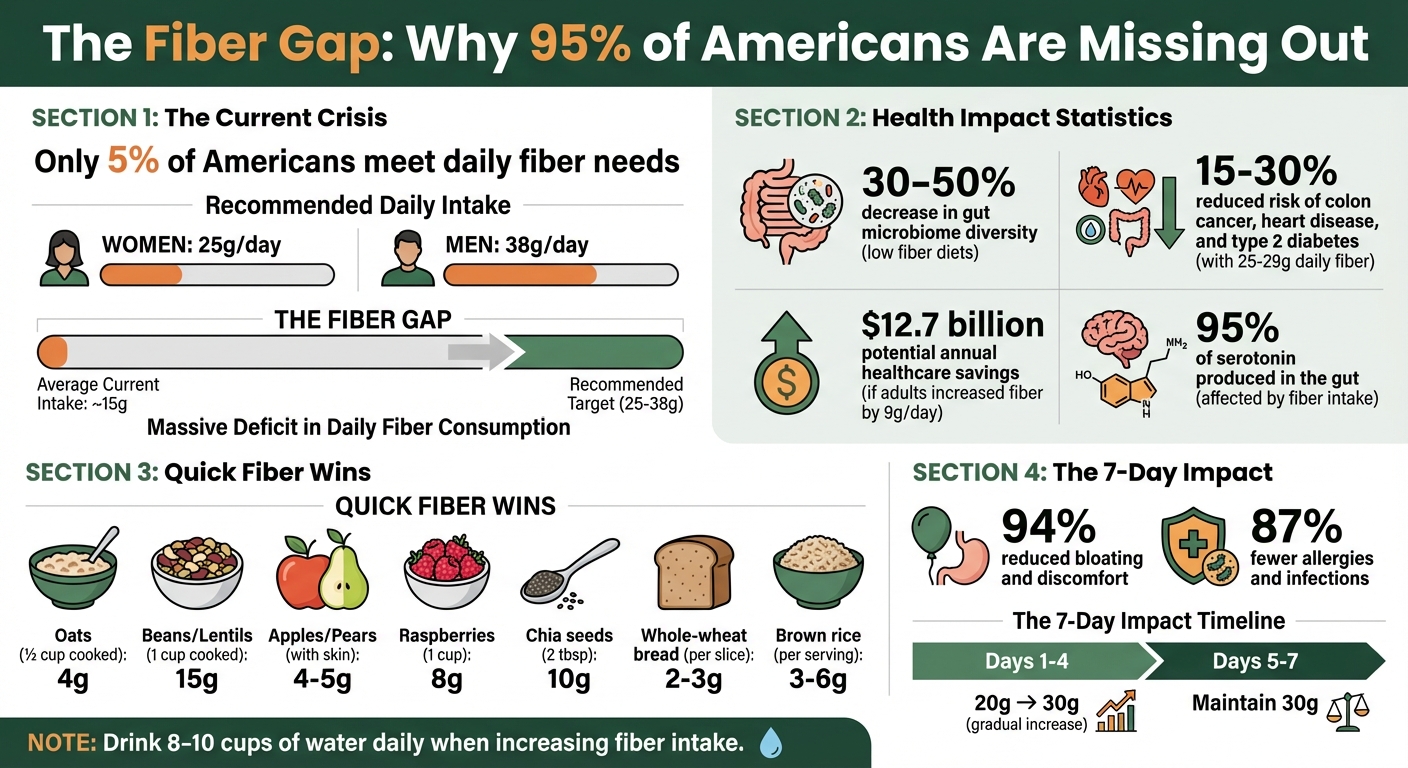
Daily Fiber Intake: Health Benefits and Disease Risk Reduction Statistics
Health Impacts of Low-Fiber Diets
Gut Microbiome Imbalances
When you skimp on fiber, your gut bacteria lose their main energy source, and that sparks a chain reaction of problems. One of the first issues? A sharp drop in microbial diversity. Research shows that people on low-fiber diets see their gut microbiome diversity shrink by 30-50% compared to those who eat enough fiber[2][4]. This loss of diversity weakens critical gut functions. Beneficial bacteria, like Bifidobacteria, decline, while harmful bacteria, such as Proteobacteria, thrive. This imbalance, or dysbiosis, compromises the gut barrier, leading to a condition often called "leaky gut", where the intestinal lining becomes more permeable[2][4].
A lack of fiber also reduces the production of short-chain fatty acids (SCFAs), which are crucial for maintaining a healthy gut lining. Without enough SCFAs, the tight junctions in the gut lining weaken, and inflammation levels climb[1][2][4]. The effects are hard to miss: constipation, bloating, irregular bowel movements, excessive gas, and abdominal discomfort often become daily struggles[2][3]. These local gut issues can also trigger larger health problems.
Other Health Risks
The trouble doesn’t stop with digestion - low-fiber diets can lead to serious systemic health risks. Studies show that getting 25-29 grams of fiber daily can cut the risk of colon cancer, heart disease, and type 2 diabetes by 15-30%[2]. On the flip side, diets lacking fiber are linked to higher rates of bowel cancer, diverticulitis, irritable bowel syndrome (IBS), stroke, hypertension, obesity, high cholesterol, and even breast cancer[2][3][4]. The financial impact is staggering too: if adults in the U.S. increased their fiber intake by just 9 grams per day - reaching 25 grams - it could save $12.7 billion annually in healthcare costs related to constipation alone[4].
Chronic inflammation is another big concern. With less SCFA production, the body struggles to suppress pro-inflammatory cytokines, leading to persistent low-grade inflammation[2][4]. This ongoing inflammation weakens the immune system by damaging gut-associated lymphoid tissue, leaving people more vulnerable to infections and autoimmune diseases[2][4]. The gut-brain connection also takes a hit. Dysbiosis disrupts serotonin production (95% of serotonin is made in the gut) and interferes with vagus nerve signaling. The result? Increased anxiety, depression, and brain fog[2][4].
The science backing these connections is hard to ignore. Burkitt’s hypothesis, revisited in The Lancet Gastroenterology & Hepatology, highlights how low-fiber diets, common in Western lifestyles, contribute to higher rates of coronary heart disease, obesity, diabetes, and cancers like colon, liver, and breast cancer[2]. In contrast, regions with traditionally high-fiber diets see far fewer cases of these diseases[3]. Yet, only 5% of Americans meet the recommended daily fiber intake - 25 grams for women and 38 grams for men. Public health experts now view this as a pressing crisis[4].
How Fiber Restores Gut Balance
Soluble and Insoluble Fiber: Two Types, Different Benefits
Adding fiber back into urban diets can work wonders for gut health. Both soluble and insoluble fibers bring unique benefits to the table. Soluble fiber dissolves in water, forming a gel-like substance that slows digestion. This process helps lower cholesterol levels and keeps blood sugar steady. Once it reaches the large intestine, gut bacteria ferment the soluble fiber, creating compounds that nourish the gut lining. You can find soluble fiber in foods like oats, barley, beans, lentils, peas, apples, pears, and berries.
In contrast, insoluble fiber doesn’t dissolve in water and moves through the digestive system mostly unchanged. Its main job is to add bulk to stool, speeding up its passage and promoting regular bowel movements. This can ease pressure in the colon, potentially lowering the risk of issues like diverticular disease and hemorrhoids. Foods rich in insoluble fiber include whole wheat bread, brown rice, wheat bran, nuts, seeds, carrots, cucumbers, and tomatoes. A balanced diet that combines both fiber types - think oatmeal with berries for breakfast, a whole-grain sandwich for lunch, and bean chili with brown rice for dinner - supports a diverse gut microbiome. Together, soluble and insoluble fibers encourage the production of short-chain fatty acids (SCFAs), which are essential for gut health. [2][3][4]
Short-Chain Fatty Acids (SCFAs) and Microbiome Benefits
When gut bacteria ferment soluble fiber, they produce SCFAs like acetate, propionate, and butyrate. Butyrate, in particular, serves as a key energy source for colon cells, fortifies the gut barrier, and helps regulate immune responses. SCFAs also play a role in stabilizing blood sugar and contribute about 14% of the body’s energy needs. A fiber-rich diet that promotes SCFA production has been linked to a reduced risk of bowel disorders, cardiovascular disease, type 2 diabetes, and even certain cancers. [2][3][4]
As your fiber intake increases, your gut microbiome begins to shift, often within just a few days. While you might experience mild bloating or gas initially as fermentation ramps up, these effects typically fade with time. Gradually increasing fiber can lead to better digestion, steadier energy levels, and a greater feeling of fullness after meals.
A High-Fiber Diet Boosts Health
sbb-itb-1bbfe7f
Practical Ways to Increase Fiber Intake
Boosting your fiber intake doesn't have to be complicated. With a few practical tweaks, you can easily work more fiber into your daily meals.
Top Fiber-Rich Foods for Busy Urban Life
Fiber-rich foods can be both accessible and affordable. Take oats, for example - just half a cup of cooked oats delivers about 4 grams of fiber. They're perfect for a quick breakfast; simply add water or milk and heat. Beans and lentils are another powerhouse, offering around 15 grams of fiber per cooked cup. Rinse canned versions to reduce sodium, and toss them into salads, soups, or grain bowls for a hearty boost.
For on-the-go snacks, apples and pears (leave the skin on!) provide 4–5 grams of fiber each. Raspberries lead the berry pack with 8 grams per cup, while chia seeds pack a punch with 10 grams in just two tablespoons. Stir them into yogurt or smoothies - they’ll form a gel that promotes fullness. Everyday swaps can also make a difference: choose 100% whole-wheat bread (2–3 grams per slice) instead of white, or opt for brown rice over white rice (3–6 grams per serving). These simple changes can add 8–10 grams of fiber to your meals without much effort.
These options make it easy to incorporate fiber into even the busiest schedules.
Easy Strategies for a Hectic Lifestyle
Managing a busy schedule? A little planning can go a long way. Set aside time on Sundays to prepare a big pot of lentil soup or cook a batch of brown rice. Portion these into containers for quick, fiber-packed meals throughout the week. Keep your desk drawer stocked with snacks like almonds, dried fruit, and oatmeal packets for those days when you're eating on the go. Upgrade your everyday staples by choosing whole-grain pasta, bagged salads, pre-cut vegetables, or frozen mixed veggies - they’re time-savers and fiber-rich.
When increasing your fiber intake, go slow. Add about 5 grams daily each week to let your gut adjust and avoid bloating or gas. Stay hydrated by drinking 8–10 cups of water daily, as fiber absorbs water and proper hydration helps prevent constipation. Aim to hit the recommended 25–38 grams of fiber daily (25 grams for women, 38 grams for men) and track your progress until it becomes second nature.
Fiber on a budget? No problem. Dried beans cost roughly $1 per pound and yield multiple servings. Oats are just $0.20 per serving, and seasonal apples or frozen berries are often cheaper than processed snacks. Shop bulk bins for nuts and seeds, look for end-of-day deals at farmers' markets, and remember that canned and frozen produce are just as fiber-rich as fresh. Even small changes can make a big difference for your gut health over time.
7-Day Fiber Reset with Begin Rebirth RE-1™
Kickstart your gut health with a 7-day plan that combines fiber-packed meals and targeted microbiome support. This reset is designed to restore balance to key bacterial strains often affected by the challenges of urban living.
Daily Meal Plan Overview
This plan focuses on consuming 25–30 grams of fiber daily, a level linked to reducing the risk of colon cancer and heart disease by 15–30% [2]. Each day includes a mix of soluble and insoluble fibers through three meals and snacks, gradually increasing fiber intake from 20 g on Day 1 to 30 g by Day 4 to avoid digestive discomfort.
- Day 1: Start with ½ cup oatmeal and ½ cup raspberries (≈10 g fiber), enjoy a lentil and vegetable salad for lunch (≈12 g fiber), and finish with a brown rice stir-fry featuring broccoli and carrots (≈8 g fiber). Total: ~30 g fiber.
- Day 2: Focus on insoluble fiber with whole-wheat toast topped with almond butter and an apple (≈9 g fiber), a brown rice bowl with black beans and peppers (≈11 g fiber), and roasted Brussels sprouts paired with other fiber-rich vegetables (≈10 g fiber).
From Days 3–7, rotate similar meals, incorporating ingredients like chickpeas, navy beans, quinoa, barley, pears, and berries. Snack options include almonds, chia seed pudding, or raw veggies with hummus. Keep track of your fiber intake and drink 8–10 cups of water daily to help fiber do its job effectively. This structured plan bridges the fiber gap common in urban diets, laying the groundwork for a healthier microbiome.
To further support gut health, targeted microbiome solutions play a key role.
Begin Rebirth RE-1™: A Gut Health Game-Changer
While dietary fiber helps nourish your existing gut bacteria, it can’t replenish the critical bacterial strains that urban stressors often deplete. Research shows that up to 50% of the human microbiome has been disrupted over the last century, leaving 80% of city dwellers deficient in essential Human Origin Strains (HOSt™). Begin Rebirth RE-1™ fills this gap with a clinically supported 3-in-1 formula, combining prebiotics, probiotics, and postbiotics in a single daily sachet.
Each serving provides 500 billion CFU of seven Human Origin Strains, along with 4.5 g of prebiotic fiber (galactooligosaccharide and inulin) to nourish both new strains and existing gut flora. This powerful blend promotes the production of short-chain fatty acids, which help regulate inflammation and boost immune resilience. The advanced Lyosublime™ delivery system ensures quick, refrigeration-free absorption from mouth to colon.
For the best results, mix one sachet with water each morning on an empty stomach during the reset. Clinical studies have shown impressive outcomes: 94% of participants experienced reduced bloating and abdominal discomfort, while 87% reported fewer allergies and infections within just 7 days [1]. The 7-Day Reset pack, priced at $79 for 7 servings, is designed for rapid relief and immediate microbiome support. Extended protocols (4-week and 12-week plans) are also available for long-term benefits. With a 4.9 out of 5-star rating from users and endorsements from 223 clinicians, RE-1™ actively restores the foundational strains that diet alone can’t replenish.
"Dual fibers and probiotic strains improve digestion and ease bloating." – Verified clinician, Family Medicine
Pairing RE-1™ with this fiber-rich meal plan creates a complete reset. While dietary fiber feeds your gut bacteria, RE-1™ ensures the right strains are there to thrive.
Conclusion: Prioritizing Fiber for Gut Health
Did you know that only about 5% of Americans consume the recommended 25–38 grams of fiber daily? [4] This shortfall is especially common in urban areas, where diets often revolve around processed and convenience foods. Fiber is essential for feeding beneficial gut bacteria, which produce SCFAs (short-chain fatty acids) that help maintain the gut lining, reduce inflammation, and support healthy digestion.
A lack of fiber in your diet can lead to a host of health problems, including constipation, hemorrhoids, IBS, heart disease, obesity, type 2 diabetes, and even certain cancers. Studies suggest that eating 25–29 grams of fiber daily can reduce the risk of colon cancer, heart disease, and diabetes by 15–30% [2][3][4].
Incorporating fiber-rich foods into your meals is a great place to start. Think oatmeal, beans, lentils, whole-grain breads, brown rice, vegetables, fruits, nuts, and seeds [2][3][4]. For an added boost, targeted microbiome support can amplify these benefits. Begin Rebirth RE-1™ is a clinically studied 3-in-1 synbiotic that combines 500 billion CFU of Human Origin Strains (HOSt™) with prebiotics and postbiotics. While fiber provides ongoing nourishment for gut microbes, Begin Rebirth RE-1™ offers a fast-acting microbiome reset through structured protocols lasting 7 days, 4 weeks, or 12 weeks. This can help improve bowel regularity, ease bloating, and enhance overall gut comfort.
To maintain gut health over the long term, aim for at least 25 grams of fiber daily for women and 38 grams for men. Gradually increase your intake to avoid discomfort, and pair it with plenty of water. Small changes can make a big difference - swap white bread for whole wheat, toss black beans into your tacos, or start your day with a bowl of oatmeal.
Building a healthy gut is about making intentional, daily choices. A fiber-focused diet, paired with microbiome support like Begin Rebirth RE-1™, can set you on the path to better gut health. Start with one simple fiber upgrade at your next meal, and if you're ready for a more structured plan, consider the 7-Day Fiber Reset mentioned earlier. Your gut - and your overall health - will thank you.
FAQs
What’s the best way to add more fiber to my diet without upsetting my stomach?
To boost your fiber intake without upsetting your digestion, start slow. Add just 1–2 grams of fiber per day and gradually increase over a week or two. This gradual approach allows your digestive system to adapt more comfortably. Don’t forget to drink plenty of water - staying hydrated is key to helping fiber pass through your system smoothly.
You can ease into this change by slowly incorporating fiber-rich foods like fruits, vegetables, legumes, and whole grains into your meals. If you need extra help during this adjustment, consider using products aimed at supporting gut health.
What’s the difference between soluble and insoluble fiber, and why do we need both?
Soluble and insoluble fiber each play a vital role in keeping your gut healthy, though they work in different ways. Soluble fiber dissolves in water, forming a gel-like consistency. This helps balance blood sugar levels, lower cholesterol, and feed the beneficial bacteria in your gut. Insoluble fiber, on the other hand, doesn’t dissolve in water. Instead, it adds bulk to your stool, making it easier to pass and reducing the likelihood of constipation.
When combined, these two types of fiber contribute to a well-functioning digestive system, support a diverse gut microbiome, and enhance overall health. To get the most out of fiber, aim to include a mix of fiber-rich foods in your meals - think fruits, vegetables, whole grains, and legumes.
How does Begin Rebirth RE-1™ work alongside a fiber-rich diet to support gut health?
Begin Rebirth RE-1™ is designed to complement a fiber-rich diet by introducing clinically tested Human Origin Strains (HOSt™) that support gut balance and aid digestion. This innovative 3-in-1 formula blends prebiotics, probiotics, and postbiotics to encourage microbial diversity and strengthen gut barrier function.
Each serving includes 4.5g of fiber sourced from prebiotics like GOS and inulin. These ingredients not only aid in the production of beneficial metabolites but also amplify the benefits of dietary fiber. Together, they work to improve gut health, enhance immune response, and tackle common concerns like dysbiosis, making it a valuable addition to a well-rounded diet.