


Prebiotic foods can help manage stress by improving gut health and supporting the gut-brain connection. These non-digestible fibers feed beneficial gut bacteria, leading to the production of short-chain fatty acids (SCFAs) that influence stress regulation. Research highlights their role in reducing cortisol levels, promoting serotonin production, and enhancing emotional well-being.
Key Takeaways:
- Gut-Brain Axis: Prebiotics impact stress by enhancing communication between the gut and brain through neural, hormonal, and immune pathways.
- Cortisol Reduction: Studies show prebiotics like galactooligosaccharides (GOS) lower cortisol, the stress hormone, and improve mood.
- Serotonin Boost: Around 95% of serotonin, a mood-regulating chemical, is produced in the gut. Prebiotics help beneficial bacteria convert tryptophan into serotonin.
- Food Sources: Onions, leeks, bananas, apples, oats, and legumes are rich in prebiotics and linked to reduced anxiety.
- Diet Impact: A "psychobiotic diet" with 6–8 servings of prebiotic-rich foods and 2–3 servings of fermented foods can lower perceived stress by 32% in just four weeks.
By incorporating prebiotic-rich foods or supplements into your routine, you can support a healthier gut and better manage stress.
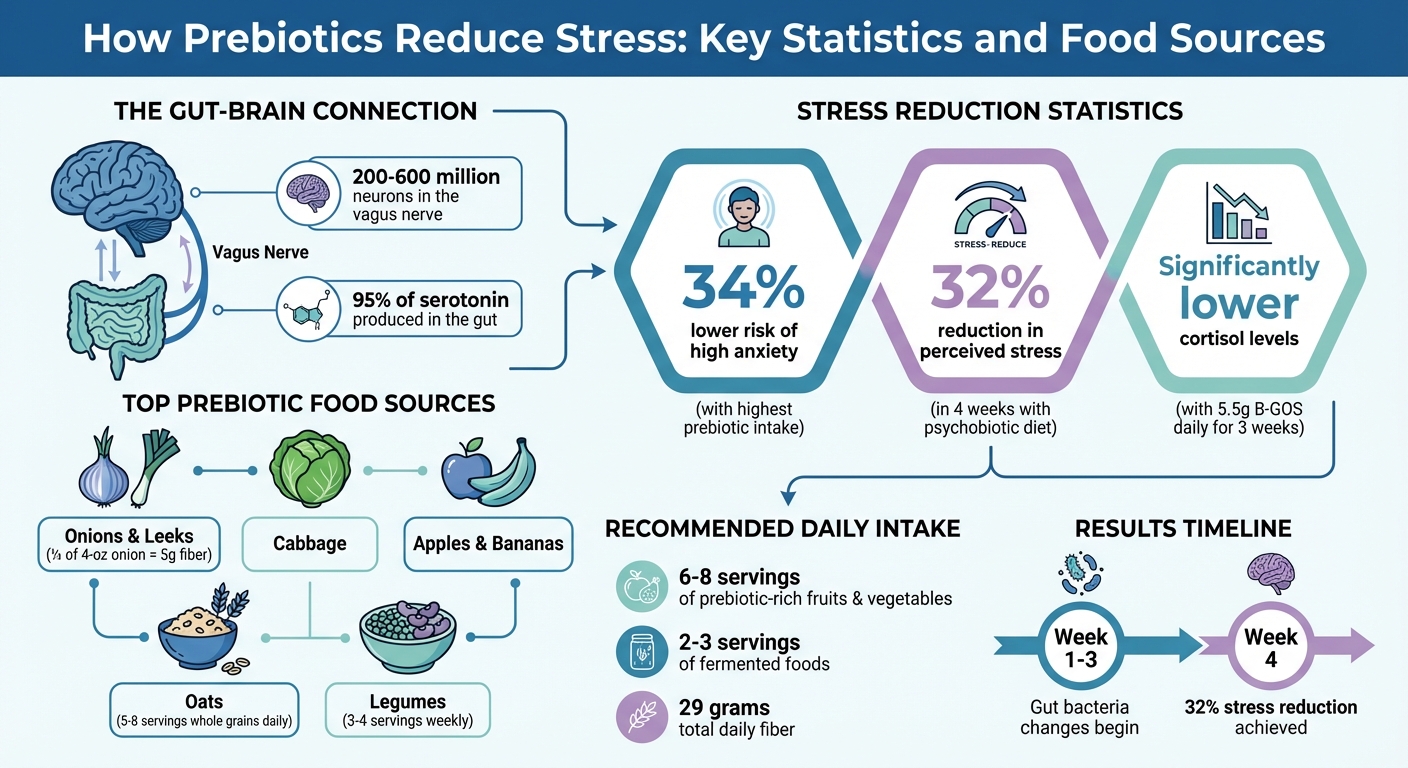
How Prebiotics Reduce Stress: Key Statistics and Food Sources
Prebiotics and Mood: Exploring the Gut-Brain Axis
How Prebiotics Affect Stress Through the Gut-Brain Axis
The gut-brain axis operates through four main pathways: neural, endocrine, metabolic, and immune systems [8][9]. A key player in this connection is the vagus nerve, which links the gut to the brain and contains an impressive 200–600 million neurons [8]. When you consume prebiotic fibers, beneficial gut bacteria like Bifidobacterium ferment these fibers into short-chain fatty acids (SCFAs). These SCFAs activate G-protein coupled receptors, influencing brain function and reducing inflammation.
Prebiotics also impact neurotransmitter activity in the gut. Did you know that around 95% of the body’s serotonin - an essential molecule for mood regulation - is produced in the gut [11]? Gut bacteria play a major role in determining whether tryptophan, an amino acid, is converted into serotonin or into kynurenine, a compound linked to inflammation and depression [11]. By feeding beneficial microbes, prebiotics help steer this process toward serotonin production, supporting a healthier gut-brain connection.
Prebiotics and Cortisol Levels
Cortisol, often referred to as the "stress hormone", is released by the hypothalamic-pituitary-adrenal (HPA) axis during stress. A study conducted in May 2015 by Dr. Kirsten Schmidt at the University of Oxford explored how prebiotics influence cortisol levels. In the study, 45 healthy participants consumed 5.5 grams of Bimuno®-galactooligosaccharides (B-GOS) daily for three weeks. The results? The B-GOS group showed a significantly lower salivary cortisol awakening response compared to those taking a placebo or fructooligosaccharides (FOS) [10].
"The suppression of the neuroendocrine stress response and the increase in the processing of positive versus negative attentional vigilance in subjects supplemented with B-GOS are consistent with previous findings of endocrine and anxiolytic effects of microbiota proliferation." – Dr. Kirsten Schmidt, University of Oxford [10]
Interestingly, B-GOS also reduced attention to negative stimuli, suggesting an anxiety-reducing effect. On the other hand, FOS did not show any notable impact on cortisol levels or emotional processing [3][7].
Gut Bacteria Changes and Stress Response
A June 2021 study from the Icahn School of Medicine at Mount Sinai examined the effects of a synbiotic - a combination of probiotics and prebiotics - on mice under chronic stress. This synbiotic included Lactobacillus plantarum, Bifidobacterium longum, and a prebiotic grape seed extract. The results were promising: the synbiotic normalized gut microbiota diversity and reduced the expression of inflammatory genes (Ccl2 and Ccl5) that attract immune cells to the brain during stress [4]. Notably, the synbiotic was more effective at preventing stress-related behavioral changes than using prebiotics or probiotics alone.
Prebiotics also strengthen the intestinal barrier, a critical component of the stress response. By maintaining the integrity of tight junctions in the gut lining, they help prevent neuroinflammation, which can contribute to anxiety and depression [8][9]. This highlights their potential role in promoting emotional well-being by supporting a healthier gut environment.
What Research Shows About Prebiotics and Stress
2024 Study: Prebiotics and Anxiety
A South Korean study conducted between 2019 and 2021 examined 4,317 adults and revealed a striking connection between prebiotic intake and anxiety levels. Participants with the highest consumption of prebiotics were 34% less likely to experience high anxiety, with an odds ratio of 0.66. This trend was consistent across both men and women [12].
2017 Study: Prebiotics and Chronic Stress Recovery
Animal research has added depth to our understanding of how prebiotics can aid in stress recovery. In 2017, studies on stressed mice showed that supplementing with fructooligosaccharides (FOS) and galactooligosaccharides (GOS) reduced behaviors associated with anxiety and depression. A follow-up study in 2020 offered a biological explanation, demonstrating that short-chain fatty acids produced in the gut could dampen cortisol responses, which are often heightened during stress [2].
Current Clinical Trials on Prebiotic Blends
Recent clinical trials have provided practical insights into how prebiotics support stress management. For instance, the 2023 "Gut Feelings" trial highlighted that a diet rich in prebiotics significantly reduced mood disturbances, improved sleep quality, and lowered stress levels more effectively than diets focused on probiotics or synbiotics [5]. Another 2023 study, focusing on a psychobiotic diet, showed a 32% reduction in perceived stress over four weeks, compared to a 17% reduction in the control group. This research underscores the role of microbial stability in buffering stress [1][6]. Together, these findings strengthen the connection between prebiotic consumption and better stress management.
sbb-itb-1bbfe7f
Prebiotic Foods Supported by Research
Best Food Sources of Prebiotics
Certain prebiotic-rich foods have been linked to better stress management. Research highlights onions, leeks, cabbage, apples, bananas, oats, and legumes as key components of what scientists call a "psychobiotic diet" [1]. These foods are packed with fibers that nourish beneficial gut bacteria, which play a role in regulating the body's stress response.
Vegetables like onions and leeks stand out in particular. A large-scale study found that individuals who consumed the highest amounts of prebiotic-rich vegetables had a 34% lower risk of experiencing high anxiety. Raw, non-salted, and non-starchy vegetables showed the strongest connection to reduced anxiety levels [12]. Alongside vegetables, whole grains and legumes are also essential for maintaining gut health.
For whole grains and legumes, the recommendation is to include 5–8 servings of whole grains daily - such as oats and rye - and 3–4 servings of legumes each week [1]. These foods are rich in compounds like arabinoxylan oligosaccharides and galacto-oligosaccharides, which are associated with lowering cortisol levels. One study even demonstrated that consuming 10 grams of fermented arabinoxylan oligosaccharides significantly reduced cortisol release during stressful situations [2].
Additionally, fruits like apples and bananas contribute to a well-rounded prebiotic intake. Combining fruits with vegetables, aiming for 6–8 servings of these prebiotic-rich foods each day, can help achieve a total fiber intake of about 29 grams daily. This level of fiber has been linked to a 32% reduction in perceived stress over a four-week period [1][6].
The effectiveness of different prebiotic fibers can vary, underscoring the importance of diverse dietary choices for stress support. By incorporating a variety of these foods into your meals, you can help strengthen the gut-brain connection and improve your resilience to stress.
Adding Prebiotics to Your Daily Routine
Combining Prebiotics with Synbiotics
Pairing prebiotics with probiotics creates a powerful synbiotic effect that supports the growth of beneficial gut bacteria. Research shows that prebiotics like FOS and GOS can nourish strains such as Bifidobacterium longum, which may help reduce cortisol levels and improve mood [14][7].
Begin Rebirth RE-1™ offers a comprehensive synbiotic formula, combining prebiotics, probiotics, and postbiotics into one solution. Each serving delivers 500 billion CFU and 4.5 grams of prebiotic fiber (including GOS and inulin), designed to quickly balance the gut microbiome during stressful periods. The Human Origin Strains (HOSt™) in this formula work synergistically with the prebiotic fiber to support the gut-brain axis, offering targeted stress relief. This approach underscores the importance of gut-brain health and highlights how mindful dietary choices can enhance stress resilience.
For those incorporating prebiotic foods into their meals, pairing them with fermented options like kefir or sauerkraut can amplify benefits. Aim for 2–3 servings of fermented foods alongside 6–8 servings of prebiotic-rich vegetables and fruits daily [1]. This combination promotes a balanced gut microbiome and supports stress management.
Here are some simple dietary swaps to help you increase your prebiotic intake.
Simple Ways to Eat More Prebiotics
Besides using synbiotic supplements, small changes to your meals can significantly boost your prebiotic consumption.
Start with easy swaps. For instance, try chicory root as a caffeine-free coffee substitute - it’s 68% inulin and supports digestion [15]. Incorporate raw garlic and onions into dressings or salsas; just half of a 4-ounce onion provides 5 grams of prebiotic fiber [13].
For breakfast, enhance your oatmeal or yogurt with cocoa powder, ground flaxseeds, or sliced bananas. Slightly green bananas are especially beneficial because they contain more resistant starch [15]. Snack on apple slices, jicama sticks, or avocado - these are packed with prebiotic fibers like pectin. Whenever possible, eat these foods raw to retain their full fiber content and maximize their gut-friendly benefits [15].
"Eating prebiotic dense foods has been indicated by previous research to benefit health. Eating in a way to promote microbiome wellness while eating more fiber may be more attainable and accessible than you think." - Cassandra Boyd, Master's Student, San José State University [13]
To avoid bloating or gas, gradually increase your prebiotic intake over five days [16]. Start with a quarter of your usual serving size and slowly work your way up. This method allows your gut microbiome to adapt, making it easier to maintain these dietary changes over time.
Conclusion
Research indicates that specific galactooligosaccharides can lower cortisol levels and improve emotional processing through the gut-brain axis [7][3]. When these fibers are fermented in the gut, they produce short-chain fatty acids (SCFAs), which help reduce the body's stress response [2].
A psychobiotic diet, rich in prebiotic foods like onions, leeks, cabbage, apples, bananas, and oats, has been shown to lower perceived stress by 32% in just four weeks [1]. By incorporating 6–8 servings of prebiotic-rich fruits and vegetables daily, along with 2–3 servings of fermented foods, you can help stabilize your microbiome and better manage stress. These findings highlight the important role prebiotics play in supporting stress management.
For a more targeted approach, Begin Rebirth RE-1™ provides a clinically tested synbiotic formula. It combines prebiotics with 500 billion CFU of Human Origin Strains per serving, working to restore microbiome balance and support the gut-brain connection.
Small dietary adjustments can also make a big difference. Whether you choose whole foods, supplements, or a mix of both, the evidence strongly supports making prebiotics a part of your routine. Start gradually, stay consistent, and take note of the positive changes in your gut health and stress levels.
FAQs
How can prebiotics help manage stress through the gut-brain connection?
Prebiotics are a type of fiber that serves as fuel for beneficial gut bacteria, helping to create a healthier and more balanced microbiome. These bacteria play an important role in producing compounds like short-chain fatty acids and aiding in the conversion of dietary tryptophan into brain-active substances. This process can have a positive impact on mood and help with stress regulation. Studies have shown that diets rich in prebiotics, such as those containing galacto-oligosaccharides, can lower anxiety levels, enhance gut bacterial diversity, and reduce stress hormones like cortisol.
If you're aiming to strengthen your gut-brain connection, Begin Rebirth RE-1™ offers a convenient solution. This 3-in-1 eubiotic synbiotic combines prebiotics, probiotics, and postbiotics in one advanced formula. It’s designed to help rebalance your microbiome quickly while also supporting stress management - an easy step toward better gut and mental health.
What are the best prebiotic foods to help manage stress?
Prebiotic foods are a special type of fiber that feed the good bacteria in your gut. Interestingly, research suggests they might also play a role in reducing stress by strengthening the gut-brain connection. Specific prebiotic fibers, such as fructooligosaccharides (FOS) and galactooligosaccharides (GOS), have been shown to lower cortisol levels - the hormone linked to stress - and improve overall emotional health. In fact, diets rich in these fibers have been associated with noticeable reductions in perceived stress within just a few weeks.
You can find prebiotics in foods like chicory root, Jerusalem artichokes, onions, garlic, leeks, asparagus, bananas, and whole-grain cereals. Incorporating a mix of these into your meals not only helps maintain a healthy gut microbiome but also supports your mental well-being, especially during challenging times.
Can prebiotics and probiotics work together to reduce stress?
Yes, combining prebiotics and probiotics - together known as a synbiotic - can play a key role in stress relief by promoting better gut health. Prebiotics serve as nourishment for beneficial gut bacteria, while probiotics introduce live strains that help maintain a balanced microbiome. When paired, they work together to strengthen the gut-brain connection, lower cortisol levels, and support emotional well-being.
Studies highlight that synbiotics can help normalize gut bacteria, reduce inflammation, and improve mood and stress levels. For instance, research has shown that a synbiotic containing Lactobacillus plantarum and Bifidobacterium longum, combined with a grape-seed-derived prebiotic, significantly eased stress-related symptoms. Similarly, diets rich in prebiotic foods like chicory and onions, along with probiotic-rich options such as yogurt or fermented kimchi, have been associated with reduced anxiety.
For an easy way to support stress management, Begin Rebirth RE-1™ offers a clinically-tested 3-in-1 synbiotic. It combines prebiotics, probiotics, and postbiotics to help reset your microbiome in just seven days.