

Research shows that gut bacteria play a major role in sleep regulation by producing GABA, a key neurotransmitter that calms the brain. Poor gut health, or dysbiosis, can disrupt this process, leading to insomnia or poor sleep quality. Here's what you need to know:
- Gut and Sleep Connection: The microbiota-gut-brain axis links gut health to sleep through neurotransmitters like GABA and serotonin.
- GABA's Role: GABA helps reduce brain activity, promoting restful sleep. People with insomnia often have 30% lower GABA levels.
- Key Microbes: Strains like Lactiplantibacillus plantarum Lp815 and Lacticaseibacillus rhamnosus improve GABA production, reduce stress, and enhance sleep quality.
- Fermented Foods: Foods like yogurt, kimchi, and sourdough naturally boost GABA production.
- Probiotic Studies: A 2025 study found that 77.3% of participants taking L. plantarum Lp815 saw improved sleep and reduced insomnia symptoms.
To improve sleep, focus on gut-friendly diets, fermented foods, and probiotics. A healthy gut can mean better sleep, less stress, and improved well-being.
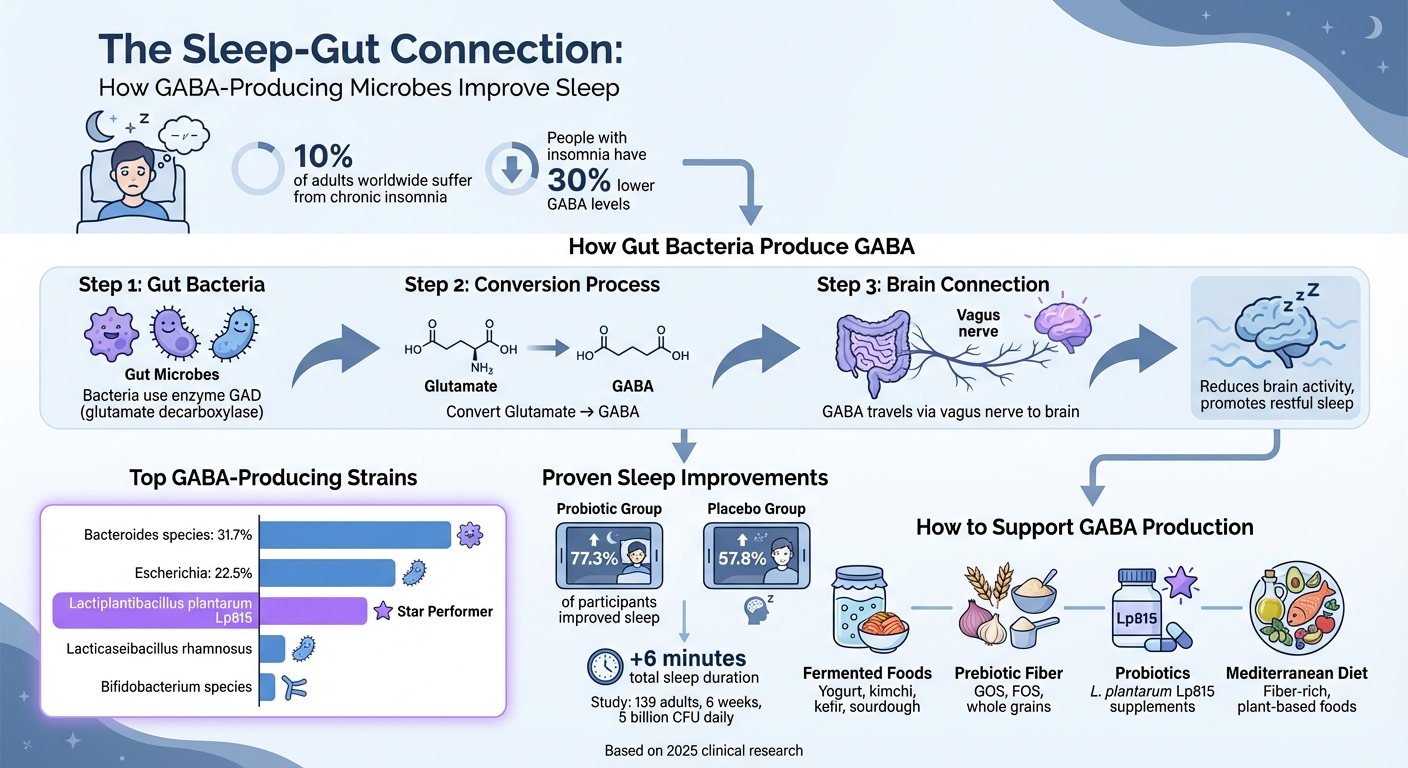
How Gut Bacteria Produce GABA to Improve Sleep Quality
Scientists trial gut bacteria treatment for insomnia | ABC News

How GABA-Producing Microbes Support Sleep
Your gut bacteria play a surprising role in improving sleep by producing compounds like GABA (gamma-aminobutyric acid). These microbes use an enzyme called glutamate decarboxylase (GAD) to convert glutamate into GABA, creating a direct link between gut health and sleep quality. This process strengthens the connection between the gut and brain, often referred to as the mind-gut axis.
Once produced, GABA and other microbial metabolites interact with your brain through the vagus nerve, influencing the neural pathways that regulate your sleep-wake cycle [1][9]. Additionally, these beneficial bacteria help fortify the intestinal barrier, protecting it from harmful substances like lipopolysaccharides (LPS), which can trigger inflammation and disrupt your sleep patterns [1].
Beyond sleep, GABA-producing microbes also help manage stress. They regulate the body's stress response via the HPA axis, keeping cortisol levels under control. When the gut microbiome is out of balance (a condition called dysbiosis), the stress response can become overactive, leading to elevated nighttime cortisol levels. This disrupts the ability to fall asleep and reduces the amount of deep, restorative sleep you get [1][2]. Certain strains of bifidobacteria are particularly effective at balancing this stress response, creating a more favorable environment for quality sleep.
How Gut Microbes Produce GABA
Some gut bacteria produce GABA as a survival strategy. Using the enzyme GAD, they transform glutamate into GABA, which helps them adapt to the acidic conditions of the gastrointestinal tract [2][9]. This conversion also neutralizes hydrogen ions, allowing the bacteria to maintain a stable internal pH while producing a compound that benefits your sleep.
Among the various GABA-producing microbes, Bacteroides species are the most abundant, making up 31.7% of GAD-containing bacteria, followed by Escherichia at 22.5% [9]. Certain strains, like Lactiplantibacillus plantarum Lp815, stand out for their ability to produce GABA across a wide range of pH levels. For instance, L. plantarum Lp815 synthesizes significant amounts of GABA in conditions ranging from pH 4 to 6, which aligns with much of the pH range in the large intestine [4]. This adaptability allows these bacteria to continue producing GABA throughout different sections of the digestive system. These processes help explain why microbial GABA production is linked to better sleep quality.
Research on Microbial GABA and Sleep Quality
Scientific studies back up the benefits of GABA-producing microbes for sleep. In a randomized, double-blind, placebo-controlled study from January 2025, 139 adults with sleep issues were given 5 billion CFU of Lactiplantibacillus plantarum Lp815 daily for six weeks. The results were impressive: 77.3% of those taking the probiotic saw a significant improvement in their Insomnia Severity Index scores (a reduction of 4 or more points), compared to 57.8% in the placebo group [4].
Participants also showed measurable improvements in objective sleep metrics. Total sleep duration increased by an average of 6 minutes, and deep sleep quality improved. Additionally, urinary GABA levels rose within the first week of supplementation, and these increases were inversely linked to anxiety and insomnia scores [4].
Another study, published in June 2025, explored the effects of Lactobacillus reuteri E9 in a zebrafish model of sleep disorders. Researchers found that this strain boosted levels of inhibitory neurotransmitters like GABA, taurine, and glycine, while also increasing melatonin receptor gene expression in neural tissue. These changes produced calming effects, reducing hyperactivity and seizures caused by a sleep-disrupting compound called pentylenetetrazol [8][10].
"GABA-producing gut bacteria can colonize the host's gastrointestinal tract for an extended period. This persistent colonization enables continuous GABA synthesis, thereby conferring prolonged therapeutic benefits."
– Chengji Jiang et al., Frontiers in Neuroscience [2]
Unlike oral GABA supplements, which are quickly metabolized and cleared from the body, GABA-producing bacteria take up residence in your gut. This allows them to continuously produce GABA, offering long-term support for improved sleep quality. This sustained production highlights the potential for targeted microbial strains to enhance gut-brain health over time.
GABA-Producing Microbial Strains and Their Sleep Benefits
GABA plays a vital role in sleep regulation, and specific microbial strains have been shown to enhance its production, offering targeted benefits for improving sleep. Let’s dive into some key strains and how fermented foods can naturally boost GABA levels for better rest.
Lactiplantibacillus plantarum for Sleep
Among the most researched strains, Lactiplantibacillus plantarum Lp815 stands out for its ability to produce GABA effectively within the pH conditions of the large intestine [4]. A randomized, double-blind, placebo-controlled study from January 2025 highlighted its impact. Over six weeks, 139 adults with moderate insomnia took a daily dose of 5 billion CFU of Lp815. The results were promising: 77.3% of participants saw meaningful reductions in their Insomnia Severity Index scores compared to 57.8% in the placebo group. Additionally, participants experienced a 6-minute increase in total sleep duration and noticeable improvements in deep sleep quality [4].
Notably, Lp815 colonizes the gut for sustained GABA production. Within the first week, urinary GABA levels rose and showed an inverse relationship with anxiety and insomnia scores [4]. Another strain, L. plantarum TWK10, also helps increase gut GABA levels, positively influencing the gut-brain axis to enhance sleep quality [13].
Lacticaseibacillus rhamnosus and Sleep Support
Beyond L. plantarum, Lacticaseibacillus rhamnosus plays a unique role in promoting sleep. This strain’s GABA production activates vagal pathways, boosting serotonin levels and supporting NREM sleep [5][13].
Other combinations of probiotics have also shown promise. For instance, pairing Lactobacillus acidophilus Rosell-52 with Bifidobacterium longum Rosell-175 has been linked to reduced sleep disturbances, lower anxiety, and improved mood. Similarly, a blend of Lactobacillus reuteri NK33 and Bifidobacterium adolescentis NK98 demonstrated improvements in sleep quality while reducing symptoms of depression and anxiety [14].
Fermented Foods and GABA Production
Fermented foods provide a natural way to increase GABA intake, creating an environment that supports beneficial microbes like those mentioned above. Specific lactic acid bacteria, such as Lactobacillus brevis, can transform everyday food substrates into GABA-rich functional foods that promote sleep.
One study from 2025 illustrated this effect: fermenting pea protein hydrolysate with Lactobacillus brevis SYLB 0016 boosted its GABA content from 3.16 mmol/L to an impressive 90.35 mmol/L - a nearly 28-fold increase. When tested on rats, this fermented protein significantly increased NREM sleep time and delta wave activity by interacting with GABA receptors [15].
"PPF with enhanced GABA content improves NREM sleep by increasing δ waves activity. As a hypoallergenic compound, PPF holds potential as a supplement to ameliorate sleep disorders."
– Society of Chemical Industry [15]
Fermented foods work through the microbiota-gut-brain axis, altering gut microbiota composition by increasing beneficial bacteria like Ruminococcus and boosting short-chain fatty acids such as butyric acid [16][12]. To maximize sleep benefits, look for fermented foods made with high GABA-producing strains like Lactobacillus brevis or Lactiplantibacillus plantarum. Popular options include fermented dairy, kimchi, sauerkraut, and specially fermented plant proteins. Incorporating these foods into a consistent diet can help maintain a balanced gut microbiome and support the ongoing production of sleep-enhancing neurotransmitters.
sbb-itb-1bbfe7f
How to Support GABA-Producing Microbes
Boosting the health of your gut’s GABA-producing microbes involves a mix of smart dietary choices, supplements, and lifestyle tweaks. Here’s how to get started:
Dietary Changes to Support Gut Health
What you eat has a direct impact on the types of microbes thriving in your gut. For example, prebiotic fibers like galactooligosaccharides (GOS), polydextrose (PDX), and fructooligosaccharides (FOS) are excellent at nourishing GABA-producing bacteria, such as Bifidobacterium and Parabacteroides distasonis. A 2022 study by Samuel J. Bowers and colleagues at Northwestern University found that male rats on a prebiotic diet (including GOS and PDX) for four weeks had improved NREM and REM sleep during stressful periods, thanks to an increase in Parabacteroides distasonis [17][3].
Adding fermented foods to your meals is another great way to introduce live GABA-producing strains to your gut. Foods like kimchi, yogurt, kefir, and sourdough contain lactic acid bacteria, which naturally generate GABA in acidic conditions [7][9]. A Mediterranean diet is also a solid choice for promoting a diverse microbiome that supports both butyrate- and GABA-producing microbes [3]. On the flip side, high-glycemic foods can lead to inflammation and microbial imbalances, which may negatively affect sleep quality [3].
Don’t forget to include foods rich in vitamin B6, such as poultry, fish, and chickpeas. This vitamin plays a key role in the GABA synthesis process by acting as a coenzyme for the enzyme glutamate decarboxylase [2][9].
Diet alone can do a lot, but supplements can take things a step further.
Microbiome Reset with Begin Rebirth RE-1™
If you’re looking for a targeted supplement, Begin Rebirth RE-1™ is a powerful option. This 3-in-1 eubiotic synbiotic is designed to restore microbiome balance and boost GABA production. Each serving delivers 500 billion CFU, including Human Origin Strains (HOSt™) like Lactiplantibacillus plantarum Lp815, which produces up to three times more GABA compared to standard strains [4].
Clinical studies show that taking just 5 billion CFU of these GABA-producing strains daily can significantly raise systemic (urinary) GABA levels [4]. The formula also includes 4.5g of prebiotic fiber (GOS and inulin) to nourish beneficial bacteria and uses the Lyosublime™ delivery system for better absorption. RE-1™ is available in 7-day, 4-week, and 12-week reset programs, and it’s vegan, gluten-free, dairy-free, soy-free, nut-free, and non-GMO.
But supplements and diet aren’t the whole story - your lifestyle matters too.
Lifestyle Changes for Gut-Brain Health
Your daily habits play a big role in the gut-brain connection. For starters, managing stress is essential. High cortisol levels can disrupt gut-brain communication and decrease slow-wave sleep [2]. Incorporating relaxation techniques can help keep cortisol in check.
Exercise is another great tool. Pairing regular physical activity with a healthy diet can boost the abundance of Lactobacillus species linked to better sleep [3]. Additionally, meal timing impacts your gut microbiome’s rhythm. Try to eat at consistent times and avoid late-night snacking to keep your gut’s activity aligned with your circadian clock [6].
"The gut microbiota is increasingly recognized as a key player in neurological and psychiatric health. Our review demonstrates that disruptions in gut microbiota composition are closely linked to sleep disturbances across multiple disorders." - Professor Lin Lu, Peking University Sixth Hospital [18]
These combined strategies - diet, supplementation, and lifestyle changes - can work together to enhance GABA production and improve sleep quality. For those with primary insomnia, who often show a 30% reduction in brain GABA levels compared to healthy individuals [3], these interventions can be particularly impactful.
Tracking Sleep and Maintaining Gut Health
Sleep Tracking Tools and Measurements
Keeping an eye on your sleep patterns can help you figure out if GABA-producing microbes are making a difference. Combining data from wearables with sleep diaries provides a fuller picture of your sleep quality.
In a 2024 randomized, double-blind trial conducted by People Science, Inc., researchers used the Gen3 Oura Ring to monitor 139 adults dealing with sleep issues. Participants took 5 billion CFU of Lactiplantibacillus plantarum Lp815 daily for six weeks. The wearable data revealed that those in the probiotic group experienced measurable improvements: an average of 6 more minutes of total sleep and increased deep sleep compared to the placebo group. Additionally, 77.3% of participants reduced their Insomnia Severity Index (ISI) scores by at least 4 points [4][19].
This two-pronged approach - using a wearable like the Oura Ring alongside subjective tools like the ISI questionnaire - offers both hard data (such as sleep latency, total sleep time, deep sleep stages, and heart rate variability) and personal feedback on restfulness and reduced daytime anxiety. For the best results, monitor consistently over a six-week period.
These insights provide a solid foundation for creating long-term strategies to support both sleep and gut health.
Maintaining Microbiome Balance Long-Term
Once you've seen improvements in sleep, keeping your gut microbiome balanced is key to maintaining those benefits. A few simple lifestyle changes can make a big difference.
Start with your diet. A Mediterranean-style diet packed with plants, antioxidants, and healthy fats promotes a diverse microbiome. This diversity helps produce GABA and other sleep-supporting compounds like butyrate [21][11]. High-fiber foods such as whole grains, legumes, nuts, and seeds are particularly beneficial for nourishing good gut bacteria.
Meal timing matters too. Eating regular meals and avoiding late-night snacks can help align your gut microbiome with your circadian rhythm [20][21]. Pair this with regular physical activity and stress management to further support gut health.
For additional support, consider a synbiotic like Begin Rebirth RE-1™ to maintain a balanced microbiome.
"Strains able to augment gut GABA production could be novel targets for modulation of sleep and mood." - Nature, Scientific Reports [4]
On the flip side, steer clear of high-glycemic foods and excess sugar, as they can cause inflammation and interfere with your sleep [21]. By combining these dietary habits with regular sleep tracking, you'll be able to spot any changes in sleep quality early and fine-tune your routine as needed.
Conclusion
Your gut microbiome plays a critical role in shaping your sleep quality. Certain GABA-producing bacteria, such as Lactiplantibacillus plantarum and Bifidobacterium species, thrive in your gut and offer steady neurotransmitter production over time. This is a significant advantage over oral GABA supplements, which are quickly eliminated from the body [2]. With approximately 10% of adults worldwide suffering from chronic insomnia - and many experiencing a 30% drop in brain GABA levels - addressing this imbalance is crucial [3]. Clinical trials reveal that 77.3% of participants who took L. plantarum Lp815 experienced noticeable improvements in their sleep after just six weeks [4]. These findings highlight the potential of targeted microbiome interventions.
"GABA-producing gut bacteria can colonize the host's gastrointestinal tract for an extended period. This persistent colonization enables continuous GABA synthesis, thereby conferring prolonged therapeutic benefits." - Chengji Jiang et al., Frontiers in Neuroscience [2]
To tap into these benefits, consider adopting a Mediterranean-style diet filled with fiber-rich and fermented foods. Align your eating habits with your natural sleep-wake rhythms, and explore a microbiome reset with Begin Rebirth RE-1™ to restore balance. These steps can help strengthen the gut-brain axis and promote long-term sleep health.
Take care of your gut, and you might just find the key to better sleep and lasting well-being.
FAQs
How do gut microbes that produce GABA impact sleep quality?
Gut microbes that produce GABA (gamma-aminobutyric acid) play an important role in improving sleep quality by strengthening the gut-brain connection. GABA is a neurotransmitter that helps calm the nervous system, ease stress, and encourage relaxation - all key ingredients for better sleep.
Specific probiotic strains, including Lactobacillus plantarum and Lactobacillus reuteri, have been found to boost GABA production in the gut. This GABA can then affect brain activity through biochemical pathways, helping to regulate sleep cycles and reduce issues like anxiety, which often interfere with restful sleep.
By nurturing a healthy gut microbiome with GABA-producing microbes, you can naturally support your body’s ability to relax and experience deeper, more restorative sleep.
What foods can help promote GABA-producing bacteria in the gut?
To support the growth of bacteria that produce GABA, try adding fermented foods like yogurt, kefir, sauerkraut, and kimchi to your meals. These foods are packed with probiotics, which can help nurture gut microbes associated with GABA production.
You can also boost this process by eating foods rich in glutamate, an amino acid that certain gut bacteria convert into GABA. On top of that, prebiotics - found in dietary fibers from fruits, vegetables, and whole grains - serve as fuel for these beneficial microbes, encouraging their activity.
Making these foods a regular part of your diet can help create a gut environment that promotes GABA production, potentially improving sleep and mental well-being.
Why are GABA-producing gut bacteria considered more effective than taking GABA supplements for better sleep?
GABA-producing gut bacteria might be a better option for improving sleep because they generate GABA directly in the gut. This is significant since GABA plays a major role in the gut-brain connection, helping to regulate pathways related to sleep. In contrast, oral GABA supplements often face challenges crossing the blood-brain barrier, which can limit their effectiveness.
Maintaining a healthy balance of these GABA-producing microbes in your gut doesn’t just support sleep - it can also positively impact mood and stress levels. Since the gut-brain axis affects multiple aspects of health, nurturing your gut environment could lead to more consistent and restorative sleep patterns.