

Synbiotics combine probiotics (live bacteria), prebiotics (nutrients that feed these bacteria), and sometimes postbiotics (compounds produced by bacteria) to improve gut health. These formulations work by:
- Balancing gut bacteria: Promoting beneficial species like Lactobacillus and Bifidobacterium, while reducing harmful microbes.
- Boosting metabolism: Producing short-chain fatty acids (SCFAs) that support gut lining, reduce inflammation, and enhance digestion.
- Strengthening the gut barrier: Improving the intestinal lining to prevent harmful substances from entering the bloodstream.
- Supporting immunity and reducing inflammation: Regulating immune responses and lowering inflammatory markers.
- Influencing brain and metabolic health: Gut-derived compounds impact mood, stress, and metabolic processes.
Modern synbiotics are advancing with tailored strain-prebiotic combinations, postbiotics for faster effects, and human-origin strains for efficient gut colonization. These developments aim to optimize gut microbiome health and overall well-being.
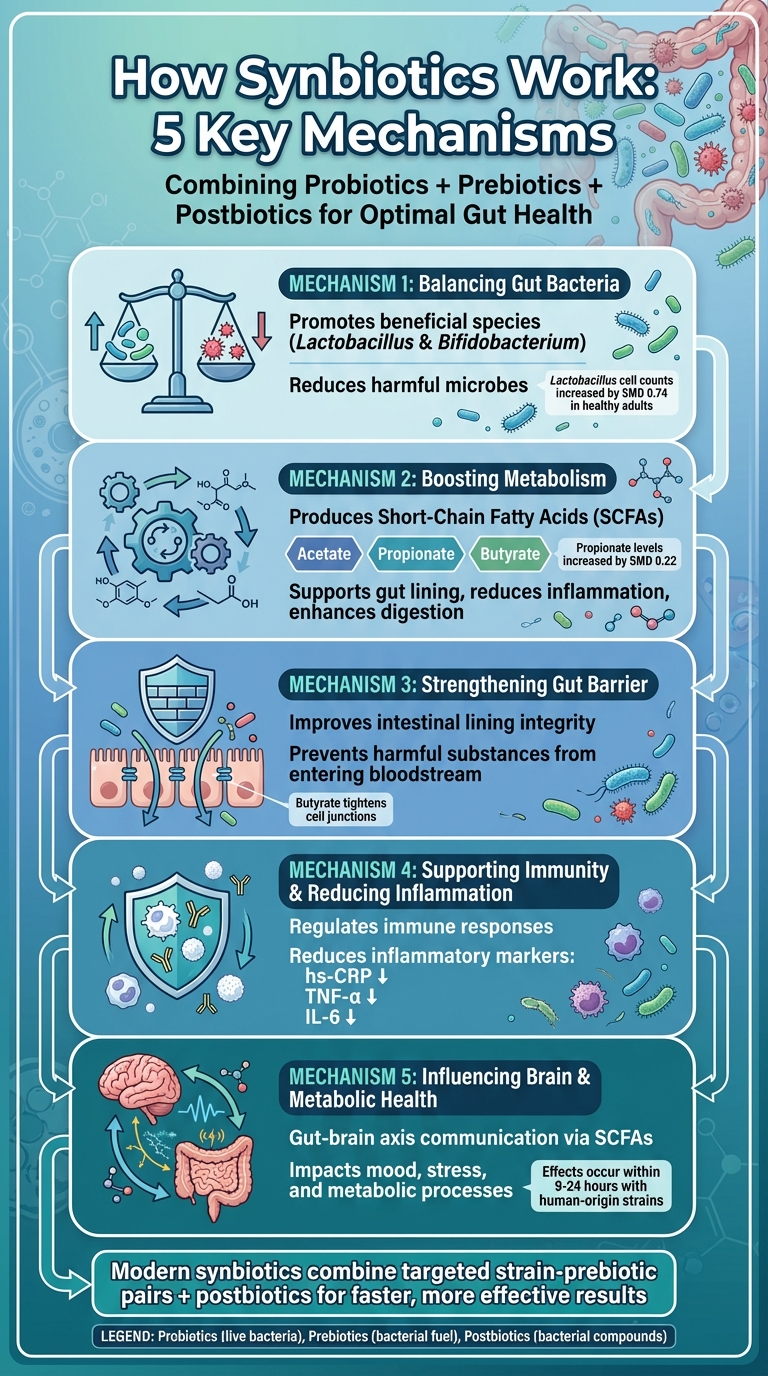
How Synbiotics Work: 5 Key Mechanisms for Gut Health
How Synbiotics Change the Gut Microbiome
Changes in Bacterial Composition and Diversity
Synbiotics influence the gut microbiota by encouraging the growth of beneficial bacteria while holding harmful species in check. Prebiotics serve as fuel for Bifidobacterium and Lactobacillus, helping these helpful microbes thrive and dominate over less desirable bacteria. A meta-analysis of 16 studies revealed that synbiotics significantly boost Lactobacillus populations in the gut. This transformation largely occurs through two mechanisms: selective fermentation of prebiotics and competitive exclusion, where beneficial bacteria outcompete harmful ones for nutrients and attachment points along the intestinal walls. These shifts in bacterial composition pave the way for complex metabolic interactions within the gut.
Metabolic Changes Through Bacterial Cross-Feeding
Synbiotics also spark essential metabolic activities among gut bacteria. Primary fermenters break down prebiotics into organic acids like formate, acetate, succinate, and lactate. These compounds are then used by secondary fermenters to create short-chain fatty acids (SCFAs) such as acetate, propionate, and butyrate [5][6][7]. Acetate plays a particularly important role, acting as a precursor for the production of more complex beneficial substances [5]. SCFAs are vital for gut health - they energize the cells lining the gut, help manage inflammation, and combat harmful pathogens, all of which contribute to restoring balance to the microbiome.
Bacterial Colonization and Establishment
By providing live microorganisms and the nutrients they need, synbiotics promote the colonization of beneficial bacteria, effectively outcompeting harmful microbes. Clinical studies back this up. For instance, a 2021 randomized controlled trial found that infants fed a synbiotic formula containing Bifidobacterium breve and a prebiotic blend experienced a marked rise in bifidobacteria levels after six weeks, along with a noticeable drop in Clostridium difficile [8]. Similarly, a 2024 study demonstrated that adults who consumed synbiotics with Bifidobacterium animalis and galacto-oligosaccharides saw improvements in their gut microbiota composition and a reduction in body fat [4]. These results highlight how tailored synbiotic formulations can strengthen and stabilize the gut microbiome.
Effects on the Human Body
Strengthening the Gut Barrier
Synbiotics play a crucial role in fortifying the gut barrier by improving the integrity of the intestinal lining. One of the key players here is short-chain fatty acids (SCFAs), particularly butyrate, which helps tighten the junctions between intestinal cells. These tight junctions act as gatekeepers, controlling what substances can pass from the gut into the bloodstream. When they weaken, harmful particles can slip through, increasing intestinal permeability. Research, especially in individuals with obesity, has shown that synbiotics can bolster gut barrier function by enhancing these junctions [2]. The synergy between probiotics and prebiotics drives changes in gut bacteria and metabolites, which collectively strengthen the intestinal lining [9][10]. These structural improvements pave the way for better immune system regulation.
Immune System Effects and Inflammation Control
Synbiotics also influence the immune system by shaping the interaction between gut bacteria and immune responses. Beneficial bacteria like Bifidobacteria and lactic acid bacteria, which thrive with the help of synbiotics, play a role in reducing inflammation. They can lower levels of pro-inflammatory signals, such as cytokines like IL-8, and suppress NF-κB-dependent gene expression. At the same time, they boost anti-inflammatory responses [9]. This dual effect makes synbiotics a promising tool for managing inflammatory conditions, both in the gut and throughout the body.
Brain Communication and Metabolic Effects
The connection between the gut and the brain offers another fascinating area where synbiotics make an impact. SCFAs produced by gut bacteria activate G-protein coupled receptors in the enteric nervous system, creating a direct communication line between the gut and the brain [11]. Additionally, gut-derived metabolites like exopolysaccharides, glutamate, and tryptophan influence mood, stress levels, and cognitive function. On the metabolic side, synbiotics help regulate endocrine signaling, which can lead to broader metabolic benefits. These interactions highlight how targeted changes in the gut microbiome can ripple through the body, affecting everything from mental health to overall metabolic function.
What Are Synbiotics? | GutDr Mini-Explainer
sbb-itb-1bbfe7f
Modern Synbiotic Formulation Approaches
Modern synbiotic formulations are pushing the boundaries of gut health by focusing on microbial synergy to deliver both immediate and long-term benefits.
Targeted Strain and Prebiotic Combinations
The key to effective synbiotic formulations lies in pairing specific bacterial strains with the right prebiotics. These targeted synbiotic pairs are designed so the prebiotics serve as an ideal food source for the co-administered bacterial strains. This approach maximizes the growth, activity, and persistence of beneficial microbes in the gut, creating a more efficient and sustainable impact on gut health [2][12].
Take, for instance, the pairing of Bifidobacterium adolescentis IVS-1 with galacto-oligosaccharides (GOS). Clinical trials demonstrated that this combination increased the bacterial strain's presence eightfold, making up 37% of the rodent gut microbiome while also strengthening the gut barrier [12]. This level of precision in formulation sets the stage for faster and more effective interventions, particularly when combined with postbiotics.
Adding Postbiotics for Faster Results
The introduction of postbiotics - metabolites and cell components of bacteria - has revolutionized synbiotic formulations. Unlike probiotics, postbiotics don’t require colonization to deliver benefits. They immediately contribute to gut health by modulating immune responses, improving epithelial barrier function, preventing pathogen binding, and managing infections [13].
By combining postbiotics with prebiotics and probiotics, modern formulations can accelerate results and amplify their overall effectiveness [14]. For example, bacterial lysates and exopolysaccharides (EPS) have been shown to enhance barrier integrity, reduce inflammation, and regulate immune and metabolic functions [13]. This three-pronged strategy - probiotics, prebiotics, and postbiotics - enables quicker microbiome restoration by addressing gut health from multiple angles while simultaneously fostering the growth of beneficial bacteria. The inclusion of human-origin strains takes this even further.
Fast Microbiome Reset with Human-Origin Strains
Human-origin bacterial strains represent a transformative step in synbiotic development. As Robert Hutkins [12] explains, microbes not derived from humans often struggle to effectively colonize the gastrointestinal tract. Human-origin strains, however, are naturally adapted to thrive in the human gut environment, overcoming these challenges.
In human fecal slurry systems, these strains demonstrated the ability to alter beta-diversity and significantly increase short-chain fatty acid (SCFA) production within just 9 to 24 hours [15]. A prime example of this innovation is Begin Rebirth RE-1™ (https://beginrebirth.com), which utilizes its proprietary Human Origin Strains (HOSt™) technology. This 3-in-1 formulation combines 500 billion CFU of human-origin bacteria with complementary prebiotics and postbiotics. Designed for structured protocols lasting 7 days, 4 weeks, or 12 weeks, it offers a clinically-supported pathway to reset the microbiome efficiently and effectively.
Key Takeaways
Synbiotics work to restore balance in the gut by increasing beneficial bacteria like Lactobacillus and Bifidobacterium, boosting essential metabolites such as short-chain fatty acids and bile acids, and strengthening the gut barrier to keep harmful inflammatory agents at bay [3].
A February 2024 systematic review revealed that synbiotics significantly raised Lactobacillus cell counts (standardized mean difference of 0.74) and propionate levels (standardized mean difference of 0.22) in healthy adults. At the same time, they reduced inflammatory markers like high-sensitivity C-reactive protein, TNF-α, and IL-6 [3]. These changes not only support digestive health but also positively impact the gut–brain axis, metabolism, and immune system regulation.
Clinical evidence highlights that only well-matched, synergistic combinations of probiotics and prebiotics deliver meaningful results. According to the International Scientific Association for Probiotics and Prebiotics, these formulations must demonstrate measurable health benefits [1][2]. For instance, one study found that a synbiotic reduced body fat mass by 4.5% in adults with overweight or obesity, while the individual probiotic or prebiotic components showed no impact on their own [1]. This reinforces the importance of integrating multiple active components into a cohesive formulation.
Modern synbiotic products are leading the way by refining their designs to maximize effectiveness. By combining prebiotics, probiotics, and postbiotics, these advanced formulations deliver both immediate and long-term benefits for gut health. Products like Begin Rebirth RE-1™ are setting a new standard, utilizing human-origin strains to accelerate and maintain gut reset.
FAQs
How do synbiotics help strengthen the gut barrier?
Synbiotics play a key role in strengthening the gut barrier by promoting a healthier balance of gut bacteria and generating helpful metabolites. The prebiotics in synbiotics serve as fuel for probiotics, which ferment them to produce short-chain fatty acids (SCFAs) like butyrate and propionate. These SCFAs act as an energy source for colon cells and boost the production of tight-junction proteins and mucins. This process tightens the gut lining and enhances the mucus layer that protects the gut.
Synbiotics also work to reduce gut permeability by lowering markers such as zonulin and encouraging the growth of beneficial bacteria like Lactobacillus and Bifidobacterium. By doing so, they help crowd out harmful microbes, reduce inflammation, and shield the gut lining from immune system-related damage. Products such as Begin Rebirth RE-1™, a clinically-supported 3-in-1 synbiotic, leverage these mechanisms to rebalance the microbiome, promote gut health, and support a stronger immune system.
How do short-chain fatty acids (SCFAs) support gut health?
Short-chain fatty acids (SCFAs) - like acetate, propionate, and butyrate - are vital byproducts created when gut bacteria ferment dietary fibers. These molecules serve as an energy source for colon cells, reinforce the intestinal lining, and help maintain an acidic gut environment that keeps harmful microbes in check.
But SCFAs do more than just support gut structure. They act as messengers within the body, interacting with receptors on immune and endocrine cells. This interaction helps reduce inflammation, encourages the development of regulatory T-cells, and stimulates the release of hormones that control appetite and blood sugar levels. Together, these functions contribute to a stronger gut barrier, balanced immunity, and better metabolic health.
Products like Begin Rebirth RE-1™ are crafted to boost SCFA production by including prebiotic fibers that fuel SCFA-producing bacteria. The result? Improved gut balance, reduced inflammation, and enhanced digestive and immune health.
Why are human-origin strains used in synbiotic supplements?
Human-origin strains come straight from the human gut, meaning they’re naturally suited to thrive in the digestive system. They’re built to handle challenges like stomach acid and bile salts, which helps them survive, stick to the gut lining, and work well with the existing microbiota.
These strains excel at producing important metabolites, such as short-chain fatty acids like acetate, propionate, and butyrate. These compounds help strengthen the gut barrier and combat inflammation. On top of that, they go through extensive safety checks to confirm they don’t carry harmful genes and have the right antibiotic susceptibility, ensuring they’re both safe and effective for humans.
Thanks to these qualities, human-origin strains are a critical component in making synbiotic formulations more effective and safer, offering strong support for a healthier gut microbiome.