

Postbiotics are emerging as a game-changer in skincare. Unlike probiotics, which rely on live bacteria, postbiotics are non-living microbial byproducts that directly support skin health. Their stability and safety make them ideal for treating conditions like acne, eczema, and aging skin. Here’s what you need to know:
- What They Are: Inactive microbes or their metabolites, including short-chain fatty acids (SCFAs), ceramides, and enzymes.
- How They Help: Strengthen the skin barrier, reduce inflammation, and regulate the skin’s microbiome.
- Why They’re Safer: No risk of infection or refrigeration needs, making them easy to use in skincare products.
- Applications: Effective for acne, eczema, sensitive skin, and anti-aging, with proven results in clinical studies.
Postbiotics offer a stable, effective approach to skincare, focusing on restoring balance without disrupting the skin’s natural microbiome. They’re also paving the way for more personalized and eco-conscious skincare solutions.
Skin Health: Dr Ashley Naidoo on The BiomeRenew Range - Postbiotic Skincare
sbb-itb-1bbfe7f
How Postbiotics Work on Skin
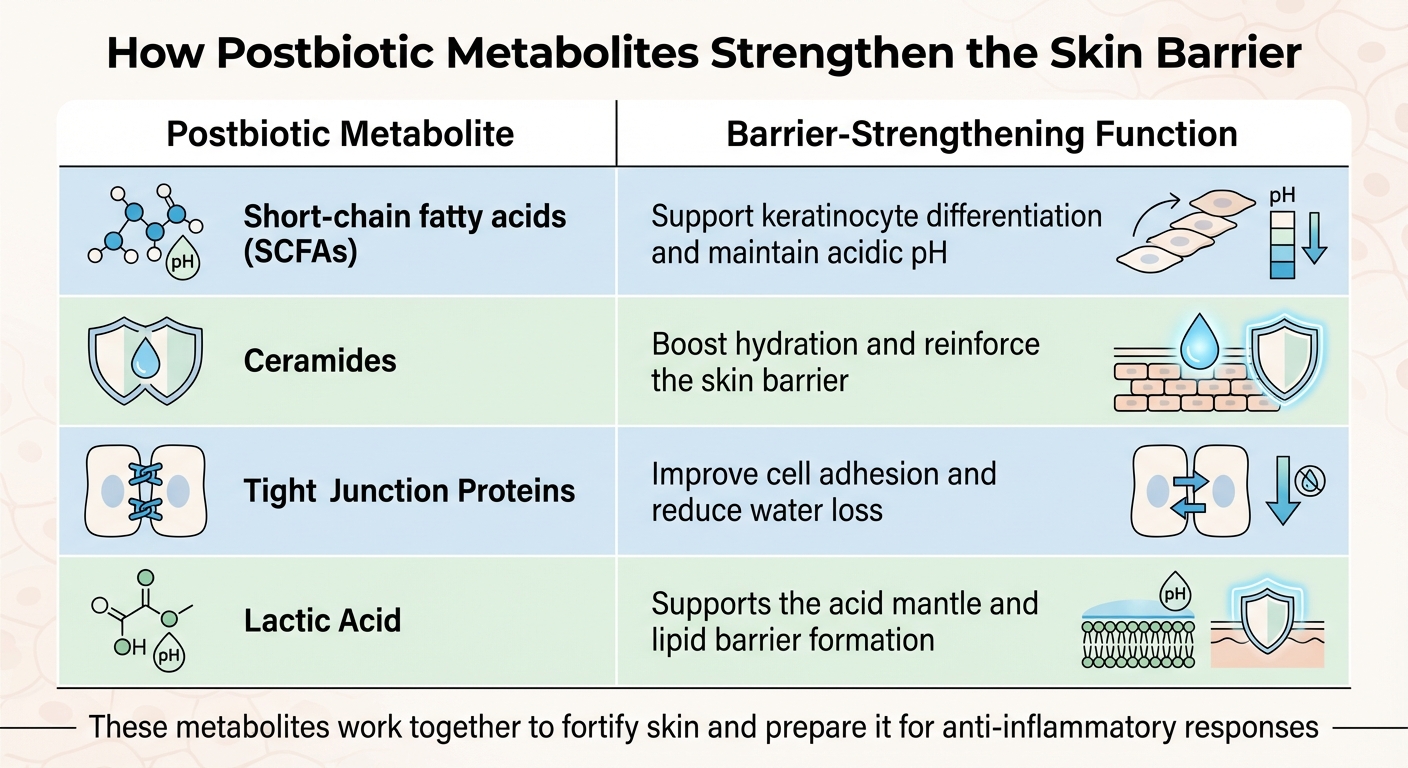
How Postbiotic Metabolites Strengthen the Skin Barrier
Strengthening the Skin Barrier
Postbiotics improve skin barrier function by boosting tight junction proteins and ceramide production, which work together to reduce water loss and lock in moisture [2][10]. Tight junction proteins help skin cells stick together, while ceramides strengthen the barrier, keeping the skin hydrated and calm. Short-chain fatty acids (SCFAs) like acetate, propionate, and butyrate also play a role by maintaining the skin’s acidic pH (below 5.0). This acidic environment supports lipid barrier formation and keeps harmful bacteria in check [2][10][6].
Certain postbiotic metabolites are especially effective in helping the skin recover and ensuring proper keratinocyte (skin cell) development. For instance, lactic acid and proteins like p40 and p75 promote healthy skin cell growth [6]. Research shows that topical Lactobacillus plantarum postbiotics can enhance dermal density and strengthen the skin barrier [10]. A study published in the International Wound Journal in 2025 highlighted how a formula containing heat-killed Lactococcus chungangensis CAU 1447 significantly sped up wound healing in diabetic mice by encouraging cell growth and improving barrier integrity [5].
| Postbiotic Metabolite | How It Strengthens the Skin Barrier |
|---|---|
| Short-chain fatty acids (SCFAs) | Support keratinocyte differentiation and maintain acidic pH [2][6] |
| Ceramides | Boost hydration and reinforce the skin barrier [2] |
| Tight Junction Proteins | Improve cell adhesion and reduce water loss [2] |
| Lactic Acid | Supports the acid mantle and lipid barrier formation [10][6] |
These effects not only fortify the skin but also prepare it for better anti-inflammatory and antioxidant responses.
Anti-Inflammatory and Antioxidant Properties
Postbiotics help control inflammation by regulating cytokines and encouraging Treg cell development, which reduces chronic inflammation [5][9][6]. This is crucial because ongoing inflammation can lead to issues like acne and eczema.
Their antioxidant effects come from enzymes like peroxidases, which neutralize harmful reactive oxygen species (ROS). By doing so, postbiotics shield skin cells from oxidative stress and slow down aging caused by inflammation, often referred to as "inflammaging" [5][6]. Research on Lactobacillus paracasei CNCM I-2116 (ST11) has shown that certain postbiotic strains can block substance P - a key driver of itching and irritation in atopic dermatitis - while also aiding skin barrier repair [6]. Additionally, bacteriocins and organic acids derived from postbiotics help maintain an acidic environment, making it harder for inflammatory bacteria like Staphylococcus aureus to thrive [5][6].
"Postbiotics represent an innovative, next‐generation strategy for skin regeneration and wound management."
– Seyedeh‐Sara Hashemi, Burn and Wound Healing Research Center [5]
Beyond calming inflammation, postbiotics promote healing by stimulating collagen production, encouraging new blood vessel growth, and aiding tissue repair [5].
This balanced approach to inflammation also supports a healthier skin microbiome.
Restoring Microbial Balance
Postbiotics further support skin health by restoring microbial balance, which is essential for preventing harmful bacterial overgrowth and related skin problems. They achieve this by outcompeting pathogens for space on the skin and encouraging the production of antimicrobial peptides like β-defensins and cathelicidin, which inhibit harmful bacteria [4][7][11]. For example, lysates from Lactobacillus rhamnosus GG can compete with pathogens for adhesion sites on skin cells and even displace already-attached harmful bacteria [7].
Postbiotics also contain bioactive compounds, such as bacteriocins, organic acids, and functional proteins, which directly suppress the growth of harmful bacteria and prevent the formation of antibiotic-resistant biofilms [4][7][1]. In lab studies, treating skin cells infected with Staphylococcus aureus using a Lactobacillus curvatus lysate reduced pathogen levels by 10 times within 6 to 24 hours [7]. Similarly, topical Lactobacillus plantarum applications have been shown to decrease acne-associated pathogens by an average of 62% [10].
"By mimicking the beneficial effect of live probiotics, postbiotics have the ability to restore healthy skin microbiome through inhibition of pathogen colonization and biofilm formation."
– BMC Cell Communication and Signaling [7]
Using Postbiotics to Treat Skin Conditions
Postbiotics for Acne Treatment
Postbiotics can help manage acne by targeting harmful strains of Cutibacterium acnes, reducing sebum production, and calming inflammatory responses like IL-1β and TNF-α [1][8]. Unlike traditional antibiotics, which may lead to resistance and disrupt the skin's natural microbiome, postbiotics offer a gentler, more targeted approach [1][8]. Their anti-inflammatory and antimicrobial properties also make them useful for addressing other skin concerns, such as eczema and sensitive skin.
Eczema and Sensitive Skin Relief
For those dealing with eczema or sensitive skin, postbiotics work by repairing the skin barrier and managing harmful bacteria. Short-chain fatty acids (SCFAs) and sphingomyelinase promote the production of ceramides and tight junction proteins, helping to restore the compromised skin barrier often seen in atopic dermatitis [2][8]. This process helps reduce transepidermal water loss (TEWL) [2][8]. Since Staphylococcus aureus is found in about 90% of eczema cases [8], controlling this pathogen is essential. Clinical studies highlight the benefits of using postbiotic metabolites from Staphylococcus epidermidis, which improve skin hydration and lower TEWL [8].
One study observed that oral supplementation with the Lacticaseibacillus paracasei strain NCC2461 over two months significantly reduced skin sensitivity and TEWL. These improvements were linked to increased levels of transforming growth factor beta (TGF-β), which supports skin barrier health [11].
"Postbiotics represent a promising alternative for skin diseases due to their potential safety and efficacy profiles, offering targeted benefits for eczema and sensitive skin without the need for live bacteria." – Santosh Kumar Prajapati et al., Biomedicines [2]
Anti-Aging Effects
Postbiotics also play a role in addressing visible signs of aging. Studies suggest they promote collagen production, aid in tissue remodeling, and protect against environmental and UV-related damage through their antioxidant properties [4][5]. For instance, a 3-week randomized, double-blind study involving 55 Korean women (average age 47.1) tested Epidermidibacterium keratini (EPI-7) ferment filtrate. Results showed measurable benefits on the treated side, including an 11.9% increase in skin hydration, a 12.5% reduction in TEWL, a 5.6% boost in skin elasticity, and a 4.7% rise in dermal density. These effects were largely attributed to orotic acid, a key metabolite [12].
Additionally, postbiotics from Lactobacillus plantarum and Lactobacillus acidophilus have shown potential in protecting against UVB-induced photoaging while maintaining the balance of beneficial skin microbes [10].
Products like Begin Rebirth RE-1™ are blending prebiotics, probiotics, and postbiotics to create formulations that support gut health, strengthen skin barriers, and reduce inflammation.
Adding Postbiotics to Skincare Routines
Combining Postbiotics with Prebiotics and Probiotics
Using a combination of prebiotics, probiotics, and postbiotics - often referred to as a synbiotic approach - can significantly enhance skin health benefits [2][9]. Here's how they work together:
- Prebiotics: These nourish beneficial bacteria, helping them thrive.
- Probiotics: They restore microbial balance, promoting a healthy skin microbiome.
- Postbiotics: These deliver rapid anti-inflammatory effects and avoid the stability challenges associated with live bacteria [2][4][9].
Together, they support the gut-skin axis while addressing common skin concerns like acne, eczema, and premature aging. Complementing topical use with a diet that supports gut health can amplify these benefits.
Diet and Supplements for Skin Health
What you eat plays a major role in skin health, thanks to the gut-skin connection [6]. A diet rich in fiber helps beneficial bacteria produce short-chain fatty acids (SCFAs), which reduce systemic inflammation and promote healthier skin [6]. On the flip side, consuming too much refined sugar can disrupt gut balance, often worsening skin issues [6][10].
For those looking for additional support, oral postbiotic supplements offer a safe and effective option, particularly for individuals with weakened immune systems [4][6]. Heat-treated strains such as L. rhamnosus and L. acidophilus L-92 have been shown to reduce the severity of atopic dermatitis in both adults and children [6].
An example of this is Begin Rebirth RE-1™, a supplement combining prebiotics (4.5 g of GOS and inulin fiber), probiotics (500 billion CFU of Human Origin Strains), and postbiotics. Its Lyosublime™ delivery system ensures effective absorption and doesn’t require refrigeration, making it a convenient daily option for supporting the gut-skin connection.
While internal strategies are essential, topical applications can offer more targeted skin benefits.
Topical Postbiotic Products
When choosing topical postbiotic products, look for formulas with a pH below 5.0. This helps maintain the skin's natural acid mantle, which is crucial for microbial balance and preventing irritation or dehydration [10]. Additionally, certain postbiotic strains provide targeted benefits:
- Streptococcus thermophilus: Boosts ceramide production, aiding in barrier repair.
- Lactobacillus plantarum: Helps with anti-aging and is effective for acne-prone skin [10].
One of the key advantages of postbiotics is their stability. Unlike live probiotics, postbiotics are non-viable, meaning they can withstand changes in temperature and pH, extending their shelf life in products like creams, serums, and wound dressings [4][5]. Applying these products after environmental stress, such as UV exposure, can enhance hydration and strengthen the skin barrier [2][10].
As microbiome-friendly skincare continues to grow in popularity, more products are being tested to ensure they support microbial diversity while maintaining skin balance [10].
Future Research and Trends in Postbiotics for Dermatology
Recent Clinical Research
Clinical trials are increasingly highlighting the effectiveness of postbiotics in improving skin health. For instance, researchers at CBQF – Centro de Biotecnologia e Química Fina in Portugal published a study in June 2023 showing promising results. They used sugarcane straw fermented by Saccharomyces cerevisiae to create postbiotic extracts with strong anti-inflammatory properties. The extract, produced under controlled fermentation, inhibited elastase activity by 83.4% and tyrosinase by 42.4% at a concentration of 20 mg/mL, all while remaining safe for human skin cells [13].
Other studies are also shedding light on the potential of postbiotics. Heat-treated Lactobacillus strains have been effective in managing atopic dermatitis in children aged 4–30 months, especially when paired with topical corticosteroids [6]. Similarly, applying Staphylococcus epidermidis topically has shown improvements in skin hydration and reduced transepidermal water loss on the forehead [8]. These findings are paving the way for more tailored and eco-conscious skincare solutions.
Personalized Skincare and Microbiome Analysis
Postbiotics are playing a key role in rebalancing the skin microbiome, and advancements in microbiome analysis are making personalized treatments more accessible. Techniques like Whole-Genome Shotgun (WGS) sequencing now allow for strain-level identification of skin microbes. This is crucial since strains within the same species can have vastly different effects on skin health [4]. Skincare companies are starting to develop products customized to individual microbiome profiles, which can differ based on factors like age, gender, ethnicity, and even specific skin areas (sebaceous, moist, or dry) [3][2].
This approach is particularly important for conditions like eczema, where around 90% of sufferers experience colonization by Staphylococcus aureus. Targeted postbiotics can help suppress this harmful microbe [8]. Additionally, the industry is focusing on "Microbiome-friendly" certifications to ensure products maintain microbial diversity and support the skin's natural balance [3].
"The ability to differentiate strains is important as more studies reveal the functional differences that exist between strains within a species." – Alexander da Silva Vale et al., Federal University of Paraná [4]
This precision not only benefits individuals but also aligns with broader sustainability goals.
Environmental Benefits of Postbiotic Production
Postbiotics offer practical advantages for sustainable practices in skincare. Their non-viable nature means they don't require refrigeration or cold-chain transportation, significantly cutting down on carbon emissions [4][5]. Their stability across a range of temperatures and pH levels also extends shelf life and reduces waste [4][14].
Eco-friendly production methods are gaining traction, with a focus on waste valorization. For example, the sugarcane straw study demonstrated how agricultural by-products can be repurposed into valuable skincare ingredients through energy-efficient fermentation [13].
"Postbiotics were successfully produced using sugarcane straw, and showed bioactive properties that potentiate their use in cosmetic/skincare products." – Marco Duarte, CBQF [13]
This "circular beauty" trend is becoming more popular as major skincare brands integrate postbiotics into their formulations for sensitive skin. The safety of postbiotics - eliminating risks like infection or antibiotic resistance gene transfer - also simplifies regulatory approval for eco-certified dermatological products [4][6].
Conclusion: Postbiotics in Modern Dermatology
Postbiotics offer a safer and more convenient alternative to live probiotics for addressing skin conditions. They provide similar benefits - like strengthening the skin barrier, reducing inflammation, and fighting harmful bacteria - without the potential risks of infection or the transfer of antibiotic resistance genes [4][2][6]. This makes them especially helpful for individuals with weakened immune systems or severely damaged skin.
From a technological perspective, postbiotics shine in several ways. They are stable across a wide range of temperatures and pH levels, boast longer shelf lives, and can be easily incorporated into standard skincare products [4][6]. Unlike probiotics that may require refrigeration or special conditions, postbiotics are much more user-friendly.
For example, topical applications of Lactobacillus plantarum have shown a 62% reduction in acne-causing bacteria [3], and heat-treated strains have been effective in managing atopic dermatitis [6]. These advancements not only improve treatment outcomes but also reduce costs, benefiting both patients and the healthcare industry.
Postbiotics also open the door to personalized skincare solutions. By tailoring products to specific skin types, ages, and conditions, they address the diverse needs of individuals dealing with acne (which affects up to 85% of people at some point [2]), eczema (impacting 1–20% of the population [2]), or psoriasis (affecting 3% globally [2]).
As research progresses and microbiome-friendly certifications become more common, postbiotics are set to take a leading role in modern dermatology, blending traditional approaches with personalized, next-generation treatments.
FAQs
What are the benefits of postbiotics for skin health?
Postbiotics offer a range of benefits for skin health by helping to maintain a balanced skin microbiome and boosting the skin's natural defenses. These compounds, produced during microbial fermentation, play a role in supporting healthy bacteria on the skin, limiting the growth of harmful bacteria, and reinforcing the skin's protective barrier. This can help guard against infections and reduce inflammation.
There’s growing evidence that postbiotics may also help with chronic skin issues like eczema and acne. By improving the skin's immune response and addressing imbalances in the gut-skin connection, they can promote better skin health. Their ability to balance microbes and soothe inflammation makes them an increasingly popular option for supporting skin health and strength.
What makes postbiotics more stable and safer than probiotics?
Postbiotics stand out for their stability and safety compared to probiotics. Unlike probiotics, which rely on live bacteria, postbiotics are made up of non-living microbial components like metabolites or cell fragments. Because they aren't alive, they eliminate risks tied to live microorganisms, such as infections or the potential spread of antibiotic resistance genes.
Another advantage is their natural stability under different storage conditions, making them easier to manage and incorporate into various products. This combination of safety and reliability makes postbiotics an attractive choice for promoting skin health and addressing other wellness needs.
Can postbiotics help with skin conditions like acne and eczema?
Yes, postbiotics can help in managing skin conditions like acne and eczema. They provide anti-inflammatory, antimicrobial, and immune-regulating properties, which can ease redness, irritation, and other related symptoms.
By supporting a balanced skin microbiome and reducing inflammation, postbiotics have shown potential in improving skin health. Their role in strengthening the skin's natural defenses makes them a helpful addition to skincare routines aimed at addressing these issues.