

Probiotics are essential for supporting gut health, immune function, and recovery, especially for active individuals. The right dosage varies by age and activity level, with recommendations tailored to children, teens, adults, and seniors. Key factors like training intensity, diet, and specific strains play a role in determining the most effective dose.
Key Takeaways:
- Children (6–12): 1–5 billion CFU daily for immune and gut health.
- Teens (13–17): 5–10 billion CFU daily to support growth and training.
- Adults (18–64): 10–30+ billion CFU daily for performance and recovery.
- Seniors (65+): 5–20 billion CFU daily to maintain digestion and immunity.
Quick Tips:
- Start probiotics 2–4 weeks before major events for better results.
- Higher doses (e.g., 100 billion CFU) may help with endurance and recovery during intense training.
- Consistency is key - probiotics leave the body within a week of stopping supplementation.
- Always match the strain to your goals (e.g., L. plantarum TWK10 for stamina, B. lactis HN019 for digestion).
Probiotics are generally safe, but consult a healthcare provider for personalized advice, especially for high-dose regimens or if you have health conditions.
FTP #26: Jamie Pugh, PhD - Probiotic supplementation for health and performance: a balanced overview
How to Determine Probiotic Dosage for Athletes
The right probiotic dosage depends on several factors, including an athlete's training routine, age, health status, and the specific probiotic strain being used. These elements play a crucial role in finding the best approach for each individual. Later sections will delve deeper into how age and activity levels shape dosing strategies.
Standard Dosage Ranges and Influencing Factors
When it comes to probiotics for athletes, research typically points to daily doses ranging between 100 million and 10 billion CFU (colony-forming units) [1][6]. Interestingly, higher doses often yield greater benefits. For example, a 2019 study highlighted that taking 100 billion CFU of Lactobacillus plantarum TWK10 for six weeks significantly improved endurance and helped maintain blood glucose levels during exercise [1].
Athletes undergoing intense training often require higher doses due to the added stress on their bodies. Rigorous exercise, combined with factors like stress and lack of sleep, can increase gut permeability and suppress the immune system [1]. Those dealing with frequent upper respiratory infections or digestive issues - such as bloating or diarrhea during heavy training - may find higher doses or specific strains particularly helpful [5][7]. Age is another consideration since an athlete’s gut microbiome evolves over years of activity and dietary habits [1]. Additionally, diet plays a role: high-protein or high-carbohydrate diets can influence gut bacteria and impact how probiotics interact with the body [1].
Timing and Duration of Probiotic Use
To maximize the benefits, start taking probiotics 2–4 weeks before a major event. This allows your gut to adapt and supports immune function during peak performance periods [1][6]. Consistency is key - probiotics should be taken daily, as they disappear from the body within about a week after stopping supplementation [6].
"Within approximately a week of discontinuing supplementation, the probiotic is no longer detectable in the feces." - Alex E. Mohr, College of Health Solutions, Arizona State University [6]
Taking probiotics with meals may enhance the absorption of certain nutrients, like amino acids and iron [1][6]. Clinical studies that report noticeable health and performance improvements typically involve supplementation periods lasting 4 to 16 weeks [1][6].
Safety Considerations and Maximum Dosages
Probiotics are generally safe when used within research-supported ranges. However, it’s always a good idea to consult a healthcare professional before starting any new supplement, especially if you have pre-existing health conditions. A complete nutritional assessment can help identify specific needs or deficiencies. When choosing a product, look for labels that clearly state the genus, species, and strain (e.g., Lactobacillus rhamnosus GG) and confirm the guaranteed CFU count at the end of the product’s shelf life [1][6]. Lastly, test any new supplementation protocol during training - not during competition [7].
Probiotic Dosage by Age Group
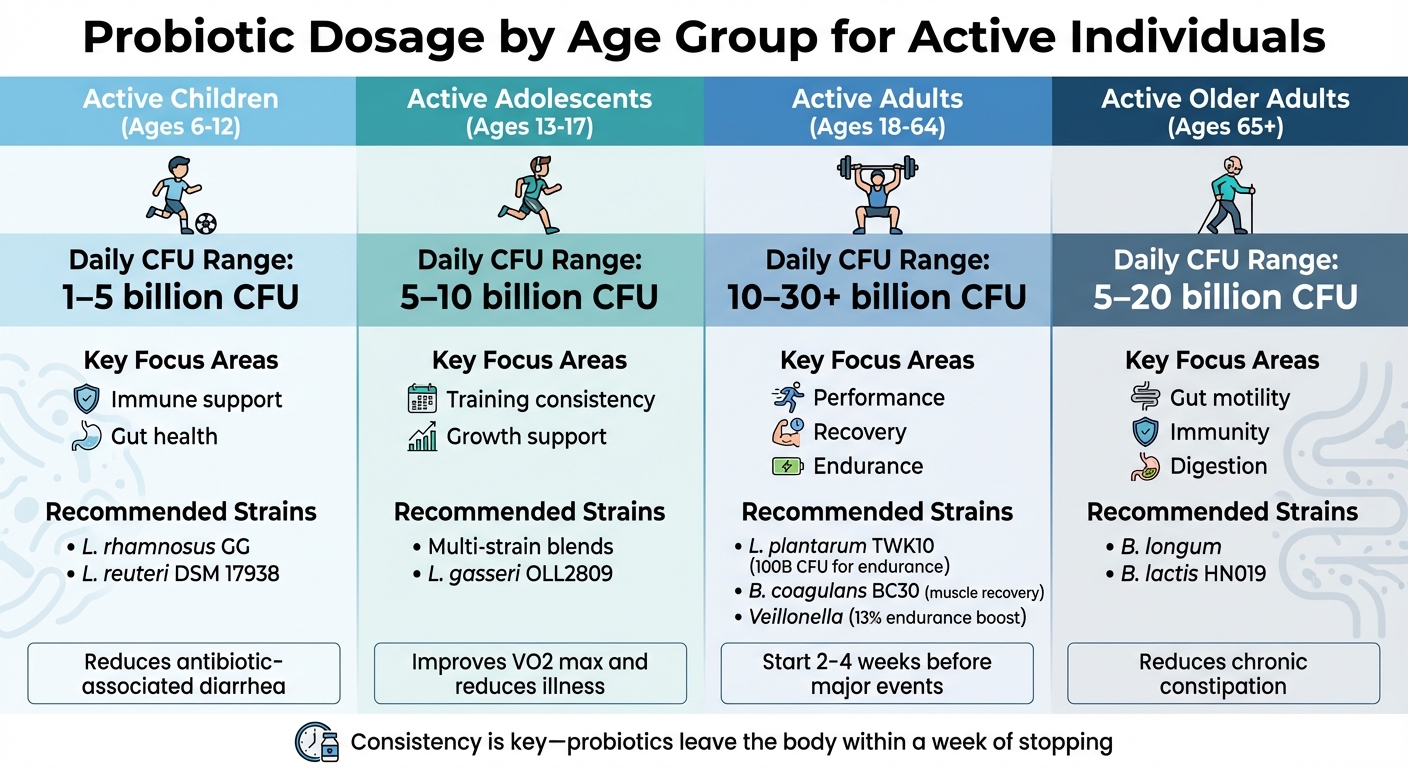
Probiotic Dosage Recommendations by Age Group for Active Individuals
Probiotic requirements change as we age, influenced by factors like physical activity, hormonal shifts, and immune system changes. Below are tailored recommendations for active individuals, organized by age group, to help meet their specific needs.
Active Children (Ages 6–12)
For active kids, a daily dose of 1 to 5 billion CFU is recommended. Strains like Lactobacillus rhamnosus GG and Lactobacillus reuteri DSM 17938 can help reduce antibiotic-associated diarrhea and promote a healthy gut environment [4]. Additionally, multi-strain probiotics found in yogurt have been shown to shorten the duration and lessen the frequency of upper respiratory infections in young athletes [1].
Child-friendly formats such as chewable tablets or sachets make supplementation easier. Always consult a pediatrician before making changes to a child’s probiotic regimen.
Active Adolescents (Ages 13–17)
Adolescents experience increased probiotic needs due to growth spurts, hormonal changes, and intense training. A daily intake of 5 to 10 billion CFU is typically suggested [10]. For example, an eight-week study on adolescent female swimmers showed that multi-strain probiotic yogurt improved VO2 max and reduced training days lost to illness [1]. Strains like Lactobacillus gasseri OLL2809 have also demonstrated benefits in young athletes [1].
Active Adults (Ages 18–64)
This age group has the most varied probiotic requirements, depending on training intensity and personal goals. Daily doses range from 10 to 30+ billion CFU, with higher doses often needed during intense training periods or competition prep [10][11].
For endurance, taking 100 billion CFU of Lactobacillus plantarum TWK10 over six weeks has been shown to improve stamina and stabilize blood sugar during exercise [1]. Veillonella, a strain found in elite runners, converts lactate into propionate and has been linked to a 13% boost in endurance performance in pre-clinical studies [1]. For muscle recovery, Bacillus coagulans GBI-30, 6086 (BC30) at about 1 billion CFU can enhance protein absorption and reduce soreness [1][8]. Similarly, a combination of Bifidobacterium breve BR03 and Streptococcus thermophilus FP4 helps maintain muscle torque and flexibility after intense workouts [1].
Timing is key for adult athletes. Start supplementation 2 to 4 weeks before major competitions or international travel to allow the probiotics to establish themselves and support immune function [1][11]. During less active periods, a lower dose may suffice, but higher doses are recommended during rigorous training or travel.
"Competitive athletes, whether amateur or professional, may require more nutritional and sports supplements than inactive individuals." - Yousef Nami, Department of Food Biotechnology [10]
Active Older Adults (Ages 65+)
Active seniors benefit from 5 to 20 billion CFU daily, with a focus on strains that support digestion and immune health [10]. Strains like Bifidobacterium longum and Bifidobacterium lactis HN019 have been shown to alleviate chronic constipation and enhance immune function [1]. For those over 50, probiotics can reduce illness and help maintain gut health, which is critical for overall immunity [1][4].
Older adults who take multiple medications should pay close attention to compatibility and may find sachets or powders easier to incorporate into their diet. Maintaining a healthy gut microbiome is essential for active seniors who wish to continue training and competing [1][3].
| Age Group | Daily CFU Range | Key Focus Areas | Recommended Strains |
|---|---|---|---|
| Active Children (6–12) | 1–5 billion | Immune support | L. rhamnosus GG, L. reuteri DSM 17938 |
| Active Adolescents (13–17) | 5–10 billion | Training consistency | Multi-strain blends, L. gasseri OLL2809 |
| Active Adults (18–64) | 10–30+ billion | Performance & recovery | L. plantarum TWK10, B. coagulans BC30, Veillonella |
| **Active Older Adults (65+) | 5–20 billion | Gut motility & immunity | B. longum, B. lactis HN019 |
These guidelines provide a baseline for adjusting probiotic use during periods of intense activity or competition preparation.
sbb-itb-1bbfe7f
High-Dose Probiotic Protocols for Athletes
When it comes to addressing acute gut health challenges in athletes, high-dose probiotic protocols can be a game-changer. While standard doses typically range from 1 to 50 billion CFU daily, athletes recovering from antibiotics or enduring the physical toll of intense training may benefit from short-term, high-dose interventions. These concentrated protocols are designed to help reset the gut microbiome quickly, especially when it's been disrupted by stress or medication [1][2].
For example, exercising in hot conditions can increase gut permeability, allowing toxins to enter the bloodstream and trigger inflammation [1]. Similarly, antibiotics can severely disrupt the gut, requiring up to three months for the microbiome to naturally recover [2][6]. High-dose probiotics can speed up this recovery, helping to restore gut barrier integrity, strengthen the immune system, and improve nutrient absorption [1]. These protocols serve as a bridge between immediate recovery and long-term performance improvements.
"Probiotic administration has been linked to a multitude of health benefits, with gut and immune health being the most researched applications." – International Society of Sports Nutrition [1]
In one study, 10 male runners who supplemented with a multi-strain probiotic for four weeks showed improved endurance during heat stress. The probiotics enhanced gut integrity and reduced the movement of toxins into the bloodstream, delaying fatigue [1].
These high-dose strategies are particularly useful during critical periods - after a course of antibiotics, following high-intensity training or competition, or ahead of international travel that may challenge the immune system. For best results, start supplementation at least 14 days before major events to allow the gut to fully adapt [2].
Using Begin Rebirth RE-1™ for Microbiome Reset
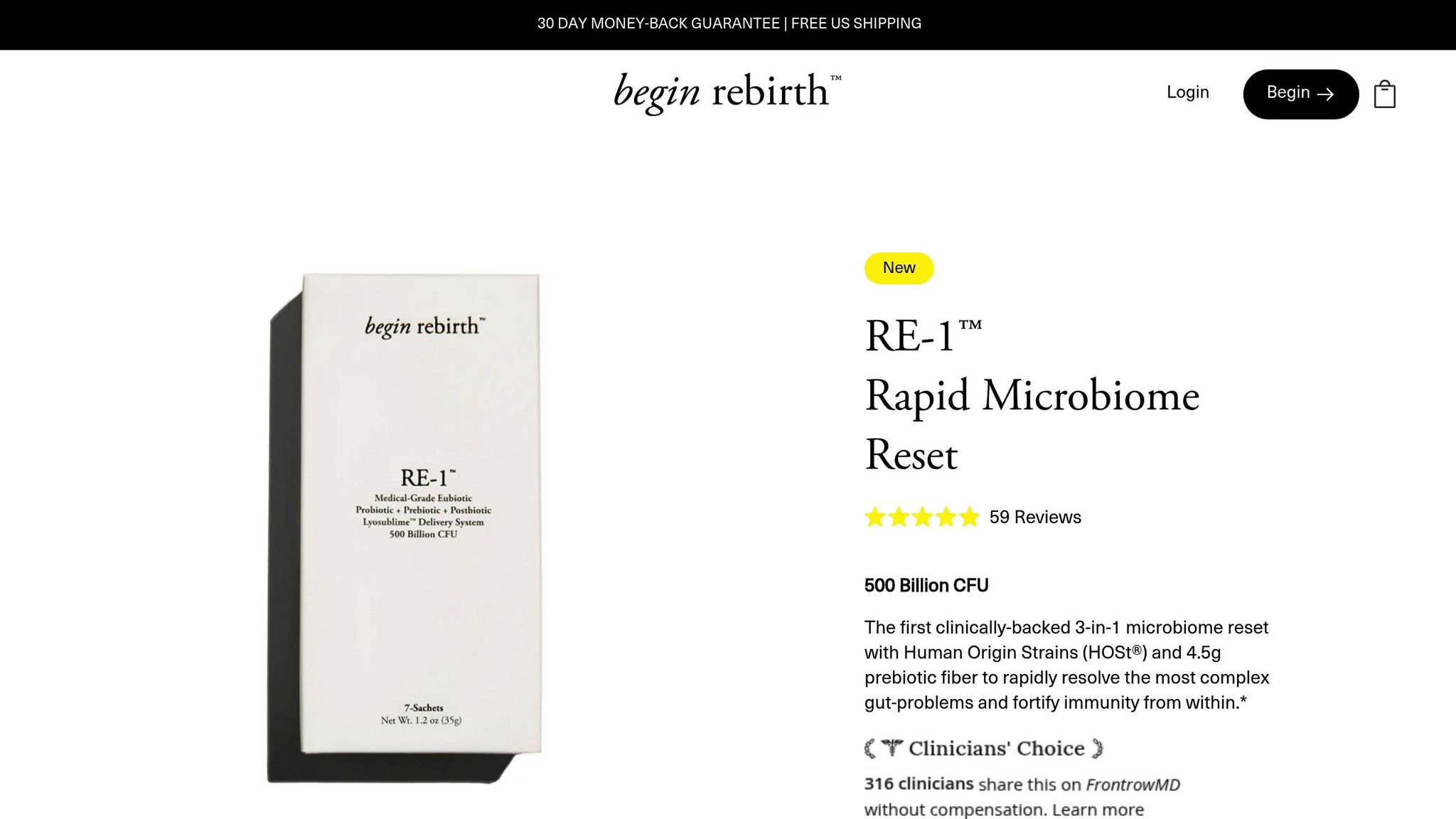
Begin Rebirth RE-1™ is a high-dose probiotic specifically designed for athletes needing a rapid gut reset. Each sachet delivers a potent 500 billion CFU, far exceeding standard doses, to help restore gut balance quickly [2]. This 3-in-1 synbiotic formula combines probiotics, prebiotics, and postbiotics, which have been shown to improve sleep, stress levels, and overall well-being in professional athletes [5]. Its Human Origin Strains (HOSt™) are tailored to the human gut microbiome, ensuring effective colonization and functionality [1]. Plus, the Lyosublime™ delivery system protects the probiotics from stomach acid, so they reach the intestines intact [1][6].
The protocol is divided into three distinct phases:
| Reset Phase | Duration | Primary Goal |
|---|---|---|
| Acute Reset | 7 Days | Rapid recovery after antibiotics or competition |
| Stabilization | 4 Weeks | Restore gut barrier integrity and reduce inflammation |
| Optimization | 12 Weeks | Long-term support for nutrient absorption and immune health |
The 7-day phase is ideal for quick recovery after antibiotics or a major event. The 4-week phase focuses on repairing the gut after intense training or ongoing gastrointestinal issues. Finally, the 12-week phase is perfect for athletes prepping for a competitive season or aiming to enhance the gut–brain connection for sustained performance [1]. To ease into the high-dose regimen, consider starting with smaller amounts during the first week, especially if you're new to such protocols [2]. Conveniently, the sachets don't require refrigeration and can be mixed into water or smoothies, making them easy to use on the go.
Adjusting High-Dose Protocols by Age
While Begin Rebirth RE-1™ suits a wide range of athletes, adjustments are necessary to match age-specific needs and tolerances [1].
For active children and teens (6–17): Lower-dose protocols are recommended due to their sensitive and developing microbiomes. The focus should be on immune support and maintaining consistent training. Shorter courses, like an 8-week protocol during cold and flu season, are often more suitable. Multi-strain probiotics have been shown to improve VO2 max and reduce respiratory infections in young athletes [1]. Always consult a pediatrician before starting high-dose probiotics for this age group.
For active adults (18–64): Adults can safely follow the full 500 billion CFU protocol. This group benefits significantly from high-dose interventions, especially for gut recovery after intense training or competition. Align the reset phases with training schedules - for instance, a 7-day reset after antibiotics, a 4-week phase post-competition, or a 12-week plan for peak season preparation.
For older adults (65+): Older athletes should emphasize strains that enhance nutrient absorption and bolster immune function, as aging naturally weakens the immune system [1]. While high-dose protocols can be beneficial, a cautious approach is best. Starting with a 4-week stabilization phase at the full dose, followed by a lower maintenance dose (10–20 billion CFU daily), often works well. Probiotics may also help with age-related hormonal shifts and muscle preservation [1]. Those on multiple medications should consult a healthcare provider to ensure compatibility.
The athletic gut microbiome is shaped by years of diet and activity, meaning younger athletes may adapt more quickly, while older athletes might need extended protocols to achieve similar results.
"The minimal effective dose and method of administration... of a specific probiotic strain depends on validation studies for this particular strain." – International Society of Sports Nutrition [1]
Regardless of age, it's important to monitor progress by tracking gastrointestinal symptoms and the frequency of respiratory infections. Keep in mind that probiotic levels in the body typically drop within a week after stopping supplementation, so consistency during the reset phase is crucial [5][6]. The next section will discuss how to monitor and fine-tune these protocols effectively.
Tracking and Adjusting Your Probiotic Dosage
Once you've started taking probiotics, keeping track of how your body responds is crucial. This allows you to fine-tune your dosage and maximize the benefits for both performance and recovery. Paying attention to key signs can help you determine if your current regimen is working or needs adjustment.
What to Monitor
Immune Health:
Notice how often you catch colds or other upper respiratory infections, as well as how long they last and how severe they are. Many active individuals report fewer sick days with consistent probiotic use. Keeping a daily log of symptoms can help you see how your dosage impacts your immune defenses.
Digestive Symptoms:
Watch for changes in bloating, gas, stool consistency, abdominal discomfort, or reflux. Some mild bloating or gas during the first few days is normal as your body adjusts, but ongoing discomfort might mean it's time to tweak your dose.
Training Recovery:
Take note of how sore your muscles feel after workouts, how quickly you recover, and your energy levels during training. Positive changes in these areas could point to your probiotics supporting your recovery process.
Performance and Mental Well-being:
Log your training output, recovery times, mood, and sleep quality over a four-week period. Patterns that emerge could reveal how probiotics are affecting your overall performance and mental health.
How to Adjust Your Dosage
Start by establishing a baseline for 1–2 weeks, recording your symptoms and overall well-being. Probiotics typically clear out of your system within a week after stopping, so this baseline will give you a clear picture of your natural state. When introducing probiotics, begin with a lower dose to test your tolerance, especially if you're using a high-potency product like Begin Rebirth RE-1™. If you experience mild side effects, temporarily reduce the dose and gradually increase it as your gut adjusts [6].
During particularly stressful periods - such as international travel, competitive events, intense training, or poor sleep - you might benefit from temporarily increasing your dose to support your immune system [1].
After completing a heavy training phase or competition season, transition to a maintenance dose. Research indicates that maintenance levels typically range between 10^8 and 10^10 CFU per day [6]. Keep detailed records to adjust your intake as needed to match your ongoing training and recovery demands.
If you switch protocols, allow for a one-week washout period to reset. Also, make sure your probiotic product guarantees viable cell counts through its entire shelf life, as potency can decrease over time [6].
"With cessation of probiotic intake, there is a reduction in the amount of probiotic in the colon, and within approximately a week of discontinuing supplementation, the probiotic is no longer detectable in the feces." – Alex E. Mohr, Arizona State University [6]
It's important to remember that the effectiveness of probiotics depends on the specific strain and the dose. A dosage that supports your immune system might not be the same as one designed for recovery or nutrient absorption [6]. If you don't notice improvements after 4–6 weeks of consistent use, consult a healthcare provider or sports nutritionist to reassess your plan. For individuals with weakened immune systems or those on multiple medications, professional supervision is especially important [9]. By consistently tracking and adjusting your regimen, you can ensure your probiotics deliver the support you need for your active lifestyle.
Conclusion
Finding the right probiotic dosage is not a one-size-fits-all approach - it depends on factors like age, training intensity, and individual physiology. The International Society of Sports Nutrition highlights this well: "The diverse, metabolically favorable intestinal microbiome evident in the elite athlete is the cumulative manifestation of many years of high nutrient intake and high degrees of physical activity and training throughout youth, adolescence and during adult participation" [1]. This reinforces the need for a personalized strategy, as outlined earlier.
Probiotic benefits are highly specific to both strain and dosage. For example, standard research-backed doses may work for daily support, while high-potency options like Begin Rebirth RE-1™, with 500 billion CFU per serving, can serve as a reset during more demanding periods. The needs of a young athlete working on building resilience will naturally differ from those of an older competitor focused on recovery and maintaining peak performance.
Genetics also play a role in how individuals respond to probiotics. That’s why it’s crucial to select products that clearly list their genus, species, and strain, along with guaranteed viable cell counts through the product's shelf life [1][6]. These details matter. Whether you're helping a young athlete strengthen their immune system or supporting gut health during the rigors of intense training, tailoring your probiotic routine to your unique needs can maximize the benefits. From reducing upper respiratory infections to enhancing nutrient absorption and speeding up recovery, probiotics can be a valuable tool for athletes at any stage of their journey.
FAQs
How can I choose the right probiotic to support my athletic performance?
To find the right probiotic for your athletic goals, it’s essential to first pinpoint your specific needs. Are you looking to improve digestion, strengthen immunity during intense training, ease exercise-related gut issues, or speed up recovery? Different probiotic strains are linked to different benefits. For instance, Bifidobacterium longum can support digestion and immune balance when taken in doses of 1–10 billion CFU daily, while Lactobacillus rhamnosus GG is known to promote gut health and immunity at doses of 10–20 billion CFU per day.
When evaluating products, pay close attention to the label. Look for the specific strain names, the CFU count (ensured through the product’s shelf life), and a dosage that matches research-backed guidelines. Delivery method matters too - capsules are easy to take, powders offer flexible dosing, and synbiotics like Begin Rebirth RE-1™ provide an all-in-one solution with pre-, pro-, and postbiotics to quickly reset your microbiome. Choosing the right strain, dose, and format tailored to your goals can help you maximize the benefits of probiotics for performance and recovery.
Can taking high doses of probiotics cause side effects for athletes?
Yes, consuming very high doses of probiotics can occasionally cause side effects like bloating, gas, or diarrhea. In rare situations, it might even lead to more severe problems, such as infections. To reduce the likelihood of these issues, athletes and active individuals should begin with a smaller dose and slowly increase it as their body adapts.
Selecting a probiotic that aligns with your specific needs is key. A well-chosen option can promote gut health, strengthen immune function, and enhance overall performance - all without unnecessary discomfort.
When should I start taking probiotics before an important event or competition?
To get the most out of probiotics, start taking them 2–4 weeks before your event. This gives your gut enough time to adjust and allows the probiotic strains to reach effective levels. The result? Better gut health, reduced inflammation, and a stronger immune system. The key here is consistency - regular use over time is what delivers the best results.
For optimal impact, take your probiotic in the morning with a meal - think yogurt, oatmeal, or a smoothie. This timing helps protect the live bacteria from stomach acid and improves absorption. Sticking to a daily routine in the weeks leading up to and during the event will help keep your gut resilient and ready.
If you’re considering a high-potency option, Begin Rebirth RE-1™ is worth a look. It delivers 500 billion CFU per serving in a convenient synbiotic blend. You can start their 7-day or 4-week protocol within the suggested pre-event window and keep taking it daily for the best results.