


Your gut microbiome is home to trillions of microbes that influence your digestion, immune system, and overall health. A disrupted microbiome - caused by poor diet, stress, or antibiotics - can lead to inflammation, digestive issues, and even chronic diseases. This 4-week reset plan helps restore balance by eliminating harmful foods, introducing prebiotics, probiotics, and postbiotics, and building long-term habits for better gut health.
Key Steps:
- Week 1: Remove triggers like sugar, processed foods, and alcohol. Focus on plant-based meals and hydration.
- Week 2: Add probiotics through fermented foods like kefir and sauerkraut.
- Week 3: Feed good bacteria with prebiotic-rich vegetables and resistant starches.
- Week 4: Strengthen your gut lining with bone broth, healthy fats, and a diverse diet.
Track your progress by noting improvements in digestion, energy, mood, and skin. Long-term success depends on maintaining these habits and supporting microbial diversity with a balanced diet and healthy lifestyle.
How to Heal Your Gut in 30 Days
What Are Prebiotics, Probiotics, and Postbiotics?
Think of your gut as a garden. Prebiotics act as the fertilizer, probiotics are the beneficial plants, and postbiotics are the nourishing byproducts that keep everything thriving. Together, they create a cycle: prebiotics feed probiotics, and probiotics produce postbiotics, all working to maintain gut health and balance [7]. Let’s break down how each plays a role in detoxifying and balancing your gut.
Prebiotics: Fuel for Beneficial Bacteria
Prebiotics are fibers that your body can’t digest, but they’re essential because they feed the good bacteria in your gut [7] [8]. When you eat prebiotic-rich foods like garlic, onions, or chia seeds, these fibers reach your colon intact, where they nourish helpful bacteria such as Bifidobacteria and Lactobacilli [2]. Considering that your body hosts a bacteria-to-human cell ratio of about 10:1, consuming 30–35 grams of fiber daily is crucial to support these bacteria [11]. Common sources of prebiotics include inulin, fructooligosaccharides (FOS), galactooligosaccharides (GOS), and acacia fiber [2] [7].
Probiotics: Restoring Good Bacteria
Probiotics are live microorganisms - both bacteria and yeasts - that help balance your gut’s ecosystem when consumed in sufficient amounts [8] [9]. They work by competing with harmful pathogens for space and nutrients in your digestive system [2] [7]. Human Origin Strains (HOSt™) are particularly effective because they are naturally suited to thrive in the human gut. Some common probiotic strains include L. acidophilus, B. animalis, and L. rhamnosus (LGG) [8]. Research shows that multi-strain probiotic supplements can significantly improve health; for instance, clinical trials demonstrated a 70% reduction in endotoxin levels and a 64% improvement in insulin resistance in people with type 2 diabetes [8]. These benefits make probiotics a vital part of any gut detox plan.
Postbiotics: Repairing and Protecting the Gut
Postbiotics are the beneficial compounds and metabolites that probiotics produce during fermentation [2] [8]. These include short-chain fatty acids (SCFAs) like butyrate, acetate, and propionate, as well as enzymes, peptides, and cell wall fragments. According to Dr. Thomas Wnorowski, Research Director at BodyBio:
"Postbiotics might be the most revolutionary of them all for our health and wellbeing." [7]
Among postbiotics, butyrate stands out for its role in fueling colon cells [7] [10]. It helps repair the gut lining, supports the protective mucosal barrier, and prevents "leaky gut" syndrome by keeping toxins from entering the bloodstream [7] [10]. Postbiotics also neutralize harmful substances like lipopolysaccharides (LPS), which can trigger inflammation [10].
How to Prepare for Your 4-Week Reset
Start by cutting out foods and habits that negatively impact your gut. A 2017 study from St Mary's University found that participants experienced noticeable improvements in symptoms and weight after just four weeks [14].
Remove Foods That Harm Your Gut
The first step is to eliminate foods that feed harmful bacteria or damage your gut lining. Say goodbye to added sugars, including refined sugar, high-fructose corn syrup, and artificial sweeteners (with the exception of Lakanto) [1] [3] [12]. Next, steer clear of ultra-processed foods with chemical additives, preservatives, or hydrogenated fats [1] [3] [12]. Gluten-containing grains like wheat should also be removed, and stricter plans may require cutting out all grains, such as rice, oats, quinoa, and corn [3] [12]. This elimination phase helps identify which foods may be triggering your symptoms, guiding better long-term choices [3].
What You'll Need
Stock up on foods that support gut health. Prebiotic vegetables like garlic, onions, leeks, asparagus, and artichokes are a great place to start. Pair these with probiotic-rich options such as yogurt, kefir, sauerkraut, kimchi, and miso to promote a balanced gut flora [1] [5]. Healthy fats from sources like avocados, olive oil, coconut oil, and raw nuts can help strengthen your gut lining [13]. For additional support, try resistant starches like green banana powder or cooked-and-cooled potatoes [4] [13].
Hydration is key, so aim for at least 2 liters of filtered water daily. Other essentials include bone broth, which is high in L-Glutamine, and herbal teas like dandelion or milk thistle [1] [11]. You might also consider Begin Rebirth RE-1™, a synbiotic supplement specifically formulated for a microbiome reset. Once your pantry is stocked, define your health goals to track progress throughout the reset.
Set Clear Goals
To get the most out of your reset, set measurable goals for both digestive and overall health. A well-balanced gut can lead to better digestion, mental clarity, glowing skin, and improved energy levels. Studies like the one at St Mary’s University show that having clear nutrition goals can result in significant physical and mental improvements [3].
Use a food and symptom diary to track changes in areas like digestion (e.g., bloating, gas), cognitive function (e.g., brain fog, concentration), emotional health (e.g., mood swings, anxiety), and physical well-being (e.g., energy levels, joint discomfort) [1] [3] [12] [14]. As Dr. Raphael Kellman explains:
"This diet is not about counting calories or measuring portions - it is about healing your gut, rebalancing your microbiome, and restoring your natural hunger cues" [12].
Keep your expectations realistic. The goal is steady, sustainable progress over four weeks - not an instant transformation.
sbb-itb-1bbfe7f
The 4-Week Reset Plan
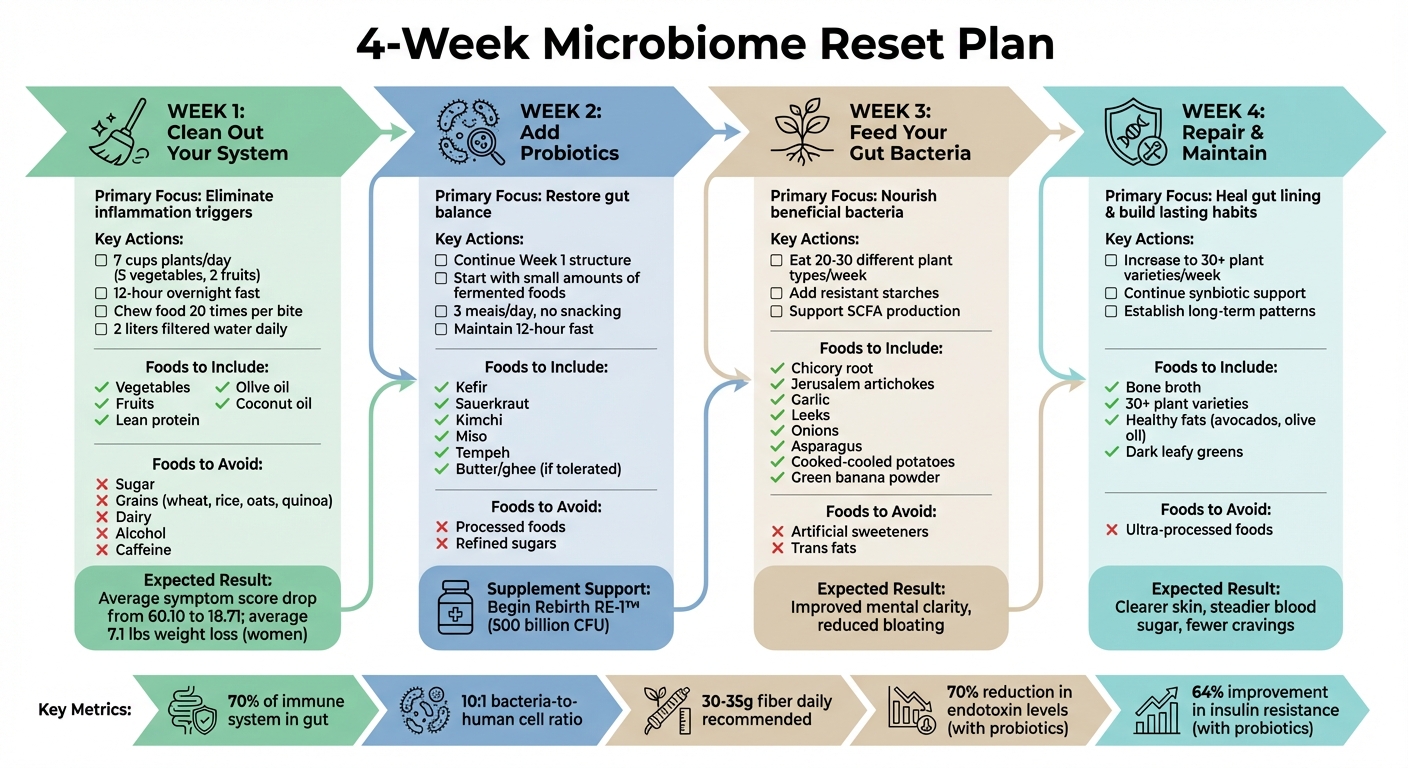
4-Week Gut Microbiome Reset Plan: Weekly Action Steps and Foods
This four-week program is designed to cleanse, restore, and balance your gut health step by step. It works by removing harmful triggers, reintroducing helpful bacteria, and supplying the nutrients your body needs.
Week 1: Clean Out Your System
In the first week, the goal is to eliminate foods and substances that can cause inflammation. Avoid refined sugar, grains (like wheat, rice, oats, and quinoa), pulses, alcohol, caffeine, and dairy [13][14]. Instead, focus on eating seven cups of plant-based foods daily - five cups of vegetables and two cups of fruit - to increase fiber and nutrient intake [14].
Try a 12-hour overnight fast between dinner and breakfast to allow your gut to recover and support bacterial regrowth [14]. Chew your food thoroughly - around 20 times per bite - to aid digestion [14]. Stick to cooking with extra virgin olive oil or coconut oil, and drink at least 2 liters (roughly half a gallon) of filtered water daily. Adding a squeeze of lemon can help support your liver’s natural detox process [14].
A study led by Dr. Kate Lawrence in June 2017 at St Mary’s University examined 21 participants following a similar elimination plan. Over four weeks, the participants experienced a significant drop in medical symptom scores - from an average of 60.10 to 18.71. Female participants also lost an average of 7.1 pounds and reported noticeable improvements in bloating and acid reflux [14].
Once you've completed this cleansing phase, you’ll be ready to replenish your gut with beneficial bacteria in Week 2.
Week 2: Add Probiotics
The second week focuses on restoring balance to your gut by introducing probiotics. Start adding fermented foods like milk kefir, sauerkraut, tempeh, kimchi, and miso to your meals. These foods help replenish your gut microbiome with healthy bacteria [14]. For an extra boost, consider using Begin Rebirth RE-1™, which provides 500 billion CFU per serving and is formulated with Human Origin Strains for effective microbiome restoration.
Begin slowly with small amounts of fermented foods to avoid issues like gas or bloating, then gradually increase your intake [1]. Stick to the same structure as Week 1: three main meals per day, no snacking, and that 12-hour overnight fast [14]. If your body handles dairy well, you can also reintroduce butter or ghee at this stage [14].
Week 3: Feed Your Gut Bacteria
With healthy bacteria now present, Week 3 is all about feeding them the nutrients they need to thrive. Add prebiotic-rich vegetables like chicory root, Jerusalem artichokes, garlic, leeks, onions, and asparagus to your diet. Include resistant starches, such as cooked and cooled potatoes or green banana powder, to further support microbial diversity [13][14]. These foods help your gut produce short-chain fatty acids (SCFAs), which fuel your colon lining and regulate immune function [13].
Aim to eat 20–30 different plant types throughout the week to encourage a diverse microbiome [14]. You can also include postbiotics to enhance your gut barrier and support your immune system [2][4].
With your gut nourished and balanced, Week 4 focuses on long-term repair and maintenance.
Week 4: Repair and Maintain
The final week centers on healing your gut lining and building habits for lasting health. Incorporate bone broth or stock into your meals to help strengthen your intestinal barrier [14]. Increase your variety of plant-based foods to 30 or more types per week, emphasizing nutrient-dense options. Add healthy fats, such as those from avocados and olive oil, along with plenty of dark leafy greens [13].
Continue using Begin Rebirth RE-1™ from Week 2 to maintain bacterial diversity. This 3-in-1 synbiotic formula combines prebiotics, probiotics, and postbiotics to solidify the improvements made during the reset [14]. By the end of this phase, you’ll have transitioned from eliminating harmful triggers to establishing a balanced and resilient gut.
| Week | Primary Focus | Key Foods to Include | Foods to Avoid |
|---|---|---|---|
| Week 1 | Clean Out | 7 cups plants/day, lean protein, olive oil [14] | Sugar, grains, dairy, alcohol, caffeine [14] |
| Week 2 | Add Probiotics | Kefir, sauerkraut, kimchi, miso, butter/ghee [13][14] | Processed foods, refined sugars [13] |
| Week 3 | Feed Bacteria | Chicory root, garlic, leeks, asparagus, resistant starches [13][14] | Artificial sweeteners, trans fats [12] |
| Week 4 | Repair & Maintain | Bone broth, 30+ plant varieties/week, healthy fats [13][14] | Ultra-processed foods [13] |
What to Expect and How to Track Results
Health Improvements You May Notice
A focused 4-week microbiome reset can bring noticeable changes to your health. By week two, you might feel less bloated and experience more regular digestion [4]. With about 70% of your immune system residing in the gut [5], some people report fewer infections. By week three, mental clarity often improves as serotonin production levels out [15].
Skin breakouts may appear early on but typically clear up by week four. Around the same time, you could see steadier blood sugar levels and fewer cravings [5][6][15]. As Elizabeth Ko, MD, and Eve Glazier, MD, from UCLA Health explain:
"The gut microbiome... influence[s] so many aspects of physiology, metabolism, immunity and nutrition that our health and well-being are closely tied to theirs" [5].
During the first few days, mild symptoms like fatigue, headaches, or irritability are common [15]. Ashley Palmer, a Nutritional Therapy Practitioner, reassures:
"Feeling worse after starting a gut detox doesn't mean something's wrong. It means your body is doing exactly what it should: eliminating harmful pathogens and rebalancing your microbiome" [15].
To track your progress, consider keeping a daily record of these changes.
How to Monitor Your Progress
Daily tracking is key to understanding how your body responds. Rate your energy, mood, and digestive comfort on a scale of 1–10 [1]. Keep an eye on stool consistency and frequency, as these can indicate that beneficial bacteria are thriving. Also, note improvements in sleep quality, as serotonin from the gut plays a role in restful sleep [15].
Stay hydrated by drinking at least half your body weight in ounces of water each day to support the detox process [15]. If you notice headaches or increased gas during the first week, these are typical "die-off" reactions. Temporary skin breakouts may also appear, signaling that your body is detoxifying.
For a deeper understanding of your progress, consult your healthcare provider about blood tests for inflammation markers like C-reactive protein (CRP) or liver function tests (ALT, AST) [2][16]. Advanced stool testing can also provide valuable insights by measuring microbial diversity and short-chain fatty acid levels [1].
Maintaining Your Gut Health Long-Term
Once you've established a balanced gut, keeping up with those good habits becomes the next challenge. Completing a 4-week reset is just the first step. Your microbiome can adapt quickly - sometimes within 24 hours - but it can just as easily revert if you slip back into old routines [18]. That’s why consistent care is so important for lasting results.
To keep your gut thriving, make prebiotics, probiotics, and postbiotics part of your daily life. Prebiotic-rich foods, fermented products, and fermented foods that provide postbiotics all work together to nourish and sustain your gut [1][2][4]. If you’re looking for a convenient option, Rebirth RE-1™ offers all three in a single daily sachet, packing 500 billion CFU to support your gut well beyond the reset phase.
Variety in your diet is also essential. Aim to eat 20–30 different plant-based foods each week. This diversity helps build a resilient microbiome, boosting digestion, immunity, and overall health [19].
But it’s not just about what you eat - your lifestyle plays a big role too. Prioritize 7–9 hours of quality sleep, aim for 150 minutes of moderate exercise each week, and practice daily stress management techniques like meditation or deep breathing. These habits can enhance microbial diversity and complement your dietary efforts [17][18].
For long-term results, commit to three 28-day cycles of focused gut care. Building significant improvements typically takes 3–6 months of consistent effort [4][17]. Stay hydrated with 8–10 cups of water every day, and keep added sugars to less than 10% of your total calories - about 12 teaspoons for a 2,000-calorie diet [18][20]. By sticking to these habits, you’ll preserve the balance you’ve worked so hard to create.
FAQs
What are the health benefits of resetting your microbiome?
Resetting your microbiome with a structured approach involving prebiotics, probiotics, and postbiotics can have a powerful impact on your health. By rebalancing the trillions of microorganisms living in your gut, you can improve digestion, enhance nutrient absorption, and strengthen the gut barrier to keep toxins out. This balance also restores the production of key vitamins, supports your immune system, reduces chronic inflammation, and lowers the chances of infections or autoimmune problems.
But the benefits don’t stop at physical health. A well-balanced microbiome plays a crucial role in mental well-being by supporting the gut-brain connection. This connection helps regulate your mood, reduce stress, and improve mental clarity. It may even assist with weight management by promoting a sense of fullness and supporting your metabolism. Products like Begin Rebirth RE-1™, a 3-in-1 synbiotic delivering 500 billion CFU per serving, offer an easy way to reset your microbiome and experience these changes in as little as 7 days.
What roles do prebiotics, probiotics, and postbiotics play in gut health, and how do they work together?
Prebiotics, probiotics, and postbiotics work together to keep your gut microbiome in balance. Prebiotics are non-digestible fibers that act as food for beneficial gut bacteria, helping them grow and thrive. Probiotics are the live, "good" bacteria that settle in the gut, supporting digestion, immune function, and microbial balance. When probiotics ferment prebiotics, they create postbiotics - beneficial by-products like short-chain fatty acids that strengthen the gut lining, reduce inflammation, and promote overall gut health.
These three elements create a natural partnership: prebiotics nourish probiotics, probiotics generate postbiotics, and postbiotics help maintain a healthy gut environment. Begin Rebirth RE-1™ brings all three together in a single, clinically-supported formula, making it easy to reset your microbiome and support better digestion and immunity.
What are the signs of an imbalanced gut microbiome?
An imbalanced gut microbiome, often referred to as dysbiosis, can manifest in various ways. Some of the most common signs are digestive troubles, such as gas, bloating, constipation, diarrhea, or even heartburn. Beyond digestion, you might notice ongoing fatigue, trouble sleeping, or shifts in mood - like increased anxiety or feelings of sadness - since the gut and brain are closely linked through what’s known as the gut-brain axis.
Other red flags include unexplained changes in weight, intense cravings for sugar, skin issues like acne or eczema, frequent infections, and difficulty concentrating, often called "brain fog." If these symptoms seem to occur together or persist over time, it’s worth paying attention to your gut health. Simple lifestyle adjustments - like eating a balanced diet, staying well-hydrated, managing stress, and prioritizing quality sleep - can go a long way in restoring balance and boosting your overall health.