


Synbiotics combine probiotics (live bacteria) and prebiotics (fiber that feeds good bacteria) to improve gut health and metabolic functions. Research highlights their role in reducing blood sugar, aiding weight loss, and lowering cholesterol. These effects make synbiotics a promising tool for managing metabolic syndrome, obesity, and diabetes.
Key findings include:
- Blood sugar control: A 2022 study showed a 14.69 mg/dL reduction in fasting glucose after 12 weeks of synbiotic use.
- Weight management: A 2023 trial found significant BMI and weight reductions in overweight adults using synbiotics.
- Cholesterol and inflammation: Synbiotics improve lipid profiles and reduce inflammatory markers, supporting overall metabolic health.
Synbiotics work by enriching gut bacteria, modifying bile acids, and reducing systemic inflammation. Products like Begin Rebirth RE-1™ offer a practical way to incorporate synbiotics into daily routines for better metabolic outcomes.
What Are Synbiotics? | GutDr Mini-Explainer
sbb-itb-1bbfe7f
Clinical Studies on Synbiotics and Metabolic Health
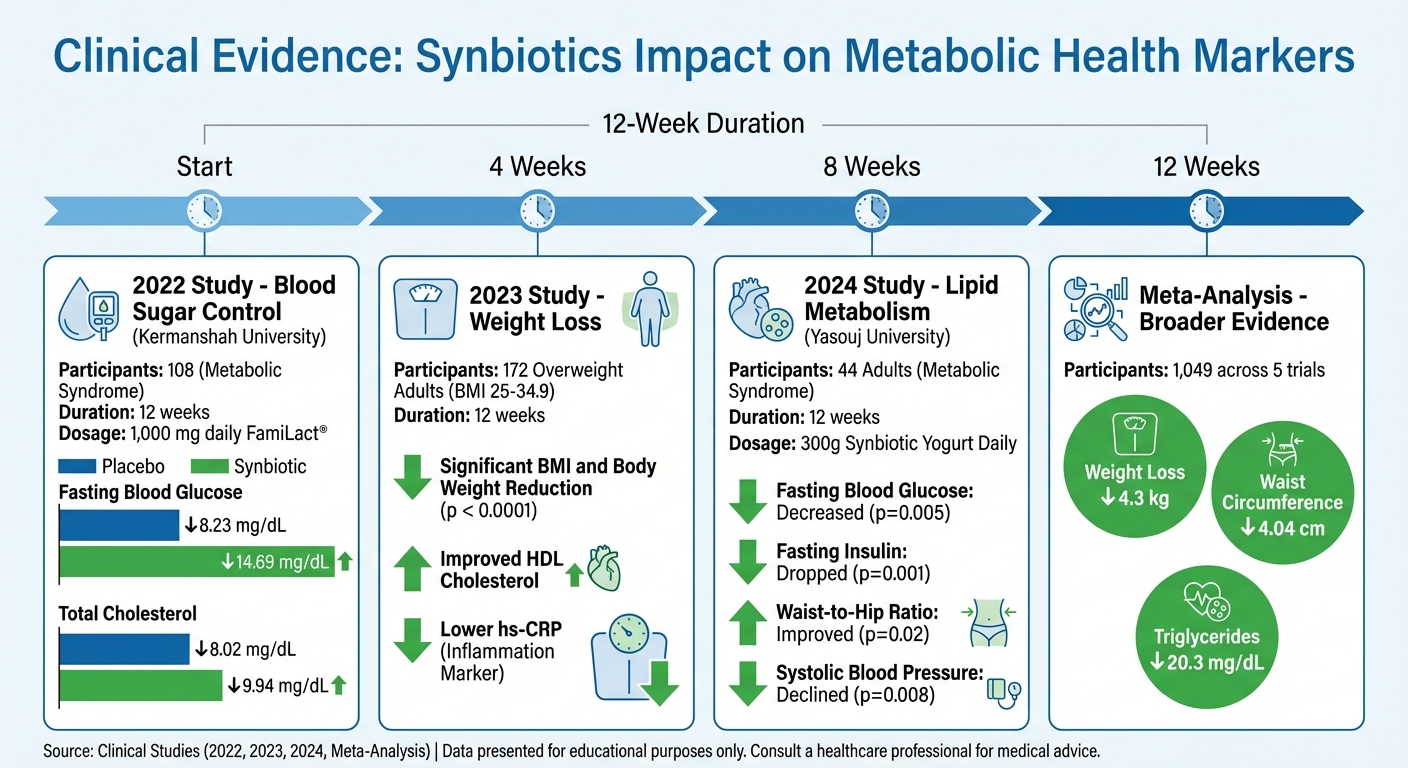
Clinical Evidence: Synbiotics Impact on Metabolic Health Markers
Several clinical trials have shed light on how synbiotics can directly influence key metabolic health markers.
2022 Study: Blood Sugar Control
A triple-blind randomized controlled trial conducted by researchers at Kermanshah University of Medical Sciences in Iran explored the effects of synbiotics on metabolic dysfunction. The study, led by Fatemeh Rahimi, involved 108 participants with metabolic syndrome and ran from November 2016 to March 2017. Participants received 1,000 mg daily of FamiLact®, a multi-strain synbiotic containing seven probiotic strains combined with fructooligosaccharides (FOS). After 12 weeks, the synbiotic group experienced a 14.69 mg/dL reduction in fasting blood glucose levels compared to an 8.23 mg/dL drop in the placebo group (p=0.007). Additionally, total cholesterol levels decreased by 9.94 mg/dL in the synbiotic group versus 8.02 mg/dL in the placebo group [6].
"Synbiotic supplementation while following a healthy lifestyle and nutrition improved FBG in patients with metabolic syndrome." - Fatemeh Rahimi, Nutritional Sciences Department, Kermanshah University of Medical Sciences [6]
This study laid the groundwork for further investigations into synbiotics' effects on other metabolic markers.
2023 Study: Weight Loss
In 2023, a double-blind randomized controlled trial examined the role of synbiotics in weight management. The study included 172 overweight adults with BMIs between 25 and 34.9 kg/m². Over the course of 12 weeks, participants were given either one of two synbiotic formulations or a placebo. The synbiotic groups showed significant reductions in BMI and body weight (p < 0.0001), while the placebo group showed no meaningful change (p = 0.0711). Beyond weight loss, the synbiotic groups also experienced better HDL cholesterol levels and lower high-sensitivity C-reactive protein (hs-CRP), an inflammation marker [8].
2024 Study: Lipid Metabolism
From December 2022 to March 2023, a study at Yasouj University of Medical Sciences investigated the effects of a synbiotic yogurt containing L. plantarum, L. pentosus, and C. marcosianos yeast on 44 adults with metabolic syndrome. Participants consumed 300 grams of the synbiotic yogurt daily for 12 weeks. The results were promising: fasting blood glucose decreased (p=0.005), fasting insulin levels dropped (p=0.001), and the waist-to-hip ratio improved (p=0.02). Systolic blood pressure also showed a notable decline (p=0.008) compared to the control group, which consumed regular yogurt [2].
"Daily consumption of the synbiotic yogurt was associated with improvements in insulin resistance, systolic blood pressure and WHR, which could be beneficial in patients with MetS." - Nature Nutrition & Diabetes [2]
Meta-Analysis: Broader Evidence
Adding to these findings, a meta-analysis of five trials involving 1,049 participants found that synbiotic interventions led to an average weight loss of 4.3 kg, a reduction in waist circumference by 4.04 cm, and a decrease in triglyceride levels by 20.3 mg/dL [5].
These studies collectively highlight the potential of synbiotics to improve metabolic health through various mechanisms, including better blood sugar control, weight management, and lipid metabolism.
How Synbiotics Improve Metabolic Health
Synbiotics play a key role in improving metabolic health through three interconnected mechanisms: enriching beneficial gut bacteria, adjusting bile acid profiles, and lowering systemic inflammation. Let’s dive into how these processes work.
Gut Microbiota Enrichment
Synbiotics deliver a one-two punch by introducing beneficial bacteria and supplying the prebiotics they need to thrive. This combination encourages the growth of anaerobic bacteria and lactic acid bacteria while suppressing harmful ones like Enterobacteriaceae [10]. For example, studies show that synbiotics can boost anaerobic bacterial counts by 2.6 log CFU/mL in the ascending colon and 2.2 log CFU/mL in the descending colon [10].
These changes lead to an increase in short-chain fatty acids (SCFAs), particularly butyrate, which is essential for maintaining energy balance and gut health [10][2][4][11]. In a 2025 study using a human gastrointestinal model, researchers tested a synbiotic blend containing Limosilactobacillus reuteri KUB-AC5 (10⁸ CFU) and Wolffia globosa powder (6 g/day) on fecal samples from obese individuals. The results? A significant rise in butyrate levels, a reduction in the harmful metabolite p-cresol, and improved bile acid deconjugation. They also observed an increase in 3-oxo-LCA, a tertiary bile acid linked to better lipid metabolism and weight regulation [10].
For long-term benefits, consistent use of synbiotics - over 8 to 12 weeks - is critical for reshaping the gut microbiome [10][2]. Look for formulations with spore-forming bacteria like Bacillus coagulans, which can survive the stomach’s acidic environment and reach the intestine intact [11].
But gut microbiota enrichment is only part of the story. Synbiotics also have a profound effect on bile acid profiles, which are crucial for metabolic health.
Bile Acid Modulation
Bile acids aren’t just for digesting fats - they act as signaling molecules that regulate glucose and lipid metabolism. Synbiotics influence these processes by introducing probiotics like Bifidobacterium and Lactobacillus, which produce enzymes that deconjugate primary bile acids [12][9]. This reduces bile acid reabsorption and increases fecal excretion.
Here’s why that matters: When bile acids are excreted, the liver has to produce new ones using circulating LDL-cholesterol, effectively lowering cholesterol levels [12][2]. Normally, about 95% of bile acids are recycled, but synbiotics target the remaining 5%, promoting cholesterol loss [12].
Between late 2022 and early 2023, a study at China Agricultural University tested a synbiotic mix (B. animalis MN-Gup, GOS, and XOS) on 80 obese participants. Over 12 weeks, the synbiotic group showed a notable increase in serum chenodeoxycholic acid (CDCA) and a reduction in LDL-C (−0.19 mmol/L). The rise in Bifidobacterium and Romboutsia was closely linked to higher CDCA levels, which improved fat metabolism and boosted hormones like PYY, CCK, and OXM [9].
"The ability of probiotic bacteria to reduce cholesterol via bile acid modification in the gut could be key for dietary interventions in reducing disease risk and improving population health." - Cambridge University Press, Nutrition Research Reviews [12]
In addition, modified bile acids activate receptors like FXR (important for glucose and lipid regulation in the liver) and TGR5 (which enhances GLP-1 secretion, improving insulin sensitivity and appetite control) [12][9].
These bile acid changes work hand-in-hand with anti-inflammatory effects, forming a comprehensive approach to metabolic health.
Reducing Inflammation
Chronic low-grade inflammation is a major driver of metabolic issues. Synbiotics tackle this by strengthening the gut barrier, which helps block harmful endotoxins from entering the bloodstream [13][11].
In a randomized, double-blind trial conducted in Tehran between October 2018 and February 2019, researchers gave 20 patients with type 2 diabetes a daily synbiotic sachet containing B. coagulans (10¹¹ spores), L. rhamnosus (10¹⁰ CFU), L. acidophilus (10⁹ CFU), and 500 mg of FOS. After 12 weeks, the intervention group saw a significant drop in hs-CRP levels - from 6.53 to 4.12 µg/ml - while the placebo group’s levels increased from 5.53 to 6.47 µg/ml [11].
Another trial, conducted between 2017 and 2022 in Jakarta, tested a synbiotic capsule on 23 patients with systemic inflammation. After 60 days, the synbiotic group showed a significant reduction in serum IL-6 levels (from 8.76 to 6.59 pg/mL) and avoided the rise in hs-CRP observed in the placebo group [13].
"Modification of the gut microbial flora by using probiotics and prebiotics is effective in reducing endotoxemia and proinflammatory cytokines by maintaining intestinal mucosal integrity and reducing intestinal permeability." - Velayati et al., 2020 [11]
Practical Applications for Metabolic Health
Using Synbiotics for Metabolic Health
Synbiotics can be a helpful addition to managing metabolic health when used properly. If you’re dealing with challenges like metabolic syndrome, obesity, or diabetes, here’s how you can integrate them into your routine, backed by clinical research.
Consistency is key. For the best results, take synbiotic supplements twice a day - once after breakfast and again after dinner. Studies show that sticking to this schedule for 8 to 12 weeks can lead to noticeable improvements in fasting blood glucose levels, insulin resistance, and waist-to-hip ratios[1][14].
Choose the right strains. Look for synbiotic products that include specific, well-researched strains like L. plantarum, L. pentosus, or B. coagulans. These strains have been shown to improve lipid profiles and help regulate blood sugar levels[1][14]. Additionally, ensure the formulation includes prebiotics like fructooligosaccharides (FOS), chicory, or inulin, as these provide essential nutrients for your gut bacteria to thrive.
Pay attention to potency. Clinical doses with high CFU counts are crucial. For example, a study conducted at Isfahan University of Medical Sciences gave 55 participants with metabolic syndrome a synbiotic capsule containing Bacillus coagulans and Bacillus indicus (6 × 10⁹ CFU each) along with 500 mg of FOS, taken twice daily. After 8 weeks, participants reported increased feelings of fullness and satiety compared to the placebo group (p = 0.02)[1]. This appetite-regulating effect can be particularly helpful for weight management.
Synbiotics work best when paired with a balanced diet and regular exercise. With 20% to 30% of adults experiencing metabolic syndrome[14] and a significantly higher risk of developing type 2 diabetes in this group[7], synbiotics offer a practical, non-drug approach to improving metabolic health. These habits can also pave the way for targeted solutions like Begin Rebirth RE-1™.
Begin Rebirth RE-1™: A Rapid Microbiome Reset
Taking these strategies further, Begin Rebirth RE-1™ offers a science-based solution for those looking to reset their microbiome quickly. This 3-in-1 synbiotic combines prebiotics, probiotics, and postbiotics in a single, easy-to-use formula.
What makes Begin Rebirth RE-1™ stand out is its use of Human Origin Strains (HOSt™) - probiotics naturally found in the human gut, which are more likely to colonize effectively. Each serving delivers 500 billion CFU and includes 4.5 grams of prebiotic fiber (a blend of GOS and inulin) to nourish beneficial gut bacteria.
The product also features a unique Lyosublime™ delivery system, which ensures the live cultures survive the stomach’s harsh environment and reach the intestines intact. Plus, it doesn’t require refrigeration, making it convenient for everyday use.
Available in 7-day, 4-week, and 12-week protocols, Begin Rebirth RE-1™ aligns with research showing that consistent use over 8 to 12 weeks yields the most noticeable metabolic improvements. The formula is vegan, gluten-free, dairy-free, soy-free, nut-free, and non-GMO, making it accessible to those with dietary restrictions.
Whether your focus is on managing metabolic syndrome, achieving weight loss, or improving insulin sensitivity, Begin Rebirth RE-1™ offers a reliable foundation for restoring gut health and supporting your overall metabolic well-being. For more details, visit beginrebirth.com.
Conclusion
Clinical research shows that synbiotic supplementation can lead to measurable improvements in metabolic health. Data from 46 randomized controlled trials, involving 3,067 participants, reveal that synbiotics lower fasting plasma glucose by 11.18 mg/dL and reduce hemoglobin A1c levels by 0.35% - clear indicators of better blood sugar control[4].
Beyond glucose management, synbiotics offer additional benefits. Studies report reductions in waist circumference (1.04 cm to 4.04 cm), body weight (0.79 kg to 4.3 kg), and triglycerides (20.3 mg/dL). They also improve cholesterol profiles by increasing HDL cholesterol by an average of 2.3 mg/dL and lowering LDL cholesterol by 9.02 mg/dL[3][5]. These consistent results across a variety of populations highlight their effectiveness.
Synbiotics also tackle chronic, low-grade inflammation - a key driver of metabolic dysfunction. By lowering inflammatory markers like high-sensitivity C-reactive protein and interleukin-6, they help improve insulin resistance and reduce blood pressure[8]. This multi-faceted approach makes synbiotics a practical option for addressing the underlying causes of metabolic challenges.
Clinical trials indicate that these benefits typically emerge after 8 to 12 weeks of use. For individuals managing metabolic syndrome, prediabetes, or weight-related concerns, synbiotics provide a safe, non-pharmaceutical solution backed by rigorous evidence. Combined with a healthy diet and regular exercise, they can serve as a cornerstone for long-term metabolic health.
These findings emphasize the potential of synbiotics, including products like Begin Rebirth RE-1™, to support and enhance metabolic well-being.
FAQs
How do synbiotics support weight management?
Synbiotics, a combination of probiotics and prebiotics, play a key role in supporting weight management by enhancing gut health and improving metabolic function. They work by balancing the gut microbiome, which leads to increased production of short-chain fatty acids (SCFAs) like acetate, propionate, and butyrate. These SCFAs help fortify the gut barrier, reduce inflammation, and trigger satiety hormones such as GLP-1 and PYY. These hormones are essential for curbing appetite and promoting energy expenditure.
Clinical research has demonstrated that synbiotics can result in modest but impactful weight loss, reductions in waist circumference, and better metabolic health. Studies have observed decreases in body fat, fasting glucose levels, and BMI over periods ranging from 12 weeks to 3 months. These findings align with the science behind Begin Rebirth RE-1™, a 3-in-1 eubiotic synbiotic designed to restore gut health and aid in weight management. Its advanced delivery system and high-potency formula make it a standout option for those looking to improve their overall health.
How do bile acids support metabolic health, and why is this important?
Bile acids do more than just assist digestion - they’re key players in maintaining metabolic health. These compounds are produced in the liver from cholesterol and later transformed into secondary bile acids by gut microbes. Beyond aiding digestion, they act as messengers, activating receptors like FXR and TGR5, which influence processes such as blood sugar regulation, cholesterol levels, energy use, and inflammation.
When FXR is activated, it can help curb glucose production in the liver, enhance insulin sensitivity, and reduce inflammation. On the other hand, TGR5 activation promotes energy expenditure and stimulates the release of GLP-1, a hormone essential for blood sugar regulation. Research has shown that adjusting the bile acid pool through strategies like dietary changes, probiotics, prebiotics, or synbiotics can lead to benefits such as improved blood sugar control, lower cholesterol, and healthier weight management.
This intricate relationship between bile acids, gut microbes, and metabolism underscores their potential as a focus for promoting better metabolic health across the U.S. population.
How long does it take to notice health benefits from taking synbiotics?
Most individuals begin to experience the positive effects of synbiotics after a few weeks of regular use. Research indicates that noticeable changes in metabolic health markers - like blood sugar levels, cholesterol, and weight - typically occur within 8 to 12 weeks of consistent daily supplementation.
To get the best results, it's crucial to stick to the suggested usage instructions while also maintaining a balanced diet and a healthy lifestyle. Synbiotics work best as part of an overall wellness routine.