

C-section births can disrupt gut bacteria development, increasing risks for issues like obesity, asthma, and allergies. Synbiotics - a mix of probiotics and prebiotics - can help restore gut balance in these infants.
- C-section effects on gut health: Babies miss out on key microbes from vaginal delivery, leading to lower levels of Bifidobacterium and higher harmful bacteria.
- Why synbiotics matter: They combine probiotics (healthy bacteria) with prebiotics (nutrients that help bacteria grow), addressing gut imbalances more effectively than either alone.
- Research-backed benefits: Synbiotics can restore healthy bacteria levels in weeks, improve microbial diversity, and support digestion and immunity.
- Long-term impact: Early supplementation may reduce risks of allergies, respiratory infections, and digestive issues later in life.
Starting synbiotics early - ideally within the first few days or weeks - can significantly improve gut health, especially for C-section babies. Look for clinically studied strains like Bifidobacterium breve M-16V combined with prebiotics for the best results.
Developing a baby's microbiome
Understanding Synbiotics and Their Function
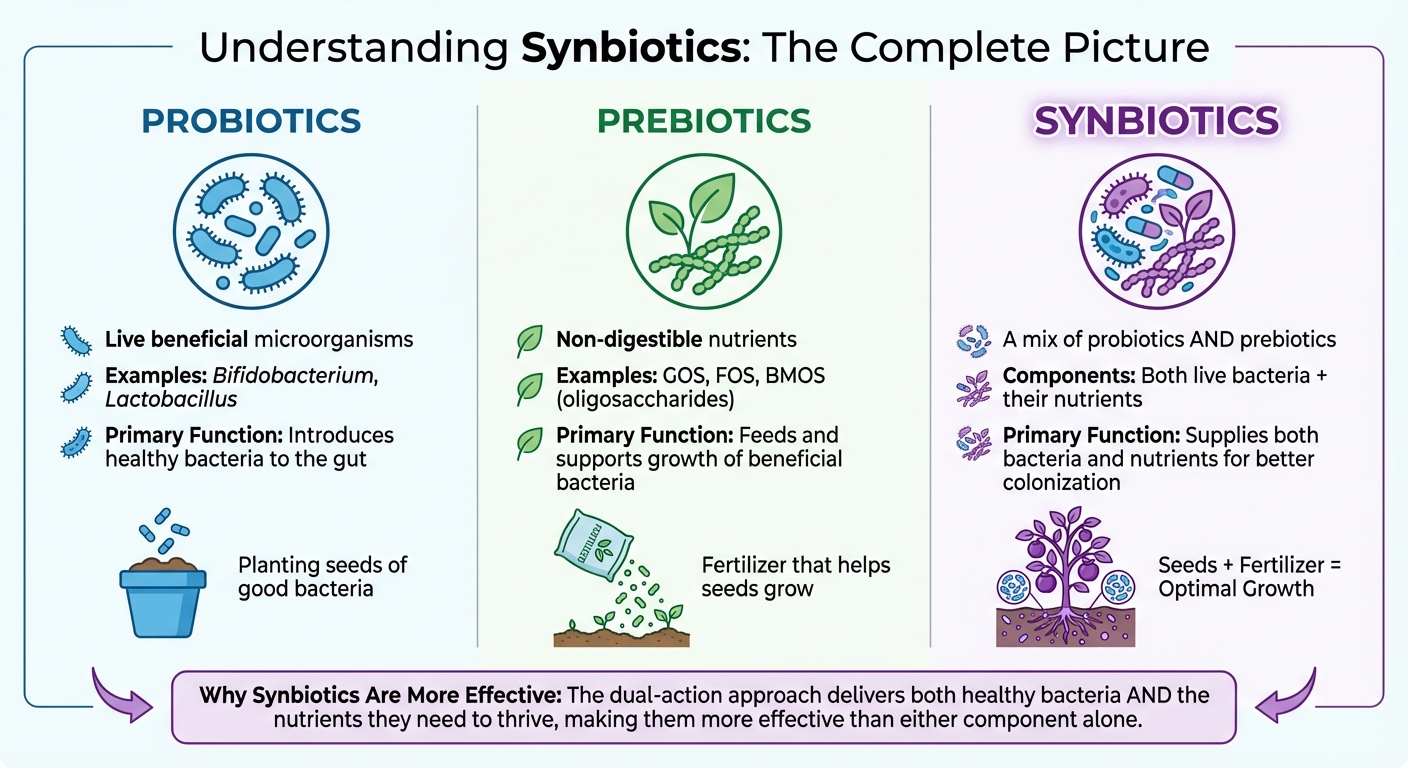
Probiotics vs Prebiotics vs Synbiotics: Key Differences and Functions
Synbiotics vs. Prebiotics and Probiotics Alone
Synbiotics combine probiotics - live beneficial bacteria like Bifidobacterium and Lactobacillus - with prebiotics, which are nutrients such as oligosaccharides that help these bacteria thrive [2][5][6]. Think of probiotics as planting seeds of good bacteria, while prebiotics act as the fertilizer that helps those seeds grow [5].
What sets synbiotics apart is their dual-action approach. While probiotics introduce healthy bacteria and prebiotics feed the existing gut flora, synbiotics deliver both at the same time. Research suggests this combination can be more effective than using either one alone [7]. Prebiotics not only nourish probiotics but also improve their survival, growth, and ability to establish themselves in the gut [5].
| Component | What It Does | Primary Function |
|---|---|---|
| Probiotics | Live beneficial microorganisms (e.g., Bifidobacterium, Lactobacillus) [2][6] | Introduces healthy bacteria to the gut [2] |
| Prebiotics | Non-digestible nutrients (e.g., GOS, FOS, BMOS) [2][5] | Feeds and supports the growth of beneficial bacteria [2][5] |
| Synbiotics | A mix of probiotics and prebiotics [2][5] | Supplies both bacteria and nutrients for better colonization [5] |
This synergy makes synbiotics a powerful tool for promoting gut health.
How Synbiotics Help Restore Gut Balance
By combining probiotics and prebiotics, synbiotics not only reintroduce beneficial bacteria but also create an environment where these bacteria can thrive. This dual action enhances the colonization of healthy microorganisms in the gut [7]. For individuals born via C-section, synbiotics can help correct the delayed colonization of essential bacteria like Bifidobacterium and Bacteroides, restoring healthy bacterial levels [4][2][5].
Synbiotics work to restore gut balance by increasing the presence of beneficial bacteria while reducing harmful strains. For example, they can boost the abundance of helpful genera and simultaneously decrease potentially harmful bacteria such as Enterobacteriaceae [2]. Additionally, they promote the production of beneficial metabolites like acetate and lactate. These metabolites lower fecal pH, creating a mildly acidic environment that helps inhibit the growth of pathogens [2][4][7].
"Synbiotics... allow fast colonization from the first days of life, emulating the gut physiological conditions observed in vaginally delivered infants." - Chien Chua et al., Researchers [5]
The benefits can appear quickly. For instance, early use of synbiotics has been shown to restore low Bifidobacterium levels in C-section infants within just one week [5]. A study published in Nature highlighted how a synbiotic mixture of short-chain galacto-oligosaccharides and long-chain fructo-oligosaccharides (scGOS/lcFOS [9:1]) combined with Bifidobacterium breve M-16V helped restore key bacterial populations in C-section infants by 17 weeks, achieving full parity with vaginally delivered infants by 12 months [4].
Another clinical trial demonstrated that infants given a synbiotic containing Bifidobacterium animalis subsp. lactis CNCM I-3446 and bovine milk-derived oligosaccharides (BMOS) experienced a significant increase in Bifidobacterium levels, effectively addressing their naturally lower levels of this important bacteria [2]. These rapid effects lay the groundwork for long-term health benefits in individuals born via C-section.
Research on Synbiotics for C-Section Babies
Rebuilding Bifidobacteria in C-Section Infants
Clinical trials have revealed that synbiotics can help restore Bifidobacterium levels in infants delivered by C-section, laying the groundwork for broader improvements in gut microbiome diversity. In a double-blind randomized controlled study published in June 2021 and registered in the Dutch Trial Register (Number 2838), 153 infants born via elective C-section were given a synbiotic-enriched formula from birth to 4 months. Researchers, including Christophe Lay and Jan Knol from Danone Nutricia Research, found that the formula created a gut environment similar to that of vaginally delivered infants by day 3. This hypoxic and acidic setting effectively mitigated the risk of a disrupted microbiome [10].
Other studies have also shown that synbiotics can restore low Bifidobacterium levels within just one week [5]. For example, one trial reported that B. lactis was present in 85% of treated infants. A separate study conducted in 2025 demonstrated that synbiotic supplementation could restore Parabacteroides levels by 17 weeks and Bacteroides levels by 12 months, bringing them close to those seen in vaginally delivered infants [4].
"Probiotic or synbiotic supplementation significantly increased the abundance of the supplemented bacterial species (of the Bifidobacterium and Lactobacillus genus), and there was a decrease in Enterobacteriaceae, especially <4 weeks of age." - Carpay NC et al., PLOS ONE [2]
Synbiotics not only boost beneficial bacteria like Bifidobacterium but also reduce harmful bacteria such as Enterobacteriaceae. This shift contributes to a healthier, more balanced gut ecosystem. Research has shown a significant reduction in Enterobacteriaceae levels in the stool of C-section infants as early as 0–1 weeks of age [2]. Beyond replenishing key bacteria, synbiotics play a role in enhancing overall gut microbial diversity.
Increasing Gut Bacteria Diversity After C-Section
While restoring Bifidobacterium is crucial, improving overall microbial diversity is equally important for long-term gut health. C-section babies often have lower microbial diversity because they are colonized by bacteria from the skin and hospital environment rather than receiving microbes from their mothers [8][11]. Clinical studies confirm that synbiotics can address this disparity by enhancing microbial diversity in these infants.
In one growth equivalence trial (NCT03520764) conducted between 2018 and 2024, 221 healthy Chinese infants were given a synbiotic formula containing scGOS/lcFOS (9:1) and Bifidobacterium breve M-16V. Results showed that the synbiotic formula increased bifidobacterial diversity and restored Parabacteroides and Bacteroides levels in C-section infants to levels similar to those of vaginally delivered infants by 12 months of age. Another study highlighted a significant increase in gut microbiome diversity at 8 weeks of age, as measured by the Shannon diversity index, in infants receiving synbiotics compared to a placebo [2].
"With this study, we demonstrate that a baby formula containing synbiotics can help to restore the delayed colonization by the good bacteria, hence helping to bring a baby's gut microbiome closer to that of vaginally born and breastfed babies." - Dr. Christophe Lay, Lead Researcher, Danone Nutricia Research [9]
The benefits of synbiotic supplementation extend even beyond the period of active use. Research shows that these supplements support the restoration of key gut bacteria in C-section infants, with positive effects persisting after supplementation ends [4][12]. Early intervention with synbiotics can promote a stronger, more balanced microbiome, helping C-section babies build a resilient gut environment during their first year of life. This underscores the importance of addressing microbiome imbalances to support long-term health.
sbb-itb-1bbfe7f
Long-Term Health Effects of Synbiotics for C-Section Individuals
Immune System Support and Disease Risk Reduction
Introducing synbiotics early in life can provide lasting benefits for the immune system, including a reduced risk of respiratory infections and a lower need for antibiotics well into childhood. A long-term clinical trial led by Peldan and colleagues explored the effects of probiotic and synbiotic supplementation during the first six months of life. When researchers followed up 5 to 10 years later, they found that children who received these supplements had fewer upper respiratory infections and were less likely to have taken antibiotics in the preceding five years [6].
Synbiotics also show promise in reducing allergic conditions. In a study published in 2017 and revisited in 2022, Chua and team administered a synbiotic containing Bifidobacterium breve M-16V and a GOS/FOS prebiotic blend to infants born via C-section. The intervention, which lasted until the infants reached 16 weeks, led to fewer parent-reported cases of skin disorders and atopic dermatitis by 22 weeks. Long-term follow-up revealed a marked decrease in eczema and other allergic diseases by the time the children turned 13 [6][2].
"The potential immune modulation of the intervention can be long lasting; meaning that early supplementation can support the immune system to protect against later infectious diseases." – Frontiers in Pediatrics [6]
Other benefits include improved vaccine responses and a lower risk of respiratory conditions like bronchitis. Infants receiving synbiotics were less likely to experience four or more upper respiratory infections in a year (OR 0.29) and had a significantly reduced risk of bronchitis at 12 months (OR 0.06) [6]. The first 100 days to six months of life is a critical period for immune system development, and synbiotics play a key role in supporting this process while potentially reducing the risk of chronic inflammatory conditions [6]. These immune benefits go hand-in-hand with synbiotics' ability to improve digestive health.
Better Digestion and Nutrient Uptake
In addition to bolstering the immune system, synbiotics help enhance digestion and nutrient absorption. They achieve this by restoring important bacterial species, like Bifidobacterium and Bacteroidota, which are often delayed in infants born via C-section. These bacteria are essential for breaking down human milk oligosaccharides (HMOs), a key component of breast milk [4]. By metabolizing HMOs, beneficial bacteria produce compounds like acetate and lactate that lower intestinal pH, improve nutrient absorption, and strengthen the gut lining [2][4][7].
"Several species of the Bifidobacterium genus are commonly present in the infant gut, and their function is to digest sugars in human milk, reduce intestinal pH and improve the integrity of the intestinal wall." – Carpay NC et al. [2]
Synbiotic supplementation has also been linked to increased levels of branched-chain short-chain fatty acids, such as isobutyric and isovaleric acid, which are indicators of healthy protein fermentation. These changes create a healthier intestinal environment, reducing gut permeability and minimizing gastrointestinal issues [2][7]. Synbiotics even influence host gene expression related to oligosaccharide metabolism, further enhancing nutrient processing [1].
These findings highlight the importance of well-designed synbiotic products. For instance, options like Begin Rebirth RE-1™, a clinically tested 3-in-1 eubiotic synbiotic, aim to support long-term immune health and digestive function, particularly in individuals born via C-section.
Using Synbiotics After C-Section Birth
Selecting an Effective Synbiotic Product
When choosing a synbiotic, look for products that combine clinically supported probiotic strains with prebiotics designed to nourish those strains. This pairing ensures the probiotics can thrive and colonize effectively in the gut.
For addressing gut microbiome challenges specific to C-section births, certain strains stand out. For example, Bifidobacterium breve M-16V has been shown to restore Bifidobacterium levels in C-section infants to levels comparable to those found in vaginally delivered babies. When combined with a prebiotic blend of short-chain galacto-oligosaccharides and long-chain fructo-oligosaccharides (scGOS/lcFOS) in a 9:1 ratio, this formulation effectively supports gut health. A trial involving 224 healthy Chinese infants (NCT03520764) demonstrated that this synbiotic combination restored key gut bacteria within 12 months [4][7].
Clinical studies suggest effective daily dosages range between 2×10⁶ and 9×10¹¹ CFU [13].
"Synbiotic was confirmed to support the restoration of important gut colonizers in infants born by C-section with effects observed even beyond the intervention period." – Wang Y et al. [4]
Adults dealing with long-term microbiome imbalances can also benefit from targeted synbiotic formulations. For instance, products like Begin Rebirth RE-1™ deliver a potent 3-in-1 formulation with 500 billion CFU per serving, designed to help restore balance quickly.
Adding Synbiotics to Your Daily Routine
For both infants and adults, timing and consistency are key to getting the most out of synbiotic supplementation. Research shows that starting synbiotics within the first three days after birth - or at least within the first six weeks - yields the best results [2][5]. The first 100 days of life are particularly important, as gut imbalances during this period can increase the risk of conditions like asthma and allergies later on [3].
For infants, a supplementation period of 12–17 weeks can stabilize beneficial bacteria levels [4][6]. Breastfeeding alongside synbiotic use can boost effectiveness, as human milk oligosaccharides naturally support the supplemented strains [5]. Some mothers also begin taking probiotics or synbiotics during the final month of pregnancy and continue while breastfeeding to promote healthy microbial transfer to their baby [7][5].
Adults seeking to address persistent gut issues stemming from a C-section birth can incorporate a daily synbiotic into their routine. Sachet-based formulations are particularly convenient, as they can be mixed with water or other drinks, making it easier to stick to the regimen. Even after supplementation ends, benefits to the gut microbiome may last for over 30 days [5].
To track progress, look for signs like improved digestion, reduced gastrointestinal discomfort, and better overall well-being. Clinical indicators such as lower fecal pH and higher levels of acetate and L-lactate also suggest a healthier gut environment [4][7].
Conclusion
A C-section birth doesn’t have to mean a lifetime of gut health challenges. Synbiotics provide a science-backed solution to replenish the beneficial bacteria that are often missed during C-section delivery. By boosting Bifidobacterium and Bacteroides populations while reducing potentially harmful bacteria like Enterobacteriaceae, synbiotics tackle the root of C-section–related gut imbalances [2][4].
Research shows that starting synbiotic supplementation early - within days or weeks - can lead to long-term benefits for the gut microbiome. Early intervention not only maximizes these benefits but also helps establish a more balanced and resilient gut over time [4][5]. Even if started later, synbiotics can still contribute to meaningful improvements in gut health.
For the best results, look for synbiotics with clinically studied strains, such as Bifidobacterium breve M-16V paired with the right prebiotics. A regimen lasting 12 to 17 weeks, ideally alongside breastfeeding, can make a significant difference. For a high-potency option, Begin Rebirth RE-1™ delivers 500 billion CFU per serving in an easy-to-use sachet.
Whether you’re a new parent focused on your baby’s gut health or someone aiming to support your own digestive wellness, synbiotics offer a practical, evidence-supported way to address the microbial imbalances linked to C-section delivery. With the right approach, it’s possible to restore gut health and reduce the long-term risks often associated with C-section births [2][6]. These insights provide a clear path to nurturing gut health from infancy into adulthood.
FAQs
How can synbiotics help improve gut health in babies born via C-section?
Babies delivered via C-section miss out on the natural transfer of beneficial bacteria from their mother’s birth canal. This missing step can lead to an imbalanced gut microbiome, a condition called dysbiosis. Over time, this imbalance might increase the likelihood of developing allergies, asthma, or other immune-related conditions.
To address this, synbiotics - a combination of prebiotics, probiotics, and postbiotics - are designed to help restore gut balance. These blends work by introducing healthy bacteria and creating an environment where they can thrive. Studies have shown that synbiotics encourage the growth of Bifidobacterium and other beneficial microbes in C-section babies. This not only improves gut health but also supports immune system development, fostering a more diverse and resilient microbiome that’s crucial for healthy growth.
For example, Begin Rebirth RE-1™ is a 3-in-1 synbiotic product backed by clinical research. It’s specifically formulated to close the microbial gap for C-section babies, helping to quickly rebalance the gut and strengthen immune health.
What’s the difference between probiotics, prebiotics, and synbiotics?
Probiotics are live microorganisms, such as specific strains of bacteria or yeast, that can support gut health and immune function when taken in the right amounts. Meanwhile, prebiotics are non-digestible fibers that act as food for these beneficial microbes, helping them grow and maintain a healthy balance in your gut.
Synbiotics bring the best of both worlds by combining probiotics and prebiotics into a single formulation. This combination creates a synergistic effect: the prebiotics feed both the added probiotics and your existing beneficial gut bacteria, encouraging a healthier and more balanced microbiome. For those born via C-section, synbiotics like Begin Rebirth RE-1™ offer targeted support. This clinically-backed formula delivers a potent mix of prebiotics, probiotics, and postbiotics to help restore gut microbiome balance and strengthen immune health.
Can adults born via C-section improve their gut health with synbiotics?
Yes, adults born via C-section may find synbiotics helpful in supporting their gut health. Studies indicate that being delivered by C-section can influence the early development of the gut microbiome, which might lead to imbalances later in life. Synbiotics - blending probiotics (helpful bacteria) with prebiotics (nutrients these bacteria thrive on) - offer a way to help restore balance and encourage a healthier gut environment.
Although research in this area is still growing, many experts believe synbiotics can play a role in boosting immune function, addressing gut imbalances like dysbiosis, and enhancing overall health. If you're thinking about trying a synbiotic, opt for products with strong clinical backing that are specifically formulated to support microbiome health.